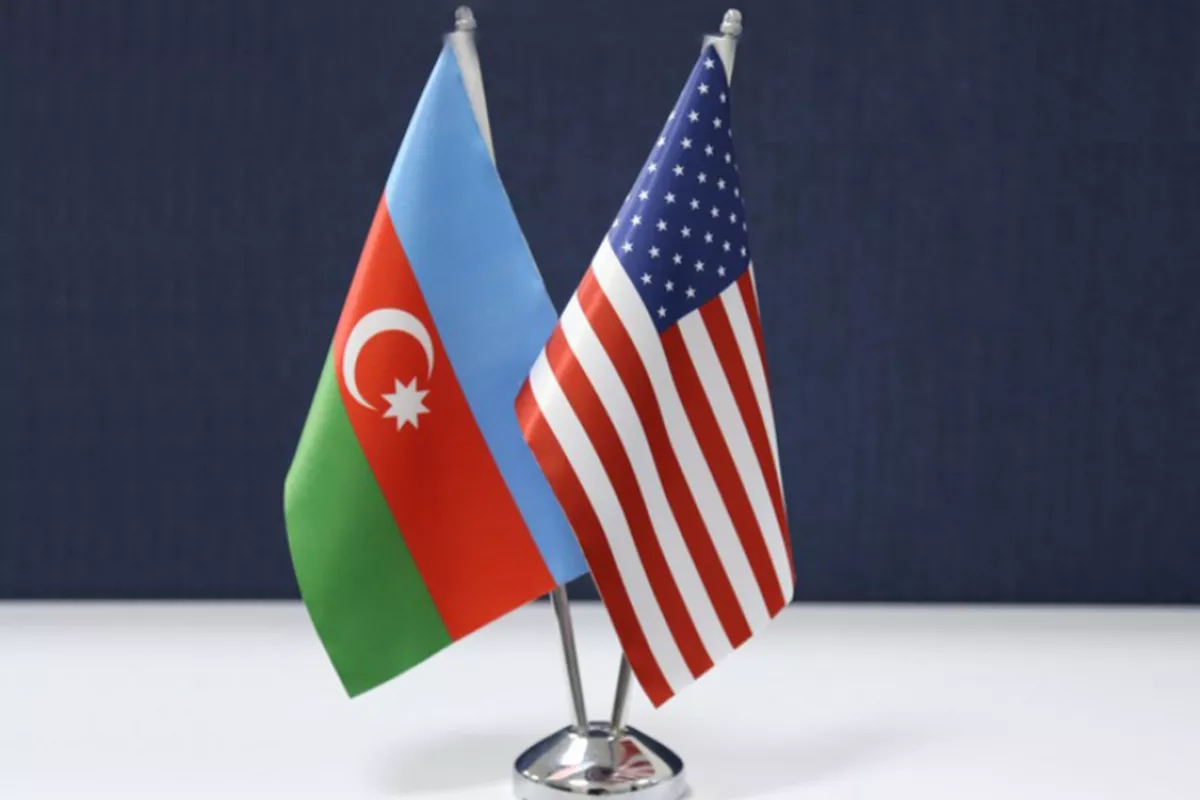
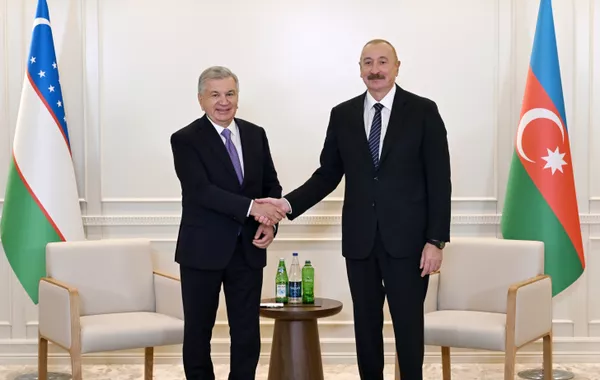
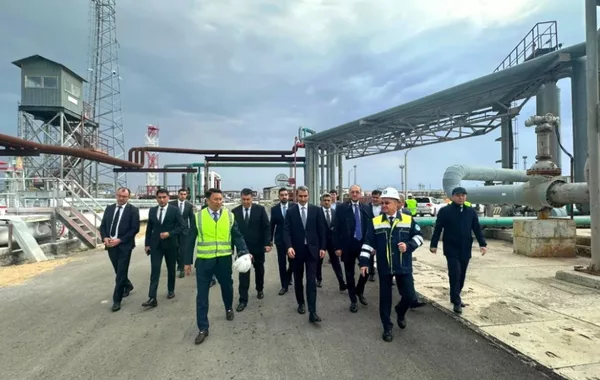
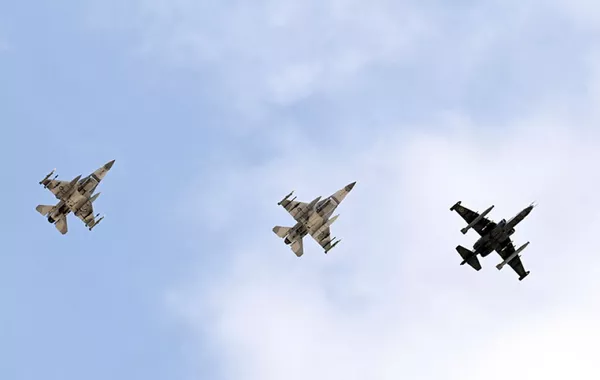
In recent years, changes in global and regional politics have raised US-Azerbaijan relations to a new level. Specifically, the 2020 resolution of the Armenia-Azerbaijan conflict, with Azerbaijan's victory, combined with growing competition among global powers, has created new geopolitical dynamics in the South Caucasus. Amid these shifting global and regional realities, Azerbaijan has become an increasingly vital partner for the United States in areas like energy security, transportation and transit routes, and counterterrorism.
The evolving dynamics of bilateral relations indicate that US-Azerbaijan cooperation has moved beyond the constraints of the past and has entered a phase of strategic partnership grounded in mutual interests, pragmatism, and concrete avenues for cooperation, writes Dr. Matin Mammadli, head of department at the Baku-based Center of Analysis of İnternational Relations, The Caspian Post reports, citing EU Reporter.
A retrospective examination of bilateral relations demonstrates that US-Azerbaijan ties entered a new phase during the administration of President Donald Trump. One of the principal reasons for this shift was the Trump administration’s foreign policy approach, which departed from traditional ideological frameworks in favor of a national interest-driven, pragmatic, and results-oriented strategy. During this period, Washington relegated ideological criticisms to the background and prioritized pragmatic cooperation with Azerbaijan. As a result, between 2017 and 2020-and again beginning in January of the previous year-mutual trust increased, and dialogue intensified in areas such as energy, security, and other strategic fields. By contrast, during the period from 2021 to 2024, a relative cooling in relations toward Azerbaijan was observed, influenced by certain political circles within the US leadership at the time. However, Donald Trump’s re-election as President in 2024 injected new momentum into bilateral relations. High-level telephone conversations and exchanges of letters took place, and President Ilham Aliyev positively assessed Trump’s foreign policy approach in several public statements. Consequently, Trump’s return to office marked the beginning of a renewed stage in U.S.-Azerbaijan relations.
One of the most significant indicators of this new phase was President Trump’s decision to suspend the implementation of Section 907 of the Freedom Support Act, a restrictive provision adopted by the U.S. Congress in 1992. This amendment, which had prohibited direct US assistance to Azerbaijan based on unfounded allegations of a blockade against Armenia, had long been considered a major obstacle in bilateral relations. During the Trump administration, the application of Section 907 was effectively halted, rendering its practical impact de facto null. In 2025, an official document to this effect was announced in Washington, and President Ilham Aliyev described the decision as the “restoration of justice after 33 years .” This step was widely regarded as a landmark decision that not only facilitated U.S. security and defense assistance to Azerbaijan but also created new opportunities for the expansion of bilateral economic and financial cooperation.
Another major event confirming the transition of US-Azerbaijan relations to a new stage was the high-level meeting held in Washington on August 8, 2025. Convened at the initiative of U.S. President Donald Trump, the trilateral summit brought together President Ilham Aliyev of Azerbaijan and Prime Minister Nikol Pashinyan of Armenia. This meeting was widely recognized as one of the most significant steps toward resolving the long-standing conflict in the South Caucasus and as a symbolic turning point in the formation of a “new world order” in the region. Within the framework of the Washington meeting, the leaders of Azerbaijan and Armenia reached agreement on the preliminary text of a peace treaty and initialed the document. They also jointly initiated the process to dissolve the OSCE Minsk Group, which had remained ineffective for nearly three decades. These developments laid the groundwork for new post-conflict cooperation prospects in the region.
A further important outcome of the Washington meeting was the formal confirmation of the elevation of U.S.-Azerbaijan relations to the level of strategic partnership. On 8 August, during President Ilham Aliyev’s working visit to the White House, a Memorandum of Understanding was signed on the establishment of a Strategic Working Group tasked with preparing a Strategic Partnership Charter between the two countries. This historic document defined the future trajectory of bilateral relations and institutionalized cooperation between Azerbaijan and the United States. On the same day, the US also signed several separate cooperation memoranda with Armenia, signaling Washington’s intention to engage both countries in parallel. Nevertheless, it was the Azerbaijan-US Memorandum of Understanding that served as the principal document evidencing the elevation of bilateral relations to a strategic partnership. President Aliyev’s Washington visit was described as another success of Azerbaijani diplomacy, marking the first transition of bilateral relations to an institutionalized strategic partnership framework.
Within the framework of agreements reached during the Washington summit, the restoration of regional communications was also given a historic designation. At the initiative of the U.S. side, an agreement was reached to name the newly opened route of the Zangezur corridor the “Trump Route for International Peace and Prosperity (TRIPP). ” This approach was significant in terms of the international recognition of Azerbaijan’s transit potential in the region. The TRIPP - Zangezur corridor is intended not only to connect mainland Azerbaijan with the Nakhchivan Autonomous Republic but also to establish an alternative and secure transportation route along the Central Asia-South Caucasus-Europe axis. For the United States, this corridor is attractive less from a purely geopolitical standpoint than from the perspective of diversifying global trade flows. In recent years, Washington has shown increasing interest in reliable transit routes in response to emerging risks in international trade corridors. In this context, Azerbaijan stands out as a stable, predictable, and rules-based partner. The implementation of the TRIPP - Zangezur corridor will enable Azerbaijan to integrate its regional initiatives into global logistics chains, further strengthening its position as a regional transit and logistics hub.
The Memorandum of Understanding signed in Washington identified three main pillars of bilateral cooperation, which will also constitute the core of the forthcoming Strategic Partnership Charter:
Regional connectivity: Expansion of cooperation in energy, trade, and transit. Particular emphasis is placed on the Southern Gas Corridor project and its contribution to Europe’s energy security, as well as the Trans-Caspian transport route known as the Middle Corridor. The United States has long played a key role in promoting energy transportation from the Caspian region. In the new phase, Azerbaijan’s energy resources and transit potential are expected to become more deeply integrated into the Eurasian space. Cooperation on regional connectivity also entails the development of new transport and logistics infrastructure and the intensification of trade relations.
Economic investment: Promotion of economic and technological investments, including artificial intelligence and digital infrastructure. This area may facilitate the transfer of U.S. expertise in high technology and digital transformation to Azerbaijan. It also envisages the exploration of new investment opportunities by American companies in Azerbaijan and the expansion of bilateral trade. There is significant potential for strategic partnership in fields such as artificial intelligence, cybersecurity, telecommunications, and the startup ecosystem. Such economic and technological cooperation will support Azerbaijan’s sustainable post-conflict development and its transformation into a regional innovation hub.
Security cooperation: Collaboration in security-related areas, including the sale of defense industry products and counterterrorism efforts. This dimension primarily involves the deepening of dialogue and joint activities in the military and defense sectors. The United States and Azerbaijan have previously cooperated within the framework of peacekeeping missions, including in Afghanistan. In the new phase, concrete steps may include joint military exercises, information exchange on cybersecurity, border security cooperation, and intelligence collaboration against terrorist networks. The removal of obstacles to the sale of U.S.-produced advanced military technologies to Azerbaijan demonstrates a growing level of trust between the two countries in the defense sphere. This will enhance Azerbaijan’s defense capabilities while facilitating coordinated efforts with the United States to combat terrorism and non-state armed groups in the region.
The establishment of a Strategic Working Group across these three pillars aims to move bilateral dialogue beyond episodic contacts toward a systematic and sustainable cooperation mechanism. Through regular meetings, this mechanism will enable the development of roadmaps for priority areas, the implementation of concrete projects, and the institutionalization of cooperation. Consequently, the preparation of the Strategic Partnership Charter represents not merely a political declaration of intent but a substantive effort to enrich bilateral relations with practical content and to build a sustainable partnership model over the long term.
Azerbaijan’s growing role in US regional geostrategy
As competition among global power centers intensifies and new security challenges emerge across regions, Azerbaijan has assumed an increasingly prominent position in US geostrategic planning. Several key factors underpin this growing importance.
First, energy security and the European market have become central priorities following the Russia-Ukraine conflict. The United States seeks to reduce Europe’s dependence on Russian energy, and in this context Azerbaijan’s role as a reliable gas supplier has gained greater prominence. The full operationalization of the Southern Gas Corridor and plans to double Azerbaijani gas exports to Europe by 2027 have received Washington’s support. The United States views Azerbaijan’s energy projects as integral to regional stability and Western integration, while also ensuring long-term US corporate involvement in Azerbaijan’s oil and gas sector.
Second, transportation and transit routes have gained strategic importance amid disruptions to global trade flows caused by pandemics, conflicts, and sanctions. Azerbaijan’s geographic position makes it indispensable at the intersection of East-West (Middle Corridor) and North-South trade routes. Azerbaijan plays a particularly crucial role in cargo transportation between Central Asia and Europe. For Washington, the diversification of transit routes in the South Caucasus has become a strategic priority, making cooperation with Baku highly significant. U.S. support for the opening of the TRIPP - Zangezur corridor reflects its interest in establishing alternative and secure logistics infrastructure. Once realized, this corridor will position Azerbaijan not only as a regional but also as a key node in global trade chains, further deepening U.S.-Azerbaijan cooperation on a global scale.
Third, regional security further enhances Azerbaijan’s geostrategic value. In the complex security environment of the South Caucasus, Azerbaijan serves as a stabilizing partner for US regional interests . The country maintains open dialogue with the West, pursues an independent foreign policy, and demonstrates resilience against radical influences. Azerbaijan’s partnership with Israel and its position as a secular Muslim-majority country aligned with principles of tolerance further coincide with US interests in the region. Consequently, the United States views Azerbaijan as a guarantor of stability and religious and ethnic tolerance in the South Caucasus, adding geostrategic value to bilateral cooperation.
Finally, positioning within global competition plays a critical role. In the current international environment, U.S. competitors-particularly Russia and China-are expanding their influence across various regions. China’s “Belt and Road Initiative” has significantly strengthened its economic presence in Eurasia. Against this backdrop, Azerbaijan is regarded by the United States as a reliable political and economic partner. By maintaining a balanced approach toward both Chinese and Russian initiatives while pursuing an independent foreign policy, Baku creates favorable conditions for the advancement of US interests in the South Caucasus. Washington thus views post-conflict Azerbaijan as a key country in preventing regional power vacuums from being filled by Russia or Iran and seeks to integrate it into its broader global strategic planning.
In conclusion, within the framework of new geopolitical realities, US-Azerbaijan relations have entered a qualitatively new phase. The agreements reached and documents signed in Washington in August 2025 clearly attest to this transformation. The effective repeal of Section 907, the establishment of the Strategic Working Group, international support for the TRIPP - Zangezur corridor, and the balanced approach of the US administration collectively demonstrate the effectiveness of Azerbaijan’s foreign policy and the solid foundations of bilateral relations. Looking ahead, the deepening of cooperation and the ratification of the Strategic Partnership Charter are expected to expand mutually beneficial political and economic opportunities in 2026 and beyond.
The US-Azerbaijan partnership is thus transitioning away from the unilateral and conditional approaches of previous years toward an institutionalized strategic cooperation format based on the principles of sovereign equality and mutual interest. This cooperation serves to strengthen regional peace, safeguard Azerbaijan’s sovereignty and development, and enhance US strategic positions in the South Caucasus. The effective implementation of the agreements reached, the further consolidation of mutual trust, and the realization of concrete projects will benefit both countries. Ultimately, this U.S.-Azerbaijan strategic partnership-shaped by complex global and regional geopolitical conditions-has the potential to contribute meaningfully to peace, security, and development at both bilateral and international levels.