In the ongoing Iran war, Russia, the Eurasian superpower, and China, the Asian superpower, have disapproved of American armed intervention in the Iran-Israel war. Their pro-Iranian policy is in line with their anti-imperial stance since the beginning of the Cold War era.
In comparison to this, let us recollect the warning President Trump once issued to Iran, declaring that if the Iranian regime continued shooting and executing innocent civilians, the US would take steps to prevent it in accordance with the Human Rights Charter, The Caspian Post reports via Daily Excelsior.
If Russia and China had reacted judiciously and without prejudice to the Iranian theocratic regime’s atrocious treatment of its own people, particularly the women, the political scenario in the Gulf and West Asia would have been very different today. They desisted from uttering a word about the regime’s heinous crimes against humanity, and even threw hints of appreciation for standing up to the US pressures.
The Afghan Taliban kept fighting against the American ground forces for nearly two decades. How many precious sacrifices did they have to make to throw out the occupational forces from their land? Very few countries had a word of appreciation for the Taliban for their heroic fight for the freedom of their country.
The US Eyes Bagram
President Trump wants to recapture the highly strategic Bagram airport in Afghanistan. It means Trump has learnt nothing from America’s two-decade-long war against the Taliban, which finally ended with its shameful disaster and withdrawal from the Afghan scene.
In the aftermath of the Taliban victory over the American and NATO forces on August 15, 2021, Pakistan felt insulted by the Taliban’s refusal to accept Pakistan’s hegemony in framing its national and foreign policy. The chagrined Pakistan adopted a belligerent posture against the Kabul regime under two pretexts. One was the allegation that the Kabul regime is shielding the TTP rogue elements, and the second was that it will adhere to the infamous Durand Line border with Afghanistan. Kabul rejected Pakistan’s assertions.
This provided Pakistan army planners the pretext to activate cross-border skirmishes in which there was loss of life on either side. Violent firing and killings in these border clashes took place. In the meantime, as the Iran war was escalating into naval operations in the Strait of Hormuz, President Trump demonstrated his fascination with the Pakistani army chief, whom he entertained over lunch in the White House and also had lengthy meetings in a secluded White House room. What was talked about in these meetings is not known to us. But this was the time when President Trump had been orchestrating the recapture of the strategic Bagram air base in Afghanistan. He believed the control of Bagram air base would facilitate surveillance over military activities by Russia in Central Asia and China’s war strategy along the Himalayan belt.
The Pakistani air force would not have struck first at some locales in Paktia province, and then in certain spots in Kabul, unless it had taken the Pentagon on board. Obviously, it suited Trump’s scheme of things to covertly encourage the Pakistani army chief to weaken Afghanistan, something he thinks would make it easy for him to seize Bagram airport. Afghans have vowed to reject the Durand Line and fight the Pakistanis. Incidentally, India proved here her selfless friendship with the people of Afghanistan at that crucial time.
None among the 53-member states of the OIC uttered a word of concern over the Pakistan air force bombarding Kabul. The Iranian theocracy did nothing beyond a shy expression of concern about regional insecurity. The Shia-dominated theocracy would go with Pakistan, the lesser evil.
Afghanistan: Crisis in Making
The crisis involving the Strait of Hormuz is viewed only in terms of energy security or military escalation. But its extension to and adverse impact on humanitarian dimensions has not been highlighted. In a recent article, The Guardian has “called for a humanitarian corridor through the Strait of Hormuz as Iran war hits vital aid.” The paper highlights that because of instability around the vital channel, traditional humanitarian supply routes are beginning to break down. Afghanistan is becoming a victim of conflicting interests in the Gulf.
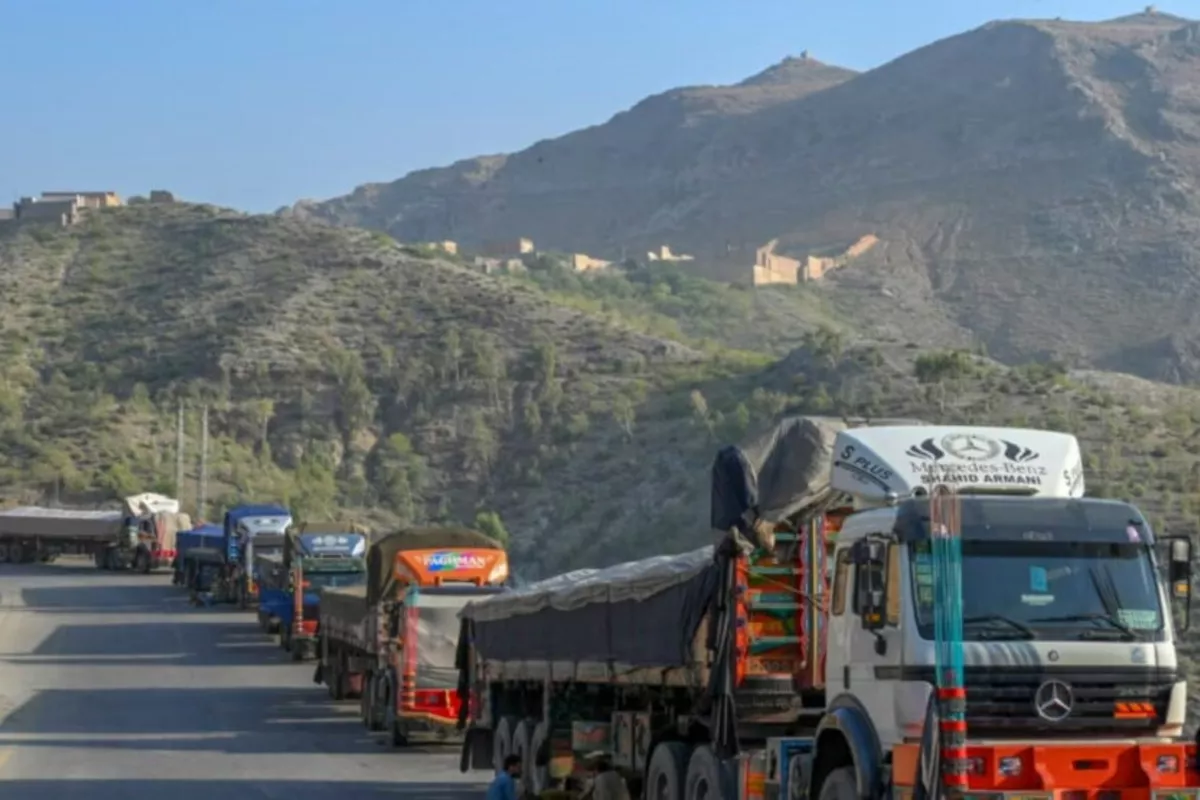
Citing the World Food Programme (WFP), The Guardian writes that the cost of delivering food to Afghanistan has tripled. Cargo that previously moved through Hormuz and onwards to Pakistan ports must now travel overland across multiple countries, which means adding weeks to the delivery schedule. This has adverse consequences for the vulnerable population, especially the children. Some shipments are stranded in regional hubs. Land-locked countries like Afghanistan, depending on imports of food grains and other necessary provisions and humanitarian assistance, are conditioned by predictability. As long as the situation in the Gulf remains in doldrums, no guarantee or predictability can work. Routes are changing; fuel cost continues to rise. Even a modest rise in oil prices significantly raises operational expenses for humanitarian agencies.
According to the estimates made by the United Nations, “around 3.7 million Afghan children are currently suffering from wasting, nearly one million of them from severe wasting, a condition associated with sharply elevated mortality risk.”
UNICEF estimates that in 2026 alone, 1.304 million pregnant and breastfeeding women are also suffering from acute malnutrition. Evidently, even temporary disruptions in aid deliveries pose a direct threat to human life. It is nothing short of a crisis for humanitarian logistics in Afghanistan. Pakistan has sealed its borders with Afghanistan. Chahbahar port, which India used for the transhipment of food grains, medicines and other necessities to Afghanistan, is in a state of limbo in view of the militarisation of Hormuz.
Chahbahar Port is geographically positioned to bypass the Strait of Hormuz, offering a potential alternative for India-Afghanistan trade, but its functionality is currently hindered by intense geopolitical and legal challenges. While designed to operate outside the Strait, the port faces a “functional block” owing to tightened US sanctions against Iran and heightened regional military tension, making it a “delicate” alternative rather than a clean workaround, say maritime analysts.
The situation is compounded by several overlapping factors. First, instability around the Strait of Hormuz has made maritime routes both more expensive and riskier. Second, the Pakistani corridor, previously the main overland route, has become unreliable, as repeated border closures and restrictions have tied humanitarian deliveries to the fluctuating political and security relationship between Kabul and Islamabad. Third, Iran has imposed restrictions on food exports and has itself become part of the conflict zone, undermining its role as both a supplier and transit route for Afghanistan.
Alternative
Realising the critical food situation in Afghanistan, the WFP is restructuring its logistics network. One solution under consideration is the increased use of the Lapis Lazuli Corridor: Türkiye - Georgia - Azerbaijan via the Caspian Sea - Turkmenistan and Afghanistan. It is a long, more expensive and time-consuming route. But it offers predictability and an alternative to a disrupted maritime pathway. The WFP does not consider which route is cheaper, but which one is reliable.
Should this option be accepted, naturally, the importance of the centre of regional humanitarian logistics shifts to Central Asia. The overland routes to Afghanistan through Central Asia were seen as a secondary option. It was not comparable with maritime shipping in terms of speed and cost. But in given circumstances, reliability is attaining more importance than speed. The corridors through Central Asia are now looking less like alternatives but more like necessities.
Interestingly, the Central Asian region possesses much of the infrastructure needed to support humanitarian transit. Kazakhstan and Turkmenistan both have ports on the Caspian, which can provide multimodal transport connections. Rail networks link Central Asia with Afghanistan through Uzbekistan and Turkmenistan. The city of Termez in Uzbekistan has long served as a key logistical hub for northern Afghanistan.
The redeeming factor is that the Central Asian states are not involved in the conflict in the Strait of Hormuz. This gives them space to become more practical partners for international organisations. The infrastructure is there, and what is needed is adaptation and expansion. Regional roles are emerging. Kazakhstan can serve as a northern entry point via the Caspian and rail corridors connected to China. Uzbekistan may become the principal overland hub through which humanitarian aid enters Afghanistan, and Turkmenistan offers the shortest route into western Afghanistan. The UN Regional Centre for the Sustainable Development Goals for Central Asia and Afghanistan in Almaty could take on increased significance and become the nodal point for systematising the Afghanistan-Central Asian connectivity mission.
By Daily Excelsior