Central Asia's fuel markets are absorbing the shock of Russia's refinery crisis, with higher-octane gasoline shortages reported in Kyrgyzstan, prices rising in Uzbekistan, and Kazakhstan tightening controls to protect its own market.
A monthslong campaign of Ukrainian drone strikes on Russian refineries culminated on Monday (July 6) in an attack on Omsk, Russia's largest refinery. To protect its own market, Moscow had already extended gasoline export limits on producers through July 31 and imposed a temporary aviation kerosene export ban on June 1, tightening supplies to a region that leans heavily on Russian fuel. Both countries have been at war since Russia invaded Ukraine in February 2022, The Caspian Post reports via Nikkei Asia.
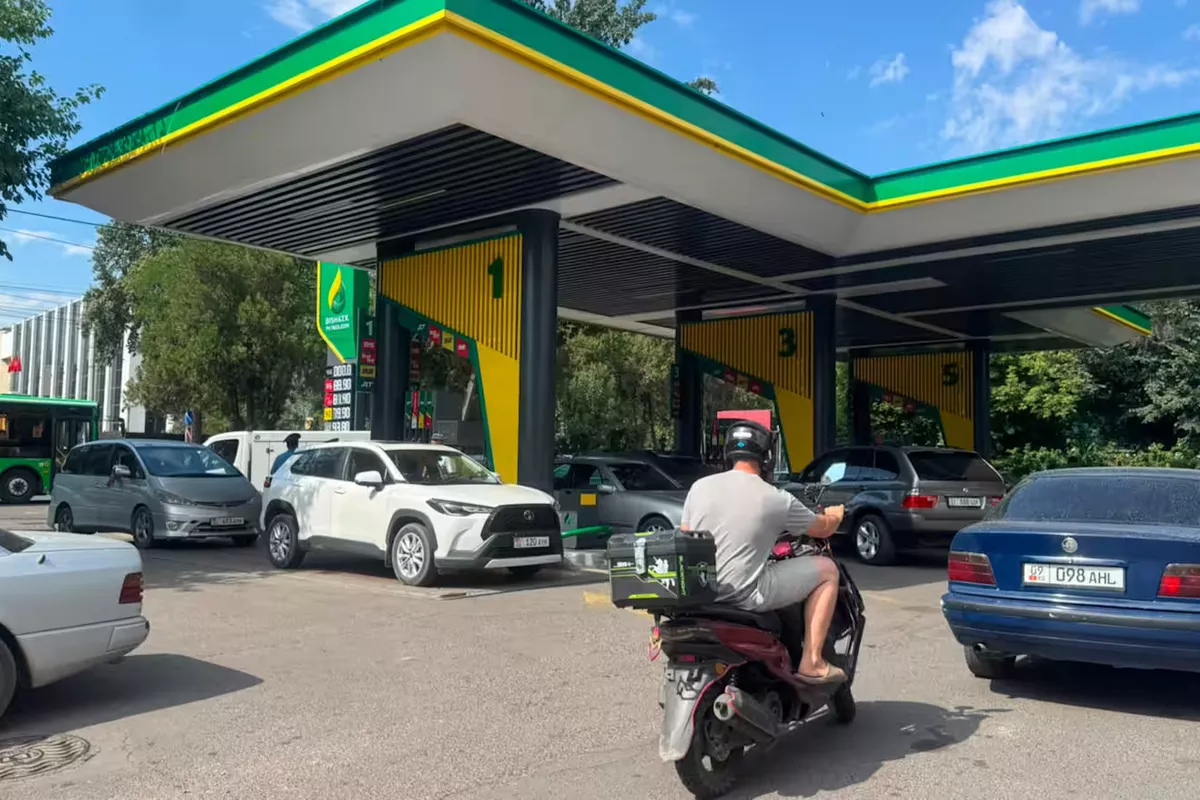
Kyrgyzstan imports more than 90% of its gasoline from Russia and faces the worst shortages.
"I'd call the situation in Kyrgyzstan precrisis, and it isn't going to disappear in a month or two," said Askar Ismailov, Kazakhstan-based senior adviser for Central Asia at the Global Gas Centre in Geneva.
If Russia cannot plug its own shortfall soon, "Kyrgyzstan will face structural economic problems, not just a fuel crisis," he said.
Most cars in the region run on AI-92, the standard grade under the octane system used across the former Soviet Union. Newer models need premium AI-95 or AI-98, which are fast depleting. This has pushed up demand for the standard grade, raising worries about supplies.
Gas stations hold 30 to 50 days of AI-92, Kanat Eshatov, president of the Association of Oil Traders in Kyrgyzstan, told Nikkei Asia. But drivers who cannot find 95 are filling up with 92 instead, so those stocks "could be sold through significantly faster, since consumption is rising because there's no 95," he said.
Kyrgyzstan's national reserves are also around the same level, Deputy Energy Minister Nasipbek Kerimov was quoted as saying in local media. In the second-largest city of Osh, though, there are stocks of "only up to one month," according to the Kyrgyz Antimonopoly Regulation Service.
Retail prices were initially capped at state maximums, but the government on Tuesday (July 7) abandoned those plans. Analysts said that higher prices are inevitable, given the shortages and the need to seek supplies from farther away.
In a sign of the widespread fuel problem in Kyrgyzstan, Deputy Cabinet Chairman Daniyar Amangeldiev was quoted in the local press as saying he was negotiating with neighboring countries for supplies, adding that China had confirmed it would send 3,000 tons of jet fuel, with diesel also under discussion.
"This search for fuel all over the world is evidence that this diversification wasn't built in advance," he said.
At the pumps, the worry is evident.
"The rush started when the Gazprom and Rosneft stations ran out of 95," said Atai Isaev, an operator at a B-Power (Bishkek Petroleum) gas station, referring to Russian gas stations. "People began asking whether supply will be stable. We don't know."
He said that his local depot still holds every grade except AI-100.
In Uzbekistan, the situation is less dire, but prices are rising. Because it sells gasoline through exchange bidding rather than fixed state prices, import costs are passed down to the pumps quickly.
The average price for all the grades rose 3.9% in June over May and is up 16.7% on the year, the National Statistics Committee said. AI-95 is climbing fastest, up 6% in June from May. The Energy Ministry said on Tuesday (July 7) that reserves would last two to three months.
Uzbekistan's cars mostly run on domestically processed gas, a cushion its neighbors lack, said Olzhas Baidildinov, a former adviser to Kazakhstan's energy minister. "But one way or another, they also depend on supplies from Russia, for that same 95 gasoline, and partly for crude," he said.
The cushion provides little comfort though: The price for propane jumped 11.3% in June to its 7,800-som (65 cents) ceiling, up 41.1% on the year, while methane rose 8.8%.
Alexei, a driver in the Uzbek capital of Tashkent, said that while he has no trouble getting fuel, "Russian 92 used to be 11,600 som, and now it's around 12,600."
Across the border in Kazakhstan, the government's focus has been to protect its own market even as it is pressed by requests. It refines around 18 million tons of crude oil a year and relies on Russia for just 1 million to 2 million tons of duty-free imports, according to Baidildinov.
Kazakhstan's vulnerability is jet fuel. It imports 300,000 to 400,000 tons and produces around 800,000 tons produced. Astana is said to be weighing supplies from China or Azerbaijan.
"I think we'll get through the summer overall, but by autumn some degree of shortage is possible," Baidildinov said.
Officials said on Tuesday (July 7) that they had received Kyrgyzstan's fuel request and would consider it, although they are worried about "leakage." There have been 593 illegal export attempts since January and unusual sales flagged at 62 filling stations and 22 mini-refineries.
The bigger risk is cross-border smuggling. The price gap with neighboring countries has roughly doubled from the 30% to 40% premium that has long fueled smuggling out of Kazakhstan, according to Baidildinov. With the current scarcity, there are expectations that the outflow will grow.
The strain has also reached production -- the strike on Russia's Orenburg gas plant forced the KPO consortium to cut output at Karachaganak, a revenue loss that Baidildinov said cannot be quantified until operations are back to normal and the shortfall can be measured against the usual output. He expects Gazprom, the plant's owner, to try to recoup some losses by charging Kazakhstan more.
"If Russia sneezes, all of Central Asia catches cold," Baidildinov said. "Either Central Asian countries live with shortages, or they import, from China for example, but the prices and logistics from there will be far more expensive."