Georgia Strengthens Ties with UN, Focuses on Green Energy and Connectivity
Georgia is ramping up its cooperation with the United Nations to promote inclusive economic growth, enhance transport and logistics infrastructure, and broaden its green energy portfolio.
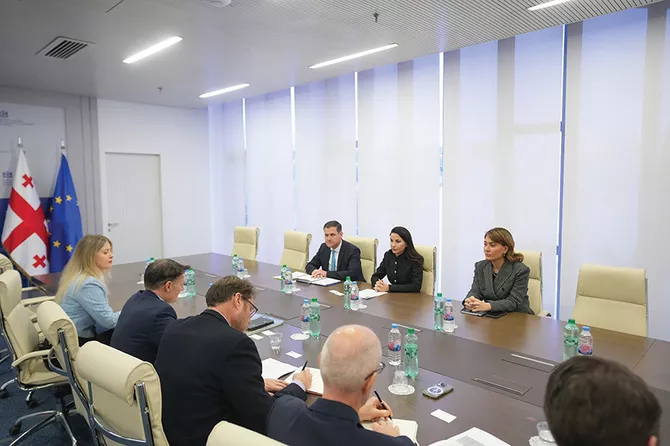
At the end of January 2026, Mariam Kvrivishvili, Georgia’s Minister of Economy and Sustainable Development, met with Didier Trebucq, the UN Resident Coordinator in Georgia, to review current economic cooperation and set priorities for future collaboration, The Caspian Post reports, citing Georgia Today.
Deputy Ministers Gennady Arveladze and Tamar Ioseliani also attended the meeting.
Driving Sustainable and Inclusive Growth
The discussions focused on sectors central to Georgia’s economic agenda: green energy, energy efficiency, digital transformation, transport and logistics, sustainable tourism, and education. Both sides emphasized aligning Georgia’s national development goals with the UN Sustainable Development Cooperation Framework 2026 to 2030, which provides a multiyear roadmap for UN support across the country.
The meeting explored cooperation in the green energy sector, particularly emerging technologies such as green hydrogen production
Didier Trebucq, a seasoned UN development coordinator, highlighted the importance of international cooperation in accelerating Georgia’s economic development. While the meeting report did not include a direct quote from him, his office has previously noted that the UN framework is a mechanism to help Georgia make faster progress towards sustainable development goals in ways that match national priorities.
Major Infrastructure Projects in Focus
Minister Kvrivishvili briefed Trebucq on ongoing and planned infrastructure projects that are key to Georgia’s regional integration strategy. The railway modernization project aims to increase freight capacity and improve efficiency along the Middle Corridor, a critical trade route linking Europe and Central Asia. The Anaklia Deep Sea Port is expected to handle up to one million TEUs annually by 2035, positioning Georgia as a major Black Sea logistics hub.
These initiatives are central to Georgia’s strategy of becoming a regional transit and logistics hub, leveraging its geographic position to facilitate trade between Europe, the South Caucasus, and Central Asia.
Green Energy and Regional Integration
The meeting also explored cooperation in the green energy sector, particularly emerging technologies such as green hydrogen production. Discussions included the strategic importance of integrating the South Caucasus energy system with the European Union energy network, a move that could enhance energy security and trade opportunities for the region.
Green energy development is not only an environmental priority but is increasingly viewed as a driver for economic diversification, job creation, and investment in innovative technologies.
New Opportunities Ahead
The January meeting highlights Georgia’s commitment to closer coordination with UN agencies and international partners to support sustainable development and infrastructure growth. By integrating green energy initiatives, transport modernization, and regional trade strategies, Georgia aims to position itself as a competitive economic hub at the crossroads of Europe and Asia.
As the country continues to implement the UN cooperation framework and major infrastructure projects, investors and development partners are likely to find new opportunities in transport, energy, and technology sectors in Georgia.
The January meeting. Source: FB
Investor Spotlight: Georgia’s Strategic Projects
Anaklia Deep Sea Port
Set to handle up to one million TEUs annually by 2035, the Anaklia port is poised to transform Georgia into a major Black Sea logistics hub. Its deep-water capacity and modern facilities aim to attract international shipping lines and facilitate faster, more efficient trade between Europe and Central Asia.
Middle Corridor Rail Network
The Middle Corridor, a growing trade route connecting Europe, the South Caucasus, and Central Asia, is getting a major boost from Georgia’s railway modernization project. Freight capacity is increasing, transit times are improving, and the corridor is expected to become a reliable alternative to traditional East-West routes.
Green Energy Initiatives
Georgia is investing in innovative green energy projects, including green hydrogen production and enhanced energy efficiency measures. Integrating the South Caucasus energy system with the European Union grid is expected to improve regional energy security while creating opportunities for investors in renewables and clean technologies.
Why It Matters for Investors
Together, these projects position Georgia as a strategic hub for trade, energy, and innovation in the region. For investors, the combination of growing infrastructure, regional connectivity, and a focus on sustainable development offers a mix of short-term returns and long-term growth potential.