During the seventh Consultative Meeting of Central Asian Heads of State held in Tashkent, Uzbekistan in mid-November, the announcement was made that Azerbaijan would join the format as a full-fledged participant. Until now, Azerbaijan had taken part in the gatherings as an honored guest.
“Today is truly a historic day for our brotherly nations. We are making a landmark decision to welcome the Republic of Azerbaijan as a full member of the Consultative Meetings,” Uzbekistan’s President Shavkat Mirziyoyev said at the forum. “Together, we will pave the way for creating a unified cooperation space, which will undoubtedly strengthen the strategic connectivity and resilience of both regions.”
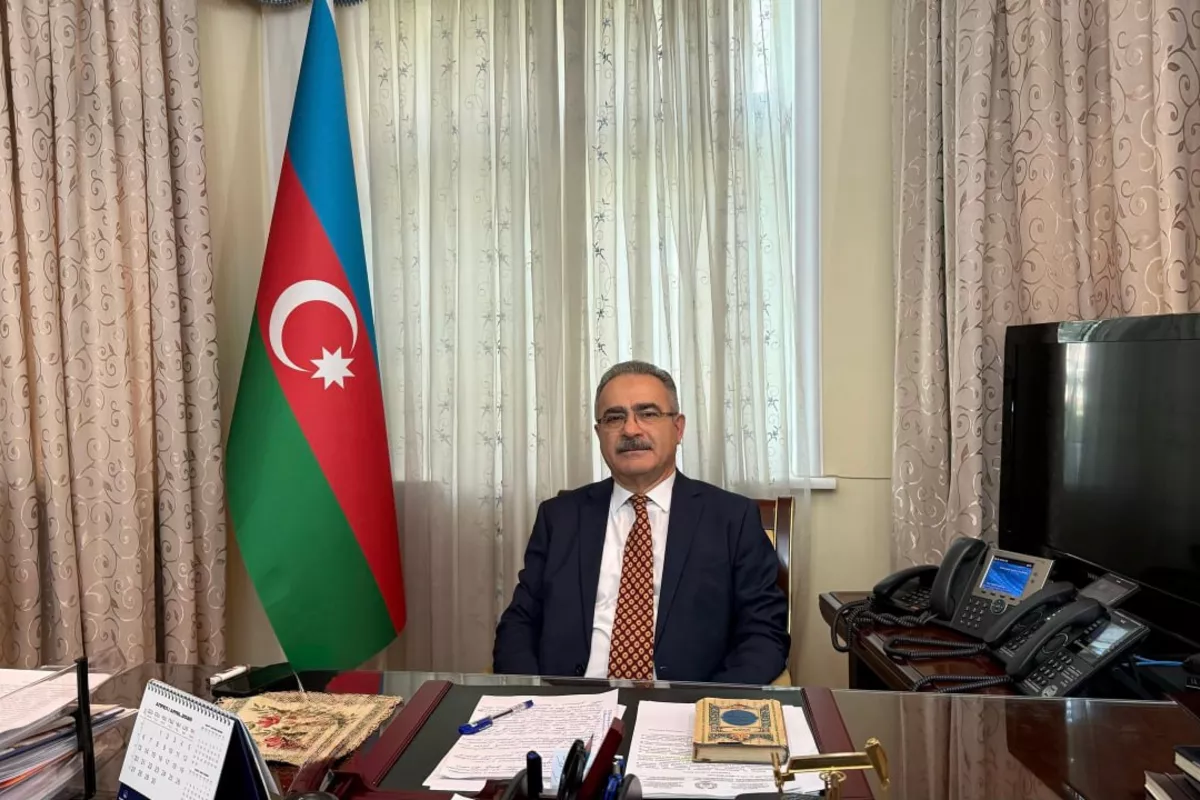
Azerbaijan’s Ambassador to Tajikistan, Alimirzamin Asgarov, shared insights into what this development means for the countries of the region - and for Azerbaijan itself, The Caspian Post reports via Tajik media.
- Azerbaijan officially became a full member of the Consultative Meetings of Central Asian Heads of State in November 2025. How do you comment on this historic development?
- First, I would note that the initiative to hold Consultative Meetings of Central Asian Heads of State was proposed by Uzbekistan’s President Shavkat Mirziyoyev in 2017. The first meeting took place in Kazakhstan, the second in Uzbekistan, the third in Turkmenistan, and the fourth in Kyrgyzstan. On September 14, 2023, the fifth Consultative Meeting was held in Dushanbe, Tajikistan.
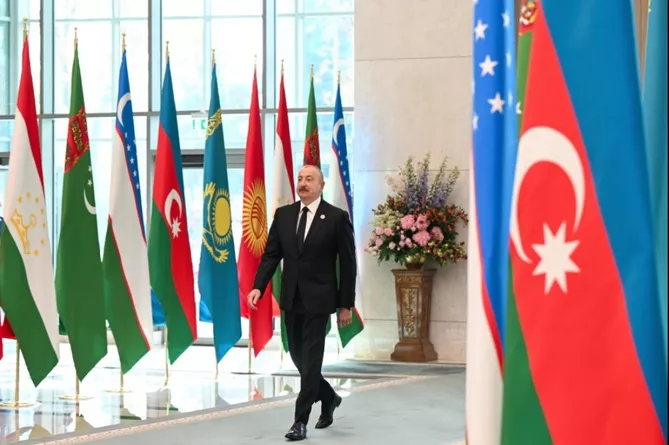
Photo: AZERTAC
Azerbaijan’s President Ilham Aliyev participated in the Dushanbe summit for the first time as an honored guest, invited by Tajikistan’s President Emomali Rahmon.
"Azerbaijan and the countries of Central Asia represent an integrated historical, cultural, geographical and geopolitical space of growing strategic significance. The Caspian Sea, which may, at first glance, appear to physically separate Azerbaijan from the countries of Central Asia, is actually a substantial factor in bringing these countries together. Today, the Caspian Sea is not a mere geographical notion as it is, above all, a symbol of the strategic unity, economic potential and historical cooperation of our peoples," President Aliyev emphasized.
Amid complex geopolitical developments, strengthening regional unity and mutual support has become essential. Further deepening cooperation and developing coordinated responses to security threats and sustainable development challenges are among the main objectives of this new era.
Our countries are united not only by geography but also by historical and cultural ties, shared religious and spiritual values, traditions, and customs. Azerbaijan places special importance on comprehensive cooperation with all countries of the region at the highest level. For more than 30 years, we have actively engaged in both bilateral and multilateral formats, supporting each other’s independence, sovereignty, and territorial integrity while actively developing economic relations.
Central Asia and Azerbaijan form a single historical, cultural, and geographical region with strategic significance in global politics, characterized by a growing economy, population, and geopolitical potential.
I believe that the strategic partnership and allied relations established between Azerbaijan and the Central Asian countries on a bilateral basis, along with active political dialogue and frequent mutual visits, play a key role in the success of this cooperation format.
Over the past three years, the heads of Central Asian states have made around 30 visits to Azerbaijan, while President Aliyev has visited these brotherly countries 13 times. During this period, Aliyev paid one state visit and two working visits to Tajikistan, and President Rahmon made one state visit and three working visits to Azerbaijan.
I am confident that this regional cooperation format will further strengthen the ties between our countries and peoples.
- Do you see any practical benefits from Azerbaijan’s cooperation with the Central Asian countries? If so, what exactly are they?
- Some political analysts try to downplay Azerbaijan’s accession to the Central Asian states’ cooperation format and minimize its significance. I strongly disagree. Thanks to the personal authority of President Aliyev, Azerbaijan has become a country capable of launching new and successful initiatives and holding a strong voice on the international stage.
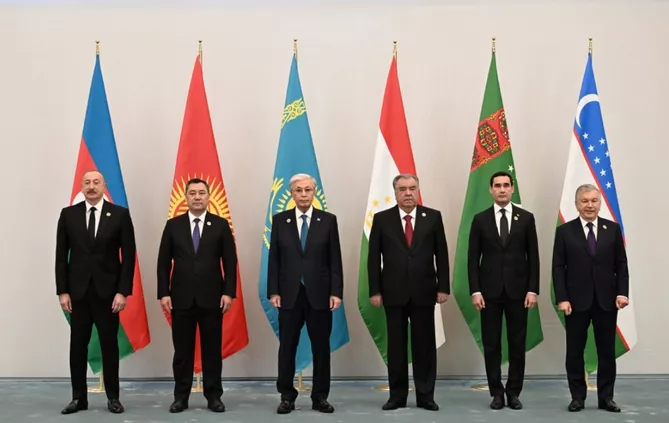
Photo: AZERTAC
Azerbaijan’s active role in the Non-Aligned Movement-of which it was chair for four years-as well as its participation in the Organization of Turkic States, the Organization of Islamic Cooperation, the Economic Cooperation Organization, and other international bodies has significantly expanded its ability to influence global processes.
President Aliyev has repeatedly emphasized the importance Azerbaijan places on relations with Central Asian countries. In a 2023 interview, he stated:
“The countries of Central Asia are developing, producing more goods for export and also buying more, therefore, routes across the Caspian become vital. Fortunately, we did our homework a while ago and prepared everything. Now it will be easier to expand. And the investments in the expansion of transportation infrastructure will be based on the figures of assumed cargo transportation.”
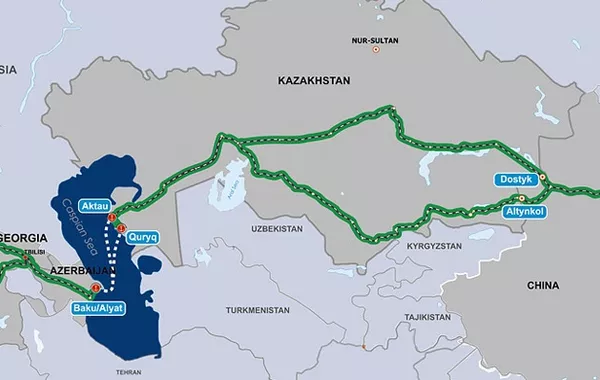
Azerbaijan’s current relations with Central Asia are no coincidence, and transport corridors play a key role. The development of the “Middle Corridor” (Trans-Caspian International Transport Route, TITR) is crucial for Central Asia, as efficient access to European markets is a regional priority.
Key areas of cooperation include developing diversified transport and logistics infrastructure and expanding transit capabilities. Azerbaijan serves as a major transit country for Central Asia within the Middle Corridor. Over the past years, the increase in export capacity and shipments along this route has taken on strategic significance.
The Middle Corridor, connecting China, Central Asia, Azerbaijan, Türkiye, and Europe, has become more than infrastructure-it is a geopolitical corridor, and Azerbaijan’s role is decisive. Shorter transit routes bring regions closer together. Modern transport infrastructure in Azerbaijan-including the trading fleet, the Alat International Trade Port (with a projected capacity of 25 million tons), the Baku-Tbilisi-Kars railway, and nine international airports-strengthens Azerbaijan’s position as a global transport and logistics hub.
Additionally, the opening of the Zangezur Corridor will benefit all Central Asian countries. The construction of this corridor in Azerbaijan is nearing completion, with an initial capacity of 15 million tons, becoming a main artery of the Middle Corridor.
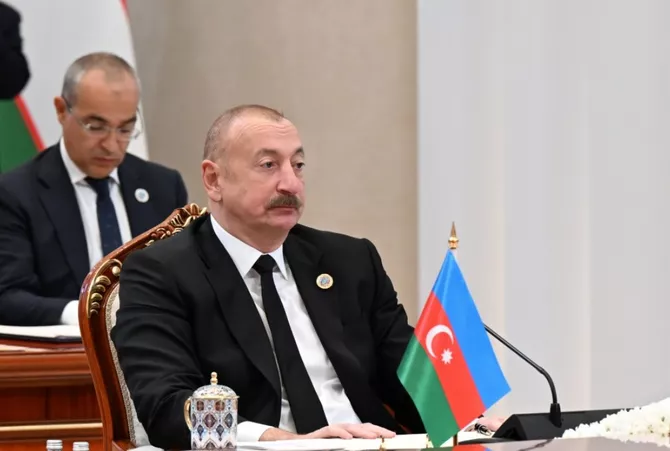
Photo: AZERTAC
Azerbaijan plays a vital role in ensuring transport security and stable access to international markets. Its developed economy encourages regional countries to expand trade and cooperation in multiple sectors.
In recent years, regional cooperation has been emphasized, supporting economic growth and sustainable development while strengthening economic security. Energy cooperation is also broadening. Beyond traditional oil exports, opportunities for green energy exports to Europe through Azerbaijan are being explored. Tajikistan and other Central Asian states possess significant renewable energy potential, which can enhance regional energy security and diversify exports.
All of this highlights the vast potential of Azerbaijan-Central Asia relations. Azerbaijan’s new status as a full participant will further expand its role in regional processes, including all levels of meetings, intergovernmental mechanisms, parliamentary forums, and joint state and civil society events. This will strengthen political dialogue and inject new momentum into economic, transport-logistics, energy, digital, humanitarian, and other areas of cooperation.
For Tajikistan and other regional countries (Kyrgyzstan, Uzbekistan, Kazakhstan, Turkmenistan), Azerbaijan’s accession offers:
Access to new transit routes, easier market access via the Caspian and Caucasus, participation in major regional projects, and diversified trade and economic links.
Opportunities to deepen cultural, educational, and humanitarian ties.
Potential growth of regional influence and autonomy.
Mutual benefits of this cooperation format include:
Strengthening the Middle Corridor through Central Asia → Baku → Caucasus → Türkiye → Europe.
Creating a joint investment space.
Energy cooperation: gas, green energy, hydrogen, power system integration.
Security collaboration: borders, cybersecurity, counter-extremism.
Building a “Caspian-Central Asian Digital Space”: IT clusters, digital corridors, data centers, technology exchange.
Establishing a formal “Central Asian Community” with a Secretariat.
Regarding some political analysts’ comments, I would say that underestimating the significance of this event reflects, at minimum, a limited understanding of geopolitics.
- How would you describe the current state of bilateral relations between Azerbaijan and Tajikistan?
- Azerbaijan was one of the first countries to establish diplomatic relations with Tajikistan. Diplomatic ties were officially established on May 29, 1992. A significant milestone in the history of bilateral relations was the opening of Azerbaijan’s diplomatic mission in Dushanbe on September 22, 2007, followed by Tajikistan’s mission in Baku on March 23, 2008.
The relationship between Azerbaijan and Tajikistan is rooted in the shared will of their peoples, who have a long history of cooperation, friendship, and joint development. Today, the intergovernmental relations between the two countries have reached their highest level. The close and trusting friendship between President Aliyev and President Rahmon plays a pivotal role in fostering these ties.
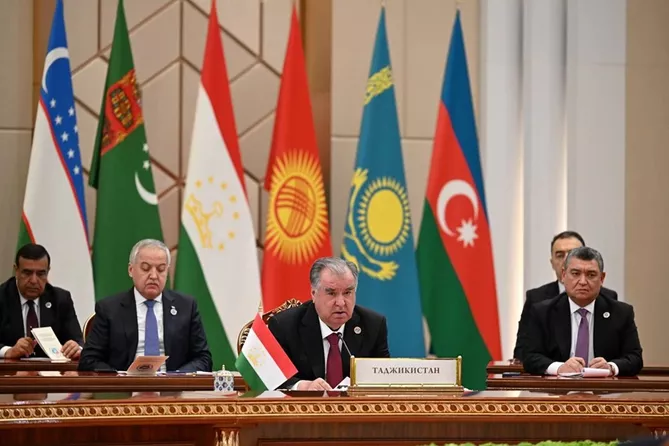
Photo: AZERTAC
Azerbaijan places great importance on developing comprehensive relations with Tajikistan based on mutual trust and respect, a shared interest in deepening bilateral cooperation, and common positions on numerous global and regional issues. During the state visit of the President of Tajikistan to Azerbaijan, the two countries signed a Declaration of Strategic Partnership, reflecting the spirit of their relationship, the will of their peoples, and encompassing virtually all spheres of cooperation. This declaration is a testament to the strong and enduring friendship between Azerbaijan and Tajikistan.
The strategic partnership between the two nations will further strengthen the bond between their peoples, reinforcing friendship and fraternal ties.
Our peoples are united by shared roots, traditions, and spiritual values.
- How would you describe the cultural and humanitarian cooperation between Azerbaijan and Tajikistan?
- In addition to their high-level political relations, Azerbaijan and Tajikistan continue to expand cooperation in tourism and culture.
From May 19 to 22, 2025, Azerbaijan Cultural Days were held in Dushanbe and Dangara. The Azerbaijani delegation, led by the Minister of Culture, included artists, writers, creative collectives, and media representatives. Concerts were organized, and the exhibition “National Heritage Living in the Pearls of Azerbaijani Art” was opened. A photo exhibition by the Azerbaijan Photographers’ Union, “Karabakh: Memory of National Heritage,” was also showcased.
During the Tajik president’s official visit to Azerbaijan from May 20 to 24, 2024, Tajik Cultural Days took place in Baku and Ganja. Visitors explored painting exhibitions, handicrafts, traditional costumes, and other works by Tajik artists and craftsmen. These events allowed Azerbaijani audiences to experience Tajikistan’s rich history, culture, and traditions.
These cultural initiatives reflect the shared desire of both peoples to exchange their heritage, deepen mutual understanding, and enrich each other’s spiritual and cultural landscapes.
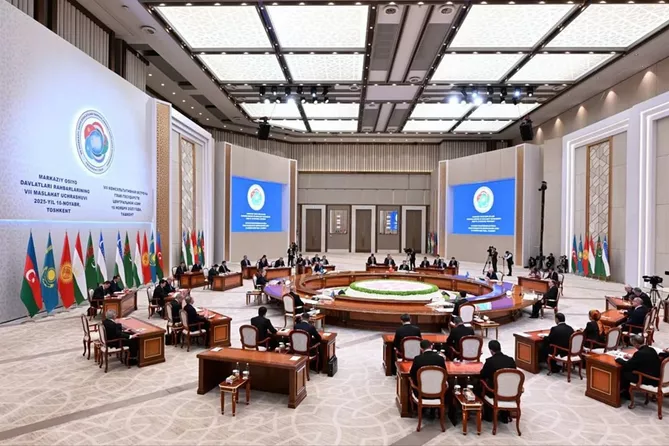
Photo: AZERTAC
In recent years, parliamentary relations have also strengthened. On March 3-4, 2022, Rustami Emomali, Chairman of the Majlisi Milli and Mayor of Dushanbe, visited Azerbaijan. During the visit, agreements were signed on inter-parliamentary cooperation and the establishment of sister city relations between Baku and Dushanbe. Today, sister-city partnerships also exist between Ganja - Khujand and Shusha - Isfara.
For centuries, Azerbaijan and Tajikistan have been connected by geographic proximity, shared roots, and cultural and spiritual values. This historic closeness forms a unique foundation for current and future cooperation across politics, economy, social, and humanitarian spheres.
Tourism cooperation is also expanding. Direct flights between Baku and Dushanbe have been especially important, with Azerbaijan Airlines (AZAL) operating three weekly flights on this route since May 30, 2023. These flights have given a significant boost to trade, investment, tourism, and cultural and humanitarian ties between the two brotherly nations.