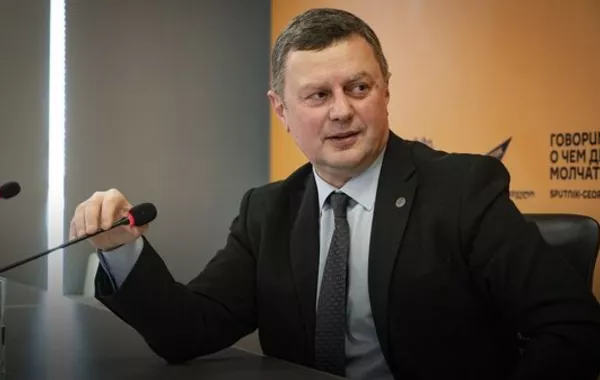
The February 6 visit of Iran’s Defence Minister Aziz Nasirzadeh to Baku signalled a cautious reset in Azerbaijan-Iran relations. Triggered by recent contacts between Ilham Aliyev and Masoud Pezeshkian, the talks went beyond formal military cooperation. Coming shortly after high-level Israeli diplomacy, the visit underscored Azerbaijan’s multi-vector foreign policy and a shared effort to replace confrontation with pragmatic dialogue and regional stability. To explore the issue in greater depth, The Caspian Post interviewed Georgian Iranologist Vasily Papava.
- Mr Papava, what lies behind the recent visit of Iran’s Defence Minister Aziz Nasirzadeh to Azerbaijan?
- The visit of Iran’s Defense Minister Aziz Nasirzadeh to Azerbaijan on 6 February 2026 clearly demonstrated that relations between Baku and Tehran are entering a new phase. After several years of mutual grievances, both sides have decided to shift towards open dialogue. Officially, the ministers discussed military cooperation and security, but behind closed doors far deeper issues related to the regional balance of power were addressed.
Nasirzadeh’s trip was a direct result of recent communication between Presidents Masoud Pezeshkian and Ilham Aliyev.
Particular attention should be paid to an unusual coincidence of schedules: shortly before the Iranian minister’s visit, Israeli Foreign Minister Gideon Sa’ar travelled to Baku. This sequence of diplomatic meetings reflects the natural dynamics of Azerbaijan’s multi-vector foreign policy. Sa’ar’s visit focused on the development of long-term economic and technological ties, including cooperation in energy and agriculture, which is part of Baku’s standard international agenda. Holding talks consecutively with different partners allows Azerbaijan to maintain transparency in its intentions and to demonstrate that its bilateral relations, whether with Israel or Iran, are based on national interests and are not directed against third countries.
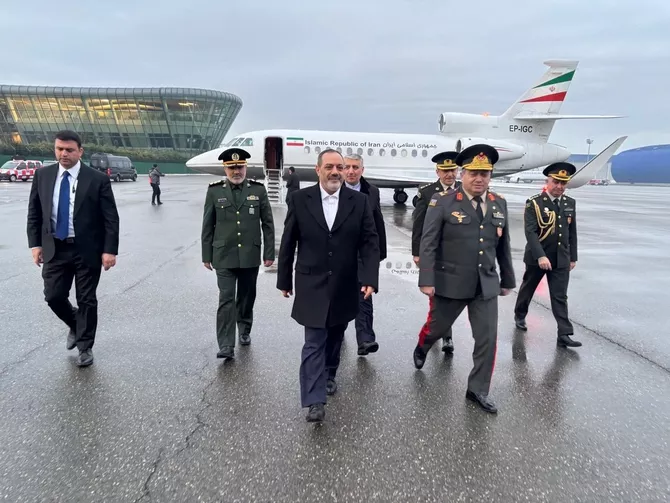
Photo: Azertac
We are now witnessing both countries establish new, predictable rules of engagement. President Pezeshkian’s new team is choosing a path of pragmatism and calm neighbourly relations. Since his visit to Baku last year, references to “brotherhood” have become increasingly frequent. Both sides are trying to definitively move beyond a period marked by loud accusations and military drills near borders, which had hindered the implementation of major joint projects and the strengthening of regional stability.
Ultimately, Nasirzadeh’s visit represents an attempt to consolidate an atmosphere of trust. The parties aim to turn the region into a zone of mutual benefit. Although long-standing concerns over ties with third countries do not disappear overnight, such meetings help replace suspicion with clear agreements, making the situation in the Caucasus significantly more stable.
- How do you assess the current situation in Iran following the decline of recent protests?
- The situation in Iran after the large-scale protests that took place in late December 2025 and early January 2026 is gradually stabilising. The authorities have managed to restore order on the streets, but the underlying causes of discontent - economic hardship and social tension - have not disappeared.
Everything began on 28 December 2025, when the rial sharply depreciated and prices for food and basic goods surged. Market traders were the first to close their shops, but protests soon spread across the country. By mid-January, the active phase of demonstrations subsided following decisive actions by security forces, including a nationwide internet shutdown starting on 8 January and the detention of participants.
The issue of human casualties remains one of the most controversial and politicised aspects of reporting on events in Iran, as the absence of unified independent monitoring has led to significant discrepancies in figures. Official statements from Tehran cite 3,117 deaths, emphasising that a substantial portion of these were members of security and law enforcement agencies killed in clashes with armed groups.
At the same time, international bodies, including human rights organisations and relevant UN committees, rely on different methods of data collection and verification. Their reports estimate confirmed fatalities in the range of 5,000 to 7,000, while more radical assessments suggest even higher numbers. This wide gap is explained not only by the difficulty of accessing reliable information on the ground, but also by methodological differences: what one side classifies as lawful actions to maintain order, the other views as excessive use of force.
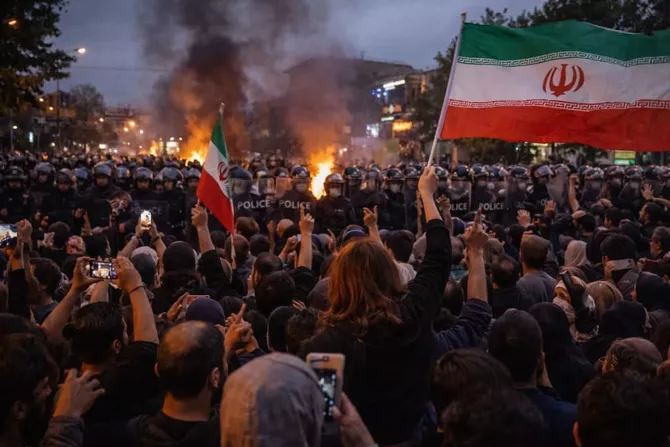
Photo credit: Reuters
A similar degree of uncertainty surrounds the number of detainees. Estimates range from 27,000 to 50,000 people. It is important to note that these figures are highly fluid, as they include both individuals temporarily detained for identification and those formally charged. This wide statistical range once again underscores how difficult it is to obtain an objective picture amid intense information confrontation.
Today, the country has entered a phase of restoring control. Legal reviews are under way, digital monitoring is being strengthened, and the authorities are attempting to stabilise the economy. The government has introduced some social support measures and revised the subsidy system, providing temporary relief, but sanctions and high inflation continue to weigh heavily on household budgets.
Politically, Iran’s leadership is acting in a consolidated manner. Security forces have demonstrated discipline, and no open disagreements are visible within the government. Nevertheless, society is still processing the aftermath of recent upheavals. Many experts believe the country is now in a lull, where open discontent has given way to cautious expectations of change. Whether this stability will last largely depends on whether the authorities can address rising prices and unemployment in the near future.
- The United States and Iran have concluded talks on Iran’s nuclear programme. How likely is it that these negotiations will lead to a reduction in tensions around Iran?
- The recent talks between the United States and Iran held in Oman on 6 February sent an important signal that dialogue has resumed, even though they did not produce immediate results. Iranian Foreign Minister Abbas Araghchi described the meeting as “a good start” and noted the constructive attitude of both sides. US President Donald Trump also characterised the talks as “very good” and said that the next round could take place as early as the beginning of the following week. Although no documents were signed, the very fact that mediated discussions on the nuclear programme resumed after a long pause is a significant step forward.
The likelihood that this will quickly and fully ease tensions remains low. The main positive factor is that both sides clearly wish to avoid a military scenario. Iran urgently needs sanctions relief to revive its economy, while the United States seeks to limit Tehran’s nuclear activities through diplomacy. Mediation by Oman and support from neighbours such as Saudi Arabia and Türkiye create a solid foundation for further meetings.
However, serious disagreements persist. The United States insists on strict inspections of nuclear facilities and demands major concessions from Iran, while Tehran firmly asserts its right to peaceful nuclear energy and refuses to discuss its missile programme. In addition, Washington continues its pressure policy alongside negotiations: Donald Trump has warned of “serious consequences” if talks fail and maintains a significant military presence in the region.
The most likely near-term scenario is a series of protracted negotiation rounds. The sides will exchange proposals and test the limits of possible concessions. This will help reduce rhetorical intensity and prevent new clashes, but it will not result in immediate sanctions relief. For genuine de-escalation, Iran and the United States will have to find a complex compromise, such as limiting uranium enrichment levels in exchange for the partial unfreezing of Iranian assets.
Overall, the current process functions as a “safety valve” that buys time and avoids a slide towards confrontation. Real tension reduction will begin only when concrete figures and timelines for mutual commitments emerge. For now, the parties have agreed to continue talking, which in itself is a positive outcome after a period of acute confrontation.
- Alongside negotiations, anti-Iran rhetoric from US President Donald Trump continues. How likely is a military strike against Iran?
- Despite the resumption of dialogue in Oman, President Trump’s rhetoric towards Tehran remains deliberately tough. In a recent interview with NBC News, Trump stated that Iran’s leader Ali Khamenei “should be very worried.” He emphasised that while he is open to negotiations, the absence of a concrete nuclear deal could lead to “very serious” consequences. Such statements, reinforced by the presence of the aircraft carrier USS Abraham Lincoln in the region, create an atmosphere of strong pressure, which the White House believes will make Iran more accommodating.
Experts assess the likelihood of an actual military confrontation in the near term as moderate. It is important to understand that diplomacy and threats are currently proceeding in parallel. On the one hand, both countries have already agreed to a second round of talks next week, calling the first contact a “positive start,” which suggests that compromise remains the priority. On the other hand, last year’s precedent of strikes on Iranian nuclear facilities shows that the Trump administration is prepared for decisive action if it concludes that negotiations have stalled. It is also worth recalling that during the “12-day war,” the United States officially advocated a diplomatic solution but then abruptly entered the conflict on Israel’s side. This experience encourages caution when interpreting Washington’s current peace signals.
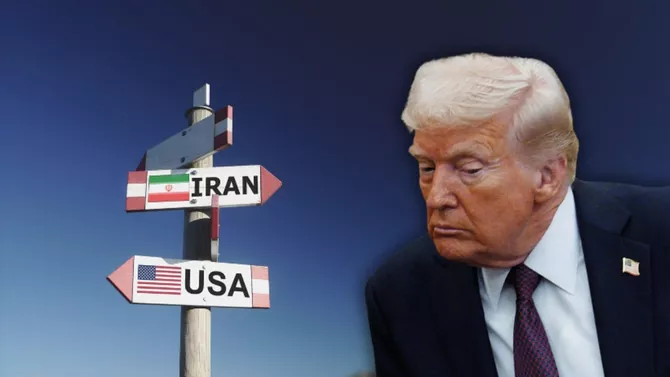
Photo credit: jpost
The main risks now stem from differing expectations. Washington wants to discuss not only nuclear issues but also Iran’s missile programme and regional influence. Tehran considers these matters integral to its national security and refuses to put them on the table. If the sides fail to find common ground in the coming weeks, tensions could rise again. In that case, the likelihood of targeted strikes on military facilities would increase, although a full-scale war would still not serve either side’s interests.
Overall, the situation resembles a complex diplomatic game in which strong statements are used as bargaining tools. The military option remains on the table as a last resort, but the current contacts in Muscat offer hope that escalation can be avoided. Further developments will depend on whether delegations can move from mutual demands to concrete proposals next week, such as partial sanctions relief in exchange for limits on nuclear activities.
- What scenarios for state development are possible in the event of a change of the ruling regime in Iran?
- Discussion of Iran’s future system of governance requires a balanced analysis of all existing development vectors, as contemporary Iranian society is a complex mix of diverse political expectations. Alongside debates on reforming republican institutions, there is also interest in the country’s monarchical legacy. These sentiments are present among both older generations and some younger people. For the former, they are linked to memories of a period of economic stability, while for those born after 1979, pre-revolutionary Iran often appears as a secular alternative to the current system, with greater emphasis on personal freedoms and integration into the global community.
One frequently discussed transformation scenario involves a shift towards a secular governance model in which military structures and technocrats could play a leading role. Under this option, the political influence of the clergy would be significantly reduced in favour of a pragmatic state apparatus. The main objectives of such a government would be to stabilise the socio-economic situation and seek compromises on the international stage. This path implies maintaining centralised control while offering society de-ideologisation of private life and prioritising national interests over religious doctrine.
The presence of supporters of the monarchical idea remains an objective factor in the domestic agenda. Calls for restoring a constitutional monarchy are sometimes justified by the need to return to a secular state framework and to draw on the historical modernisation experience of the Pahlavi dynasty. Proponents point to a period of active industrial growth and high international standing in the 20th century, believing that historical continuity could help strengthen national unity during a power transition.
Nevertheless, any large-scale restructuring carries risks for internal stability. Weakening traditional levers of governance could exacerbate regional development challenges in Iran’s ethnically diverse provinces. Despite a centuries-long history of statehood underpinning national cohesion, any transition period would inevitably require the construction of a new system of checks and balances between the centre and the regions.
Ultimately, the sustainability of any future model of statehood will depend on its ability to respond to the population’s core demands. Regardless of the form of governance - whether increased military influence, restoration of monarchical institutions, or other arrangements - the key expectations remain improved living standards and expanded personal freedoms. Iran is searching for a unique balance that would preserve internal order while implementing long-overdue social transformation.