New Proposal Envisions Kazakhstan's Role in Iranian Uranium Transfer
The critical question of how to handle Iran’s enriched uranium stockpile will be addressed in a long-term peace agreement between the United States and Iran, to be negotiated over the 60 days following the signing of an initial memorandum of understanding (MOU).
It remains unclear whether the Trump administration will insist on the destruction, export, or downblending of the stockpile in Iran. The latter option typically involves a reversible process that dilutes the material’s purity level, The Caspian Post reports via the Foundation for Defense of Democracies.
Dilution on Iranian soil would allow Tehran to retain the material, at least temporarily, under U.S. and/or International Atomic Energy Agency (IAEA) monitoring. After dilution, it is unclear whether Iran would be allowed to keep the stockpile for such purposes as fabricating fuel rods for civil nuclear power or research reactors.
Downblending inside Iran carries significant reversibility and proliferation risks while introducing an unnecessary intermediate step toward fully removing the material. Any arrangement in which the United States assists in retrieving and storing the stockpile at an Iranian facility could also give the regime a subsequent opportunity to seize and conceal the material.
Retrieving the Enriched Uranium
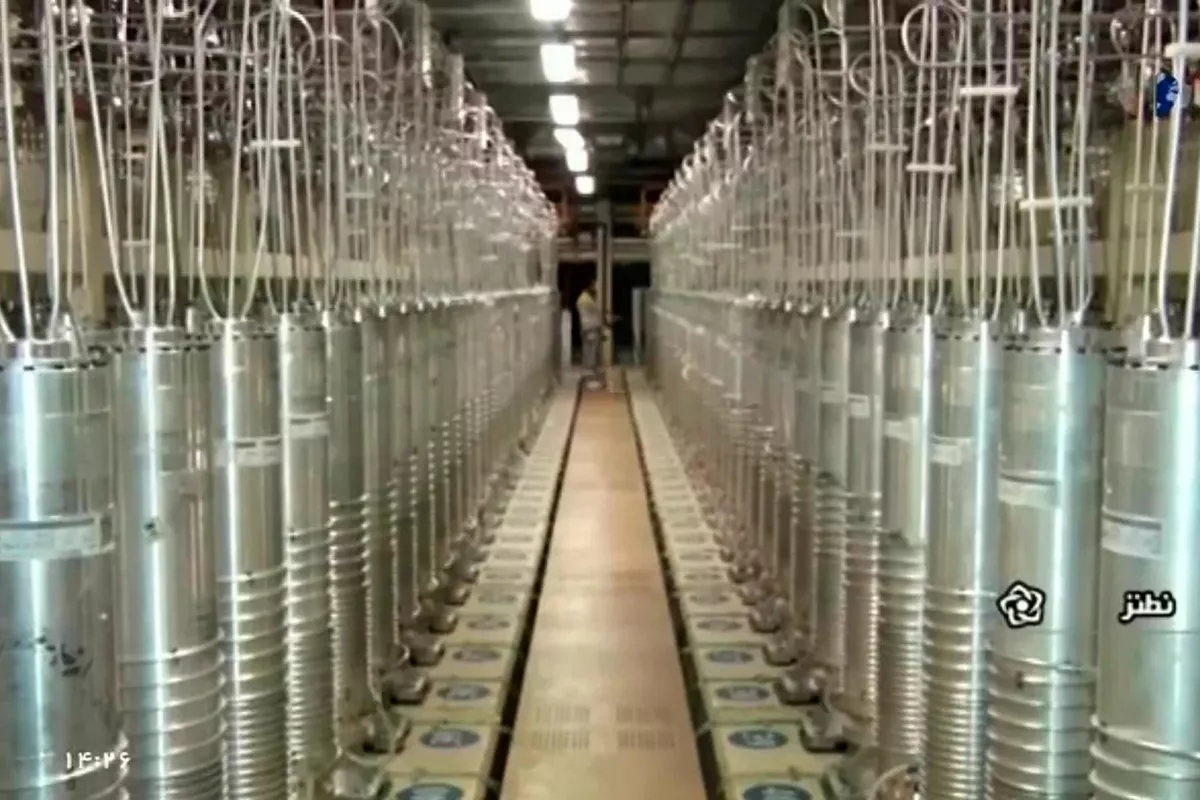
According to reporting by the IAEA and the Institute for Science and International Security, Iran’s roughly 9,000 kilograms of enriched uranium in uranium hexafluoride (UF6) form are likely entombed at three sites struck by the United States in June 2025: the Fordow enrichment facility, Natanz enrichment facility or associated tunnels, and a tunnel complex at Esfahan.
More than two-thirds of Tehran’s stock of 440 kilograms - roughly 11 nuclear weapons’ worth - of 60 percent highly enriched uranium (HEU) were likely stored at Esfahan. How much material survived the strikes remains unknown. The United States and Israel have been monitoring the sites since the strikes and have warned Iran against attempting to access the material. Limited access-prevention strikes were also conducted at Natanz during follow-on operations in March 2026.
If Iran permits retrieval of the material under a long-term deal, the operation would likely require military teams and hazardous-material specialists supported by heavy excavation equipment flown in for the task. If Iran secures U.S. agreement to downblend the material inside the country once it is recovered, Tehran may use downblending capabilities it retains - or a usable facility - at Natanz, where such capabilities are typically co-located with enrichment plants.
Proliferation Implications of Dilution
Most dilution processes aim to leave material intact for re-enrichment or fabrication into fuel rods. This involves mixing depleted, natural, or low-enriched uranium (LEU) UF6 with the enriched material to reduce the concentration of uranium-235.
Even a U.S. requirement to downblend to 0.7 percent U-235 (natural uranium) or even 3-5 percent LEU could be problematic, as an LEU stockpile in Iran would position the regime to enrich it further relatively quickly. LEU already accounts for roughly 70 percent of the technical effort required to reach weapons-grade uranium. Moreover, a stock of natural uranium in UF6 form would remain vulnerable to seizure and concealment by the regime, particularly since Iran currently lacks functioning uranium conversion facilities capable of producing new UF6.
Destruction or Export Is the Soundest Policy
The Trump administration should reject Iran’s request to downblend or maintain enriched material in-country under a long-term deal. The request appears to be a deliberate gambit aimed at prolonging Tehran’s access to the material while minimizing concessions.
Such a stockpile would also draw unfavorable comparisons to the Obama administration’s 2015 Iran deal, which permitted Iran to retain a stockpile of up to 300 kilograms of LEU.
The safest option is the immediate destruction of the material upon retrieval. The next most favorable option is packaging and exporting it to the IAEA fuel bank in Kazakhstan for safekeeping. From there, the IAEA could authorize limited transfers of the material to Russia, which already fabricates fuel rods for Iran’s Bushehr reactor, based on Iran’s legitimate civil needs such as Tehran’s remaining research and power reactors.
By Andrea Stricker