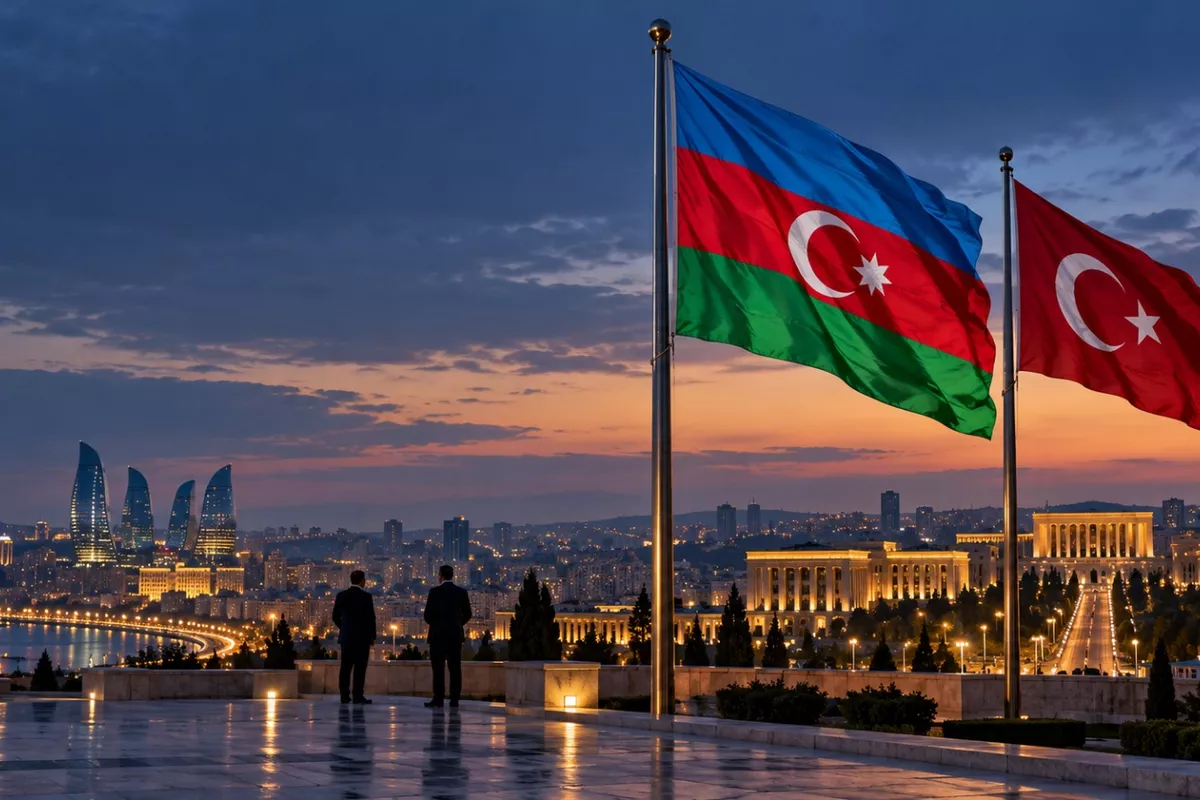
The current tension between Baku and Ankara over the issue of the hijab in Azerbaijani schools has become more than a dispute over dress or educational regulations. It has clearly exposed the limits of the well-known formula: “one nation, two states.”
That formula still reflects the profound historical, linguistic and cultural affinity between Azerbaijan and Türkiye. Yet it does not alter an obvious fact: under Recep Tayyip Erdoğan, the two countries have developed on the basis of fundamentally different political and state models. They are united by ethnic kinship, strategic interests and shared historical memory, but they have different views on the role of religion in society, the limits of state intervention and the very logic of national development.
For Azerbaijan, secularism is a foundation of statehood. Secular nationalism and the separation of religion from the state are not simply a legacy of the Soviet period, as is sometimes claimed. These principles were established during the years of the First Azerbaijan Republic, from 1918 to 1920. It was then that Azerbaijan developed one of the most progressive models of statehood in the Muslim world for its time, including in the sphere of women’s political and social rights.
In other words, secularism lies at the heart of Azerbaijan’s national project. It was not imported from outside and is not a temporary political construct. It is a historical choice that has endured changes of era, the collapse of empires, the Soviet period and the restoration of independence.
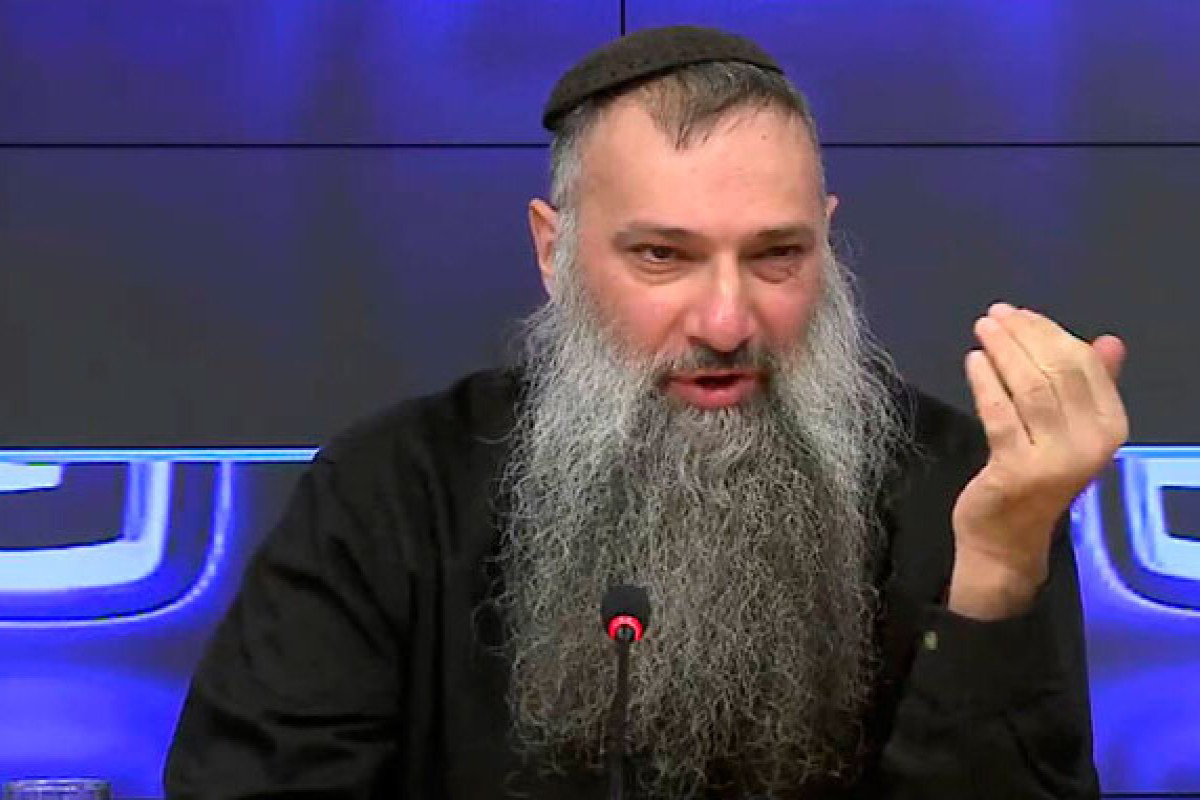
This issue also carries particular domestic significance for Azerbaijan. The country is home not only to Shiites but also to Sunnis-both ethnic Azerbaijanis and representatives of North Caucasian peoples, including Lezgins and Avars. It also has a sizeable Orthodox Russian community and an active Jewish community. In such an environment, turning religion into an instrument of state-building would inevitably create dangerous fault lines between Shiites and Sunnis, as well as among different ethnic and religious groups.
This is precisely why Azerbaijan’s political elite has deliberately chosen a model in which the state maintains a distance from religion. This course was laid down during the First Republic and remains strategically important today. It is particularly relevant given the Iranian factor and Tehran’s efforts to expand its religious and political influence in Azerbaijan.
For Baku, secularism is not an abstract ideological principle. It is a matter of sovereignty, domestic stability and national security. A state that allows external religious centres to influence its social and political life gradually loses the ability to set its own agenda.
Türkiye under Erdoğan, by contrast, has moved towards a marked strengthening of religion’s role in public and political life. In the Turkish political context, the hijab carries a particular symbolic weight. For many conservative segments of society, it is seen as a symbol of overcoming the restrictions that existed during the era of strict Kemalist secularism.
But the issue is, of course, not limited to the hijab. Erdoğan’s political project has been built on a combination of Turkish nationalism and Islamic identity. The formula “one nation, two states” primarily reflects the ethnic and national affinity between Azerbaijan and Türkiye. Yet the current Turkish leadership views the country not only as a centre of the Turkic world, but also as an influential part of the Islamic world. Religious solidarity often serves as an important component of both domestic and foreign policy.
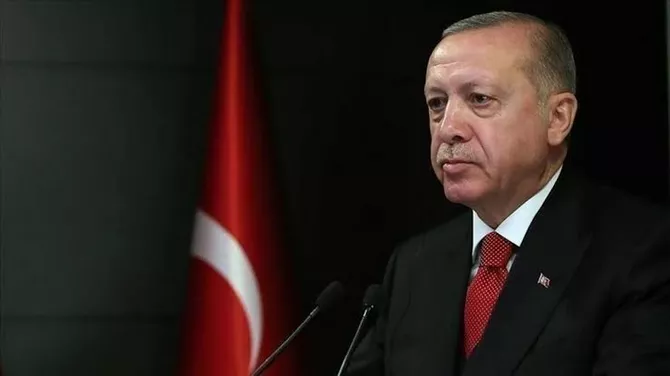
photo: getty images
Within this framework, there is also a growing desire among parts of Türkiye’s conservative society to see Islamic norms promoted more actively beyond Türkiye itself-in states perceived as close allies or as part of a common cultural space.
The electoral nature of this policy should not be overlooked either. From the outset, Erdoğan has relied on religiously conservative segments of society. Even when Türkiye’s leadership acts on pragmatic considerations in particular matters, it cannot entirely disregard the expectations of its political base. That base often adopts more hard-line positions, advocating not only the further Islamisation of Türkiye but also a stronger Islamic agenda across the wider region.
The current incident has therefore once again brought to light a latent tension that has long existed between two fundamentally different models of statehood: the Azerbaijani and the Turkish. The formula “one nation, two states” reflects historical, linguistic and cultural proximity. But it does not eliminate differences in political priorities, social organisation and perceptions of religion’s role.
The ethnic dimension of this discussion usually remains in the background. Recep Tayyip Erdoğan has repeatedly spoken of family roots connected to the Black Sea region. More important, however, is the fact that his political identity and worldview were shaped primarily within a conservative Islamic environment. For the current Turkish leadership, Islamic solidarity is therefore often no less important-and on certain issues, perhaps more important-than Turkic integration itself.
Azerbaijan, meanwhile, has built its state model on different foundations: secular nationalism, a clear distance between the state and religion, strong institutions and an independent foreign policy. This difference remained largely unspoken for a long time, but it has always existed and has periodically come to the surface.
One of the most revealing episodes was Erdoğan’s statement that Türkiye had “liberated Karabakh.” Such wording is highly sensitive for Azerbaijan. Türkiye’s military and political support during the war was important, but the victory was achieved first and foremost by the Azerbaijani state and the Azerbaijani Armed Forces.
It was Baku that spent decades strengthening the economy, building a modern military, recovering its territories and demonstrating its ability to defend its national interests independently. The Karabakh victory became a central element of Azerbaijan’s national idea and foreign-policy positioning.
Its core meaning is that Azerbaijan is not an object of another power’s policy and not a dependent ally, but an independent state capable of defending itself and achieving strategic goals. This is why claims that Karabakh was liberated by Türkiye alone are perceived in Baku as more than an imprecise formulation. They can be interpreted as an attempt to cast doubt on Azerbaijan’s independence and to portray it as a country acting exclusively in Türkiye’s wake.
That would directly contradict the model Azerbaijan consistently upholds in its relations with Russia, Iran, the West, Central Asian countries and other partners. Baku seeks a close alliance with Ankara, but not a relationship of dependence.
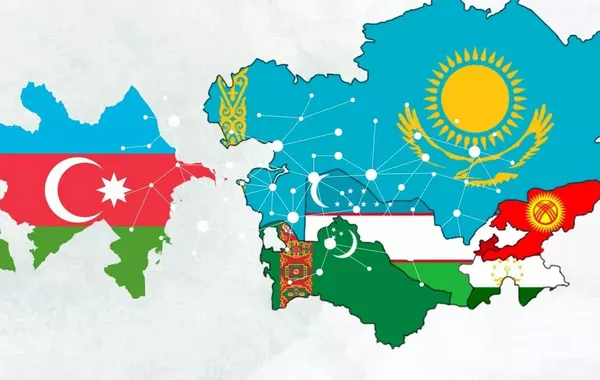
There is also a broader context: competition between different visions of the Turkic world. For Ankara, Azerbaijan is a crucial gateway to Central Asia. Nearly all Turkic states in the region share a common Soviet historical experience and, broadly speaking, a secular model closer to Azerbaijan’s. This gives Baku unique political and cultural capital in its relations with Central Asia.
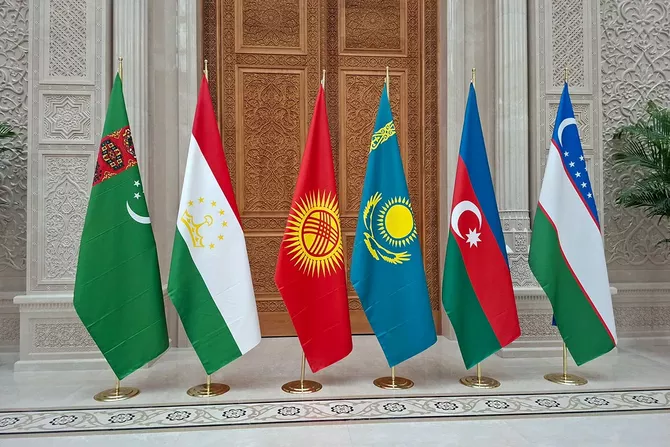
photo: getty images
Türkiye cannot build a comprehensive Turkic policy without Azerbaijan’s participation and consent. In this sense, Baku is not merely Ankara’s ally but an independent centre of influence. This, too, may generate latent rivalry, particularly over which ideological model should shape the future of the Turkic space: a secular, nationally oriented one or a more religiously political one.
Azerbaijan has a significant advantage in this competition. It not only geographically connects Türkiye with Central Asia, but is also politically and historically familiar to the region. Its experience of state-building, its approach to religion, its post-Soviet institutional tradition and its commitment to a multi-vector foreign policy are far closer to many Central Asian capitals than the ideological models emerging within contemporary Türkiye.
A separate factor is Azerbaijan’s relationship with Israel. For Baku, this relationship is not limited to military-technical cooperation. Its ties with Israel are an important element of foreign-policy diversification, security, technology and defence cooperation. Azerbaijan consciously does not want to depend on any single centre of power, including its closest ally.
This logic is entirely understandable. A state that depends completely on one supplier of weapons, technology or political support inevitably becomes more vulnerable. Cooperation with Israel enables Azerbaijan to preserve room for independent manoeuvre in its relations with Ankara, Moscow, Tehran and other external actors.
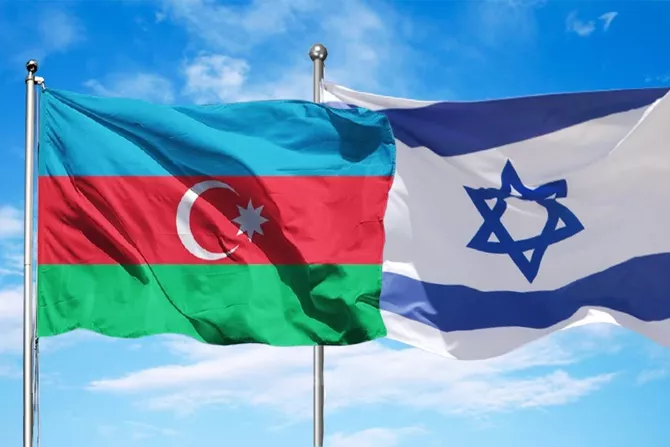
photo: getty images
For parts of Türkiye’s conservative camp, Baku’s close ties with Israel may be a source of irritation-particularly amid the emotionally charged political agenda surrounding the Middle East. For Azerbaijan, however, the choice in favour of strategic cooperation with Israel is driven not by ideology but by state interests: security, technology, defence and the need to preserve freedom of foreign-policy choice.
There are likely other, less visible economic and political contradictions as well. Azerbaijan has substantial investments in Türkiye and maintains extensive ties with Turkish elites, business circles and media outlets. Baku has long learned to develop its own channels of influence abroad, including in Türkiye. This makes bilateral relations more complex than they are usually portrayed in public rhetoric.
Behind the outward image of brotherhood lies real politics-competing interests, elite influence, struggles over the information agenda and differing views of regional leadership. This is normal in relations between two strong states. What would be abnormal would be to deny that such differences exist.
Finally, the domestic Turkish factor should not be excluded. Competition among different groups within Erdoğan’s circle is intensifying, while the question of future political succession is gradually becoming more relevant. Some forces may be interested in a tougher Islamic agenda and in applying demonstrative pressure on allies, including Azerbaijan.
At the same time, Devlet Bahçeli’s position shows that not all of Türkiye’s political elite support a confrontational approach towards Baku. For Türkiye’s nationalist circles, Azerbaijan remains a vital ally, without which it is difficult to imagine either a sustainable Turkish policy in the South Caucasus or Ankara’s long-term position in Central Asia and the Turkic world.
Judging by the statements made by Turkish Foreign Minister Hakan Fidan in Baku, both sides understand the value of their strategic alliance and have no interest in undermining it. Azerbaijan seeks to preserve the current formula of relations: a close alliance with Türkiye, without political subordination. A serious escalation with Baku would also be highly disadvantageous for Ankara, weakening Türkiye’s position in the South Caucasus, Central Asia and the broader Turkic space.
Most likely, the current tension will gradually subside. But its underlying causes will not disappear. The differences between the two state models, competition for influence in the Turkic world, the religious factor, Azerbaijan’s relations with Israel and Baku’s drive for strategic independence will continue to create potential points of friction.
That is why the striking aspect of the current crisis is not that it has emerged, but that such deep and objective contradictions remained largely unspoken for so long. The history of Azerbaijani-Turkish relations shows that the alliance between the two countries has never been entirely free of complications: the interests of Ankara and Baku have not always coincided, including during critical periods of the twentieth century and in the 1990s.
Yet both capitals have so far managed not to allow such disagreements to undermine their strategic partnership. That will be the central test today as well. The strength of an alliance is measured not by the absence of disagreement, but by the ability to resolve it without ideological pressure, without attempts to export one’s own political model and, above all, without challenging each other’s sovereign choices.
Azerbaijan has an interest in a strong Türkiye, and Türkiye has an interest in a strong and independent Azerbaijan. But a durable alliance is possible only where partnership does not turn into subordination, and brotherhood is not used as an argument against sovereignty.