Azerbaijan’s Armed Forces Day is not merely a date on the national calendar. It is a moment when the country looks beyond its army and reflects on its own destiny. For any state, an army is never only about weapons, equipment or military discipline. It is also about national memory, dignity, and the ability of a people to defend their land, their honor and their right to the future.
Every nation faces moments when history asks it a decisive question: can it defend itself? Can it protect not only its borders, but also its memory? Can it reclaim what was taken from it and restore a justice that, for many years, others tried to present as impossible?
Azerbaijan answered that question not with words, but with action.
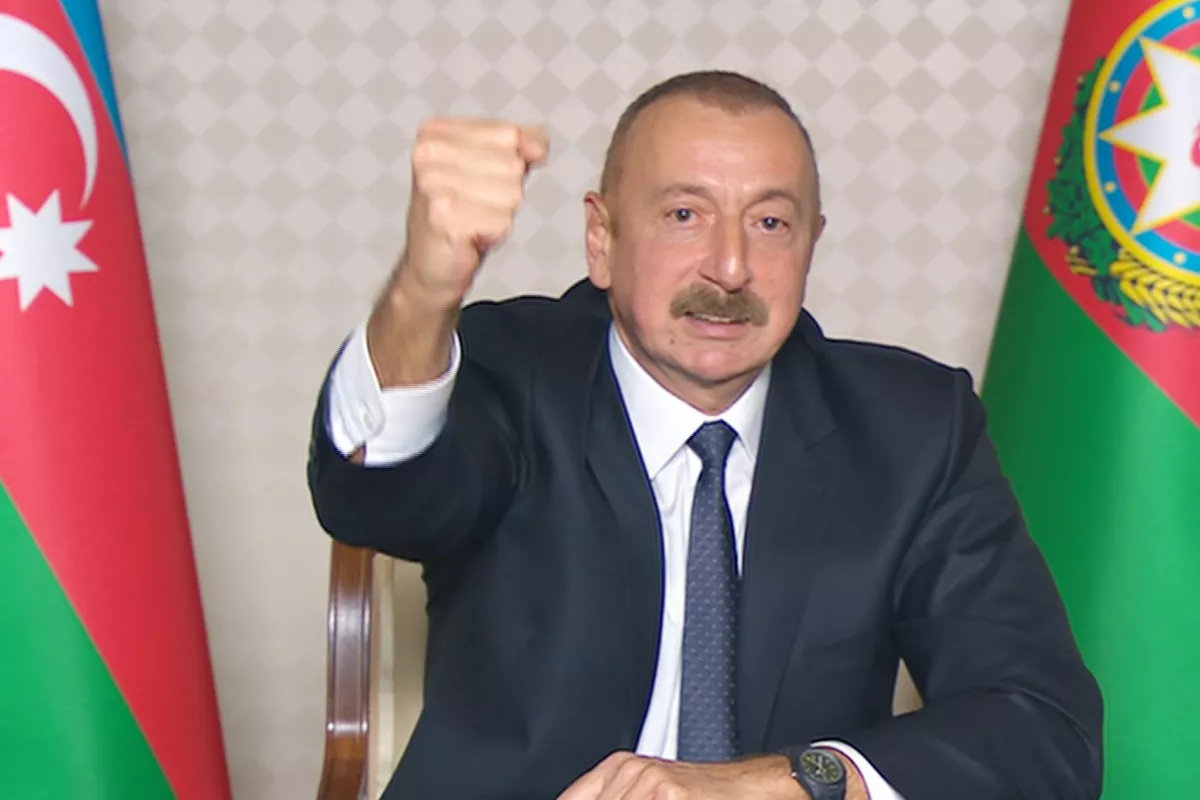
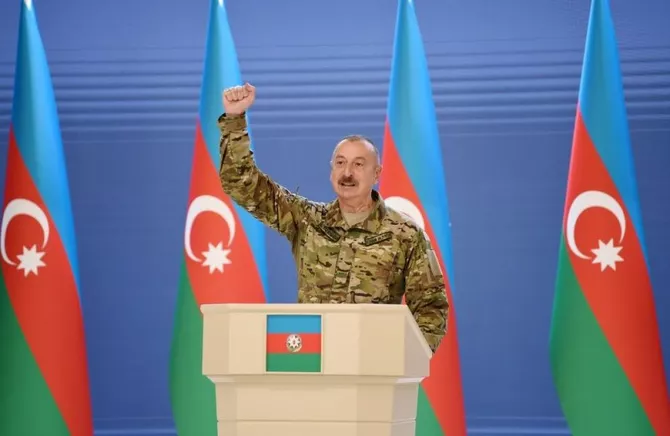
Under the leadership of President and Commander-in-Chief Ilham Aliyev, Azerbaijan achieved what for decades had seemed beyond reach: it restored control over its lands and brought to a close one of the most painful chapters in its modern history. For Azerbaijan, this was not simply a military success.
World history reserves a special place for statesmen who do more than govern: they restore a nation’s belief in itself. They are remembered not only because they governed, passed laws, negotiated or delivered powerful speeches. Their names remain in national memory because, at decisive moments, they were able to return to their people something essential: land, sovereignty, dignity and faith in the justice of their own historical cause.
Source: Dailysabah.com
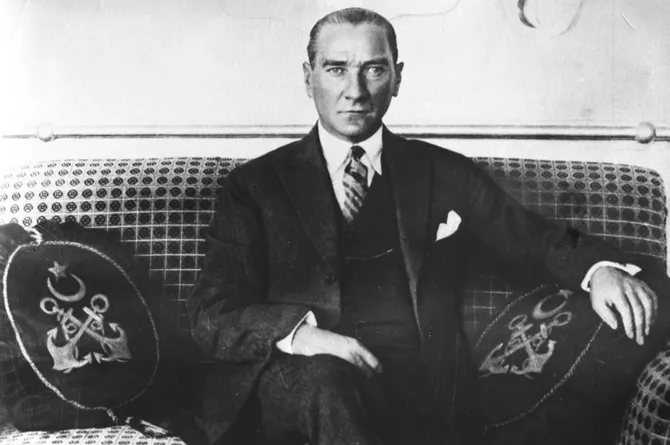
Mustafa Kemal Atatürk became a symbol of state salvation for Türkiye after the collapse of empire and the painful trials of the early 20th century. He prevented Turkish sovereignty from disappearing and laid the foundations of a new state. Charles de Gaulle entered French history as the man who, in a time of national humiliation, refused to let France dissolve into defeat and restored the country’s sense of honor. Konrad Adenauer and later Helmut Kohl linked their names to the restoration of German statehood and unity - first through the reintegration of the Saar, and later through the reunification of Germany after decades of division. In Italian history, Cavour, Garibaldi and Victor Emmanuel II became symbols of national unification, when fragmented lands acquired the form of a single state.
Each of these figures belonged to a different era, faced a different drama and operated in different historical circumstances. But they shared one defining trait: they did not accept loss as the final verdict of history. They did not agree that a nation should live forever in a condition of incompleteness, division or humiliation. They saw national pain not as a reason for resignation, but as a task that the state had a duty to resolve.
Source: virtualkarabakh.az
President Ilham Aliyev belongs to this broader tradition of statesmen whose legacy is tied to the restoration of national wholeness. He did not allow Azerbaijan to grow used to loss. He did not allow society to accept the idea that injustice imposed from outside could become a permanent reality. This is where the measure of a statesman is revealed: in the ability to see beyond the present day, to preserve a national objective when others grow tired of waiting, and to achieve results when many have already stopped believing.
Ilham Aliyev turned waiting into strategy, strategy into state will, and state will into victory. This reflected not only the strength of political decision-making, but also the ability of a leader to understand the deeper historical nerve of his people - to recognize the depth of national pain and transform it not into rhetoric, but into outcome.
For Azerbaijan, the return of its lands was never only a question of territory. It was a question of national breath. Cities and villages that for years had existed in memory as wounds once again became part of the living geography of the country. Land ceased to be only a memory, only a map, only a name repeated in the stories of displaced families. It became homeland again.
This is the philosophical meaning of victory. Land is not merely space. It is the memory of ancestors, graves, homes, roads, rivers, mosques, schools, children’s voices, the smell of bread, the shade of trees, and the language in which a person first learns the word “homeland.” When a people loses land, it loses more than territory. It loses part of its soul. And when that land is returned, the nation regains a sense of wholeness.
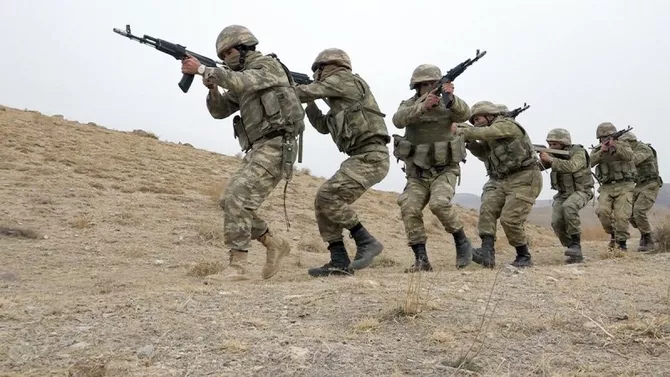
Azerbaijani soldiers in a 2022 training exercise. (photo: MoD, Azerbaijan)
The Azerbaijani soldier became the symbol of that historical wholeness. He carried the weight of the past and the price of the future. His achievement is measured not only in liberated cities and villages, but also in the restored dignity of millions of people for whom the homeland ceased to be an open wound and once again became a living reality.
The achievement of an army is not measured only by victory on the battlefield. It is measured by what that victory makes possible afterward - by the ability of a people to speak of its land no longer as a loss, but as a returned part of itself. In this sense, the Azerbaijani Army became more than a military force. It became an instrument of historical justice, a pillar of statehood and a symbol of national revival.
That is why Azerbaijan’s Armed Forces Day now carries a special meaning. It is the day of an army that became a force of return. It is the day of the soldier who gave the people back their land. It is the day of the officer who led others forward. It is the day of a nation that believed, waited and did not forget. And it is also the day of the Commander-in-Chief under whom Azerbaijan was able to close one of the most painful pages of its modern history and open a new one - a page of strength, dignity and restored sovereignty.
The strength of an army is not defined only by numbers, weapons or military technology. Its real strength lies in the justice of its purpose, loyalty to the homeland and the certainty that behind every soldier stands an entire nation. An army becomes truly powerful when it does not defend an abstract line on a map, but a land that lives in the memory of generations.
Today, on Armed Forces Day, Azerbaijan honors not only its army. It honors a state that found the strength to rise, unite and prevail. It honors a people that preserved its memory. It honors the Commander-in-Chief who turned a national dream into political and historical reality.
Azerbaijan has shown that historical justice may be delayed, but it cannot be erased. Land may be lost for a time, but if a nation does not lose its memory, will and faith, return becomes possible. Azerbaijan’s victory was precisely such a return - the return of territory, the return of dignity, and the return of belief in the strength of the state.
In world history, what remains is not only the dates of wars and diplomatic agreements. What remains are the moments when a nation recovers itself. For Azerbaijan, victory became such a moment. And the army that returned the people to their land will remain one of the central pillars of national memory.
History does not honor only those who wait for the right moment. It remembers those who know how to create that moment. For Azerbaijan, that moment was created by the will of the state, the strength of the army, the unity of the people and the leadership of Ilham Aliyev.