For years, the Rasht-Astara railway has been presented as the missing link in one of Eurasia’s most ambitious transport projects. Now, as regional calculations shift and alternative routes show their limits, Moscow and Tehran appear to be returning to the plan with fresh urgency.
The proposed 162-kilometre line would connect the Iranian cities of Rasht and Astara, completing the western branch of the International North-South Transport Corridor (INSTC). The route runs from Russia through Azerbaijan and Iran to the Persian Gulf, offering a potential rail connection onward to India.
Russian Railways First Deputy CEO Sergei Pavlov said this week that Moscow and Tehran expect construction to begin in 2027 and to be completed within three years. Surveying work is already under way, he said, after being interrupted earlier this year by military hostilities in Iran.
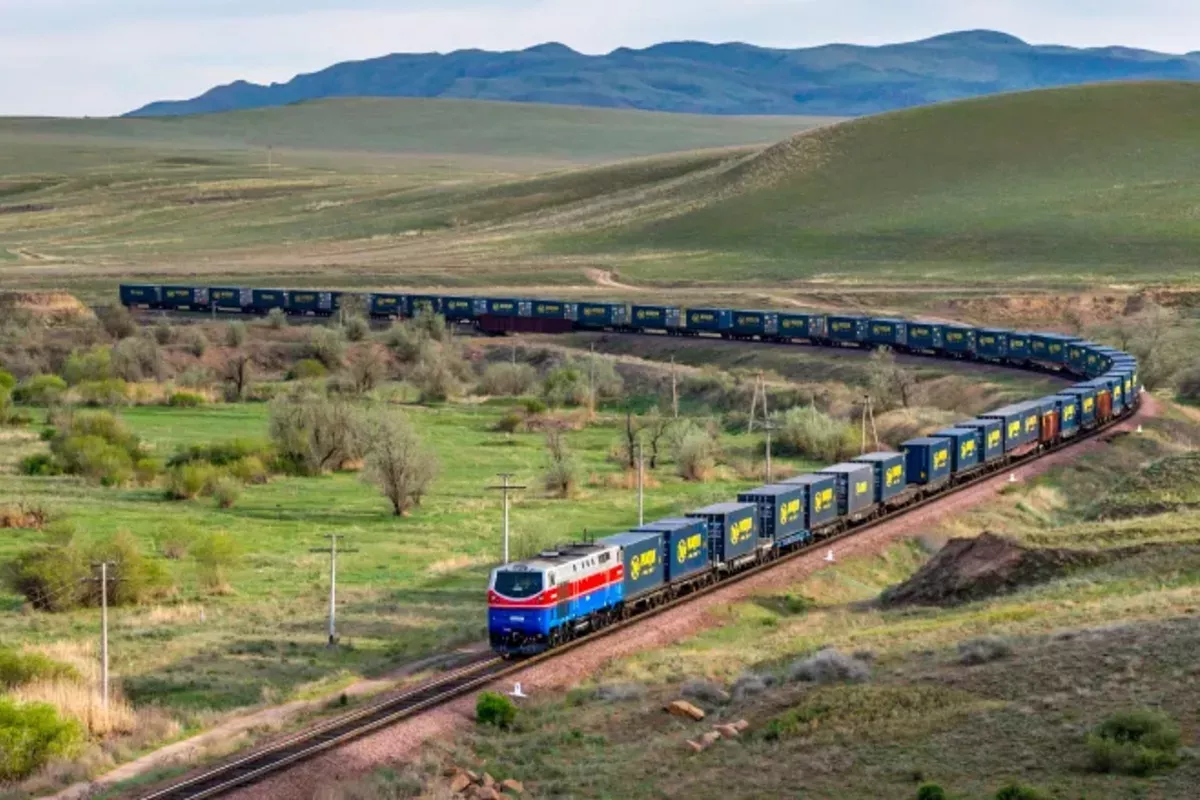
The revival reflects both geopolitical necessity and commercial pressure. During a period of tension between Moscow and Baku, Russian officials and analysts increasingly discussed the eastern branch of the North-South corridor through Central Asia as a potential priority. But that enthusiasm has since faded. The Caspian maritime route, meanwhile, has struggled to keep pace with demand. Russian media have reported that the route’s existing capacity is close to being exhausted.
That has once again placed the Russia-Azerbaijan-Iran rail connection at the centre of the conversation.
The western branch of the INSTC is designed as a multimodal route linking Russian transport hubs such as Astrakhan and Makhachkala with Baku, Rasht and Bandar Abbas. Azerbaijan’s role is already firmly established: its 511-kilometre section of the corridor has long been completed and is operational.
The Rasht-Astara link remains the critical gap.
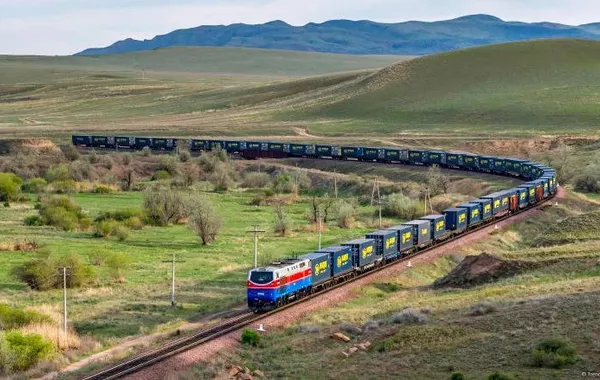
Once finished, it would allow freight trains to move from Russia to Iran through Azerbaijan without the current reliance on road transport at the Iranian border. Cargo reaching Astara in Azerbaijan is now transferred to trucks before continuing onward by rail inside Iran - a costly and time-consuming process that undermines the corridor’s commercial appeal.
The project is estimated to cost €1.6 billion, of which Russia is expected to provide €1.3 billion. Plans include eight stations, 56 overpasses, 73 bridges and 30 grade-separated crossings. Russian officials expect the completed route to handle at least 15 million tonnes of cargo annually.
For Moscow, the project is part of a broader effort to build resilient trade routes outside traditional European transit networks. For Tehran, it offers a chance to reinforce Iran’s position as a major Eurasian logistics hub and connect more deeply with markets to the north.
The political climate has also become more favourable. Earlier this month, Russian President Vladimir Putin said Moscow was ready to work with Azerbaijan on the development of the North-South corridor. “There are no problems for this,” he said during a meeting of the Valdai Discussion Club.
Iran, for its part, has moved to address one of the project’s most persistent obstacles: land acquisition.
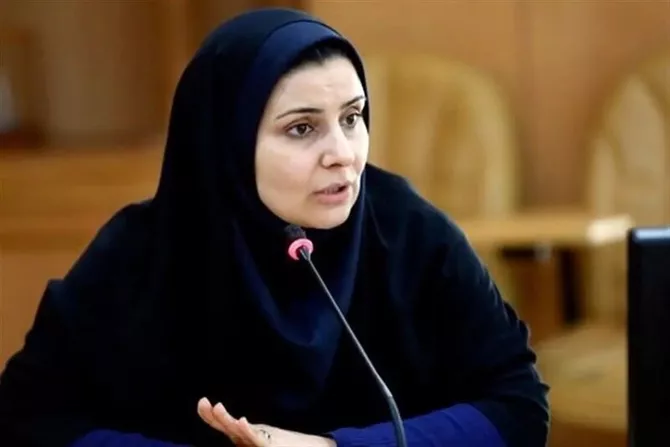
photo: getty images
Iranian Minister of Roads and Urban Development Farzaneh Sadegh recently announced that Tehran had completed the purchase of land along the entire Rasht-Astara route. The process had been particularly complicated in Gilan province, one of the few areas in Iran where rice cultivation is permitted. Farmers reportedly sought high compensation for land that is both productive and scarce.
The resolution of that issue removes a major practical barrier to construction.
A more ambitious question is now emerging: could Russia’s 1,520-mm gauge eventually be extended beyond the Rasht-Astara section?
Iranian Ambassador to Moscow Kazem Jalali said in September that Tehran was considering the use of the Russian gauge not only near the new line’s terminal points but potentially on an extension towards Bandar Abbas, Iran’s principal port on the Persian Gulf. He also referred to the possibility of a separate north-south railway line within Iran built to the Russian standard.
Such plans remain speculative. The immediate task is to build Rasht-Astara and close the most important gap in the INSTC. But a single gauge from Russia through Azerbaijan and deep into Iran would have obvious advantages: it would reduce transit times and eliminate the need to transfer cargo or change wheelsets at the border.
The financial challenge, however, would be substantial. Experts estimate that a new Russian-gauge line through Iran could cost up to $10 billion - many times more than the Rasht-Astara project.
The three countries are also seeking to improve the corridor’s efficiency through digitalisation. In July, railway officials from Azerbaijan, Russia and Iran signed a trilateral protocol in Moscow aimed at making the route more commercially competitive. Their plans include harmonising electronic data systems and gradually replacing paper-based freight documentation with a digital corridor.
Traffic figures underline why the project continues to attract attention. According to Russian Railways, cargo transported along the rail routes of the North-South corridor reached 8.9 million tonnes between January and September 2026, up 9.6% year on year. September alone saw volumes rise 32.2% to 1.1 million tonnes.
Grain shipments through Astara to Iran were particularly strong: 65,000 tonnes were transported in the first half of the year, four times more than during the same period in 2025.
The numbers do not yet make the North-South corridor a full-scale alternative to established global trade routes. But they do demonstrate rising demand, and reinforce the argument that the missing railway section between Rasht and Astara is no longer simply an infrastructure project.
It is becoming a strategic test of whether Russia, Iran and Azerbaijan can translate political interest into a functioning Eurasian trade corridor.