Péter Magyar's victory in Hungary's parliamentary elections in the spring of 2026 was interpreted by many European observers as the beginning of a fundamental reassessment of the country's foreign policy after 16 years of Viktor Orbán's rule. The change of government and the rise of the pro-European Tisza Party created expectations that Budapest would quickly abandon the principles that had shaped its international course over the previous decade and a half.
Yet the first months of the new government suggest that no foreign policy revolution has taken place in Hungary. What is changing is primarily the style of diplomacy, while the country's strategic priorities remain largely intact.
Péter Magyar is not dismantling Orbán's foreign policy legacy. Rather, he is seeking to adapt it to a new European reality. Instead of pursuing permanent confrontation with Brussels, the new prime minister is adopting a more flexible approach that allows Hungary to rebuild relations with the European Union while preserving room for manoeuvre on issues Budapest considers vital.
The reasons behind the Tisza Party's convincing victory lay primarily in domestic politics. After several years of high inflation, declining real incomes and economic stagnation, a significant proportion of Hungarian society came to associate the deterioration in living standards with the prolonged conflict between Orbán's government and the institutions of the European Union.
The freezing of billions of euros in EU funding became not merely a political issue but a serious economic problem. Hungarian voters therefore supported Magyar less because they wanted a radical change in the country's geopolitical orientation than because they hoped for economic stabilisation and the normalisation of relations with Brussels.
In other words, Hungarians voted against the accumulation of domestic problems, but not necessarily against the country's traditional understanding of its national interests.
This also explains the first foreign policy steps taken by the new cabinet. Orbán deliberately turned confrontation with Brussels into a central element of his political strategy and regularly used Hungary's veto power as an instrument of pressure. Magyar's government has instead opted to resolve disputes through negotiation.
In the first weeks after taking office, Budapest intensified consultations with the European Commission on unlocking EU funding, announced its intention to join the European Public Prosecutor's Office and confirmed that Hungary would remain a member of the International Criminal Court.
These decisions signalled a retreat from the most confrontational aspects of the previous government's policy and paved the way for restoring trust between Hungary and the European institutions.
However, the normalisation of relations with Brussels does not mean that Budapest is abandoning an independent foreign policy. On the contrary, the new government's early actions indicate that Magyar views cooperation with the European Union primarily as a means of strengthening the Hungarian economy, rather than as a reason to abandon national priorities.
The continuity of Hungarian policy is most clearly reflected in its approach to Ukraine.
Despite adopting firmer rhetoric towards Russia and supporting humanitarian assistance to Kyiv, the new government continues to rule out arms supplies and the deployment of Hungarian troops. Budapest also remains cautious about accelerating Ukraine's accession to the European Union.
The political language has changed, but the substance of policy has not. Orbán openly positioned Hungary against the broader European consensus. Magyar seeks to defend largely the same national interests through less confrontational methods that are more acceptable to Brussels.
The same logic is evident in Hungary's relations with Russia.
Following the change of government, many expected Budapest to rapidly revise its energy cooperation with Moscow. This has not happened. The new government has confirmed that existing oil and gas supply contracts will remain in force, that deliveries via the TurkStream pipeline will continue, and that the expansion of the Paks II Nuclear Power Plant will proceed.
Budapest stresses that its objective is not to abandon Russian energy resources at any cost, but to diversify supply sources gradually without damaging the Hungarian economy.
At the same time, Hungarian pragmatism should not be confused with political loyalty to Moscow. After Russian intelligence accused the European Commission of allegedly preparing a change of government in Hungary, Magyar's cabinet lodged an official protest with the Russian ambassador. The message was clear: constructive relations with Russia do not imply tolerance of interference in Hungary's domestic affairs.
Budapest's policy towards China is equally revealing.
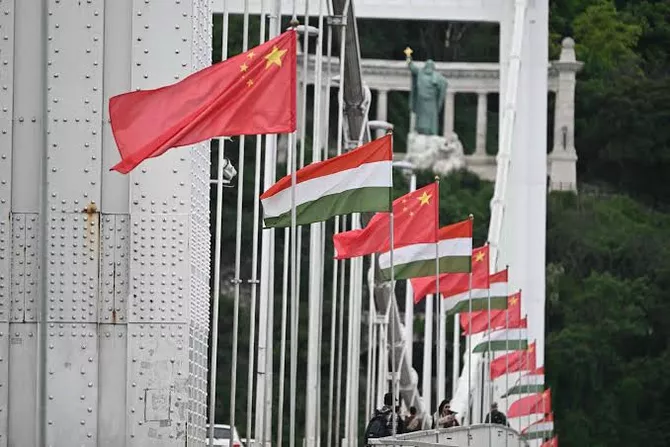
photo: CGTN
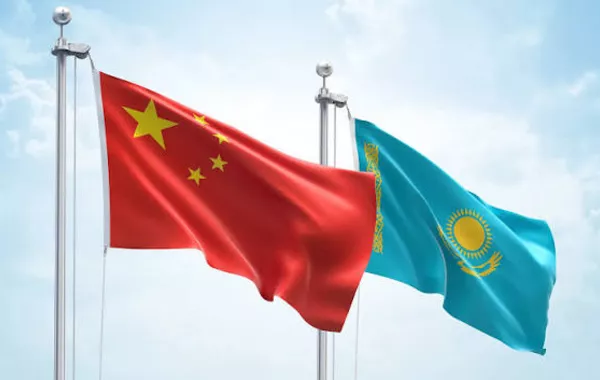
Under Orbán, Hungary became one of the largest recipients of Chinese investment in Europe. The new government has shown no intention of withdrawing from projects already under way. Instead, it is seeking to strike a balance between Brussels' calls to reduce economic dependence on China and Hungary's interest in retaining investments that are important for the country's industrial development.
This once again demonstrates that the central objective of Hungarian foreign policy remains the protection of economic interests rather than adherence to ideological formulas.
Péter Magyar's foreign policy is therefore centred on balancing relations with several major centres of power.
Hungary needs to restore trust with the European Union and regain access to financial resources. In its relations with Ukraine, it aims to reduce political tensions without abandoning its fundamental positions. With Russia, Budapest wants to preserve energy cooperation while demonstrating that it is prepared to defend its sovereignty. With China, it seeks to maintain investment ties without entering into direct conflict with the EU's broader strategic approach.
Such a policy cannot easily be described as either pro-Western or pro-Russian. It is better understood as an attempt to maximise Hungary's room for independent diplomatic manoeuvre.
This is the principal difference between Orbán and Magyar. Orbán defended sovereignty through permanent confrontation. Magyar is trying to achieve the same objective through more flexible diplomacy.
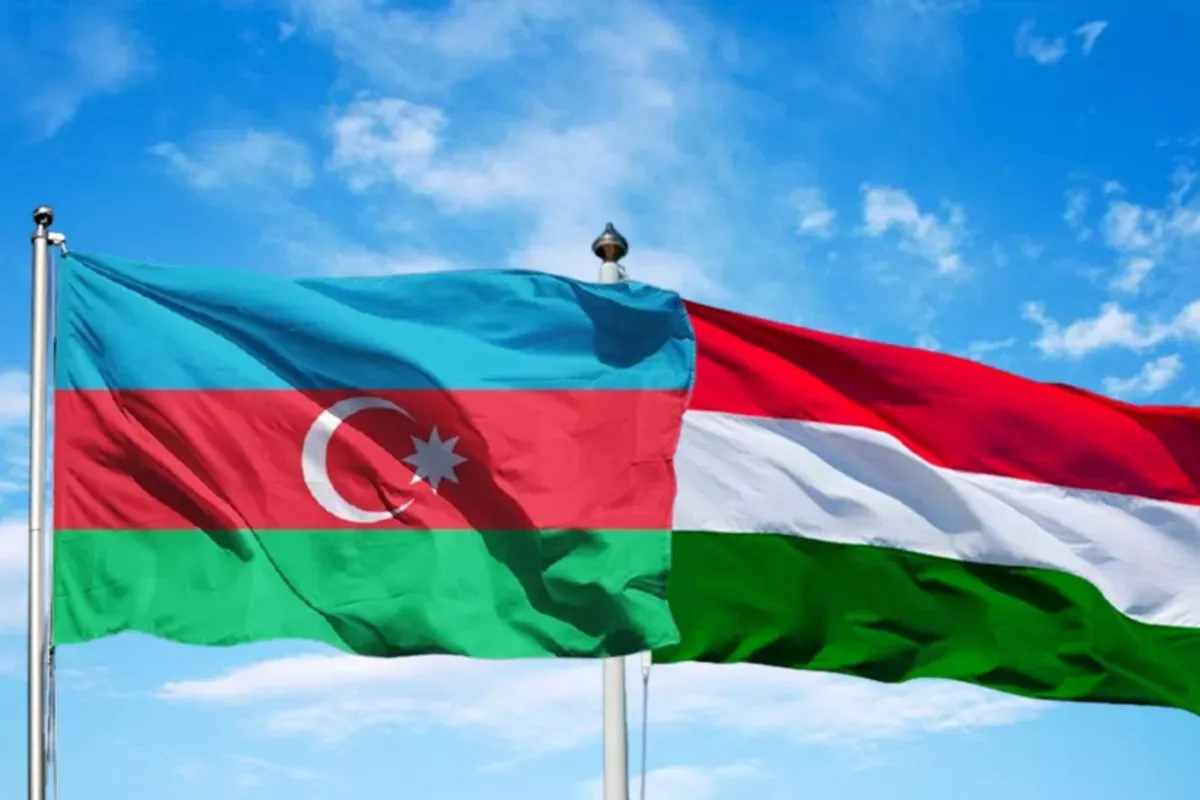
For Azerbaijan, this transformation creates more opportunities than risks.
The new government's commitment to diversifying energy supplies objectively increases the importance of Azerbaijani gas for the Hungarian market. Budapest does not intend to abandon Russian energy resources altogether, but it is interested in gradually reducing its dependence on a single supplier.
Under these circumstances, Azerbaijan is becoming one of Hungary's most attractive partners, particularly given the existing infrastructure of the Southern Gas Corridor and the potential to expand Caspian gas supplies to Europe.
The improvement in relations between Hungary and the European Union may make the Azerbaijani dimension even more significant. Greater supplies of Caspian gas would serve not only Budapest's interests but also the broader objectives of European energy security.
At the same time, Azerbaijani-Hungarian cooperation has long extended beyond the energy sector.
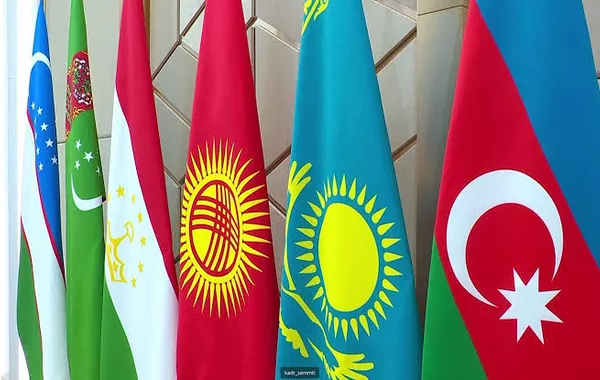
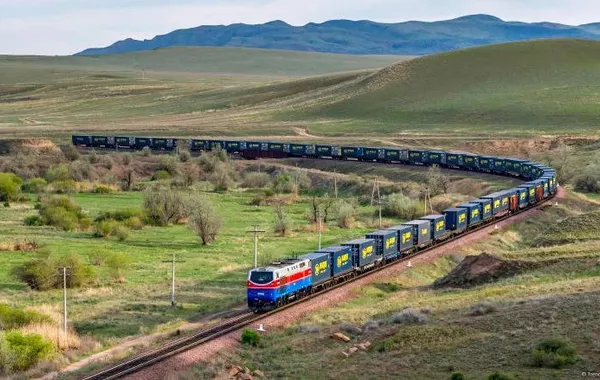
The development of the Middle Corridor, cooperation within the Organisation of Turkic States, and collaboration in transport, digital technologies and agriculture have created a solid foundation for bilateral relations. That foundation is largely independent of which political force is in power in Budapest.
Moreover, Magyar's commitment to a multi-vector foreign policy only enhances Azerbaijan's value as a country that plays an important role in European energy security, the development of Eurasian transport routes and the strengthening of Hungary's ties with the Turkic world.
The first months of Péter Magyar's government therefore point not to a foreign policy revolution, but to a change in diplomatic style.
Hungary is abandoning confrontation as its principal instrument in relations with the European Union, but it is not revising its fundamental understanding of national interests. The new government wants to make Hungary a more predictable partner for Brussels without turning it into a state willing to sacrifice its economic and political priorities merely to demonstrate European solidarity.
As Raymond Aron, one of the leading theorists of international relations in the twentieth century, observed, foreign policy rarely involves a choice between good and evil. More often, states choose between different ways of protecting their national interests under conditions of uncertainty.
It is through this prism that Péter Magyar's foreign policy should be viewed. Hungary is not abandoning the pragmatism of the Orbán era. It is simply making that pragmatism less confrontational, more flexible and more acceptable to its European partners.
For Azerbaijan, this evolution means that favourable conditions for the development of the strategic partnership are likely to remain in place. Budapest's political rhetoric may be changing, but pragmatism continues to underpin Hungary's foreign policy.