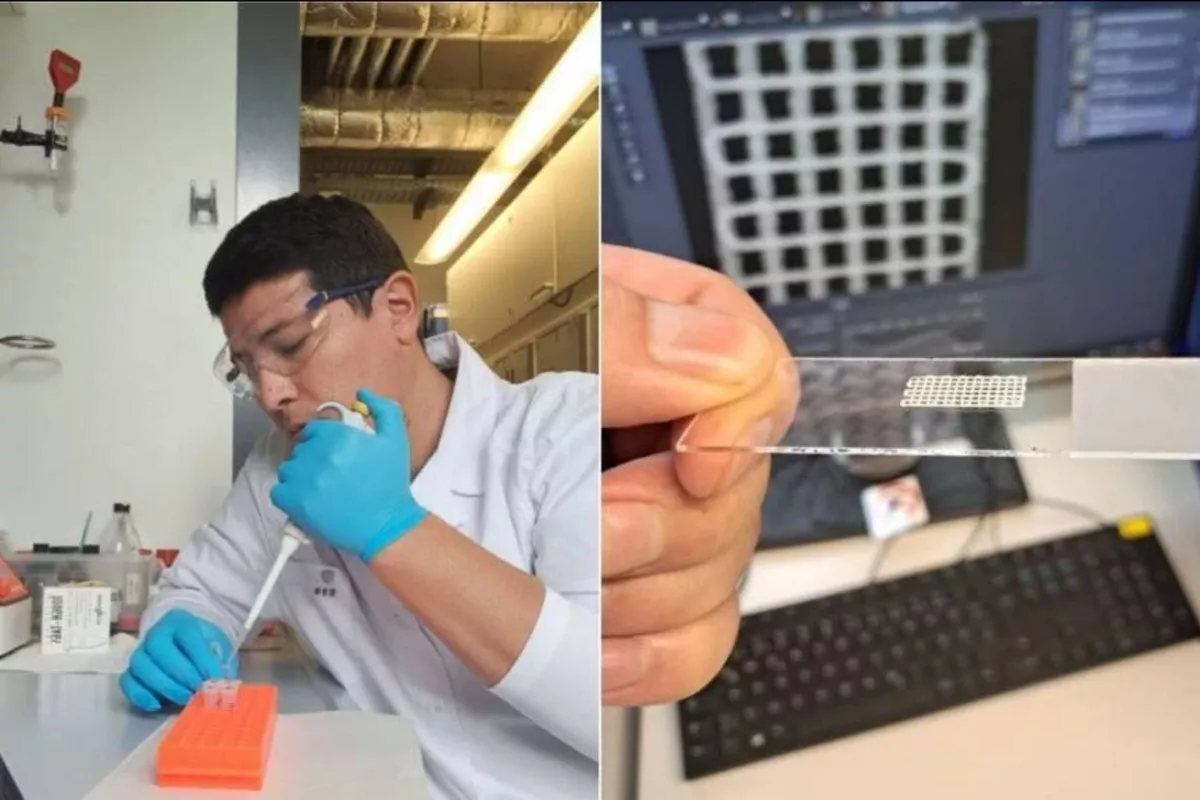
Photo credit: UzA
Uzbekistan has marked a major scientific breakthrough that could transform the future of medicine: researchers have developed a new bioink capable of printing human organs using a 3D bioprinter.
The innovation was created by Olimjon Boymatov, a researcher at the Institute of the Chemistry of Plant Substances under the Academy of Sciences of Uzbekistan, The Caspian Post reports via Uzbek media.
According to the Agency for Innovative Development, the new bioink is produced from polysaccharides derived from local plants, making it both cost-effective and adaptable to domestic production conditions.
For years, Uzbek scientists have worked to develop bioinks that are fully compatible with the human body, safe for medical use, and economically viable. However, despite progress, no solution had previously reached a level suitable for broad practical application.
A turning point came after Boymatov completed a research internship in Germany, where he studied advanced bioprinting technologies and modern hydrogel production methods at leading universities.
“In 2024, I won a competitive internship organized by the Agency for Innovative Development and studied modern bioprinting technologies and new hydrogel production methods,” Boymatov explained. “As a result, we obtained positive findings on a bioink that enables the printing of human organs using a 3D bioprinter.”
The newly developed hydrogel supports the viability and growth of human iMSC cells, creating real prospects for producing artificial tissues and organs with high levels of biocompatibility, safety, and adaptability.
The Intellectual Property Agency of Uzbekistan has already issued a positive conclusion on the development, and the patenting process is currently underway - a step that could position Uzbekistan among emerging players in the rapidly advancing field of regenerative medicine.
Share on social media