Iran and Türkiye Have a Rail Idea — China Has the Money
The recent meeting between the foreign ministers of Iran and Türkiye in Tehran was framed as a turning point in bilateral transport cooperation. Statements about prioritizing the connection of railway lines at the border sounded decisive and forward looking. Yet, beneath the confident tone, the initiative exposes a deeper and more familiar dilemma that accompanies almost every grand infrastructure project in today’s Eurasia: ambition is abundant, but financing and political resolve are not.
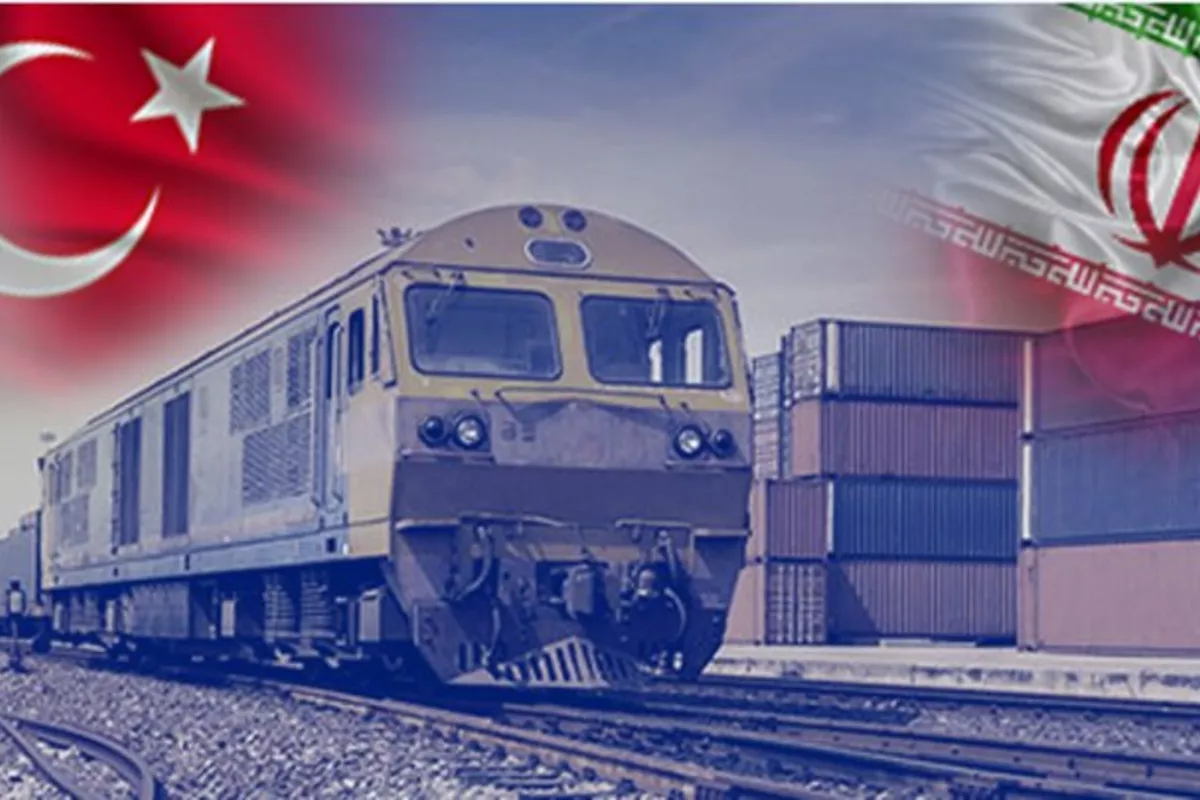
At the center of the discussion lies the proposed Marand-Cheshmeh Soraya railway, a roughly 200-kilometer line designed to link northwestern Iran with the Turkish border and eventually connect to Türkiye’s Kars-Dilucu railway. If completed, this link would form a new land corridor between the two countries, promising to reduce transit times, diversify logistics routes, and reinforce regional connectivity. On paper, it is precisely the kind of project that fits the moment, as global trade flows are being reshaped by geopolitical tension, sanctions, and the growing vulnerability of maritime routes.
For Iran, the railway carries symbolic and strategic weight far beyond its physical length. Tehran presents the project as part of a future uninterrupted China-Europe rail corridor, one that would finally anchor Iran firmly within Eurasian transit networks.
For years, Iranian policymakers have spoken about transforming the country into a logistical crossroads between East and West. Geography is on their side, but politics and economics have repeatedly stood in the way. This railway is meant to signal that Iran is still in the game, still relevant, and still capable of offering itself as a transit bridge despite external pressure.

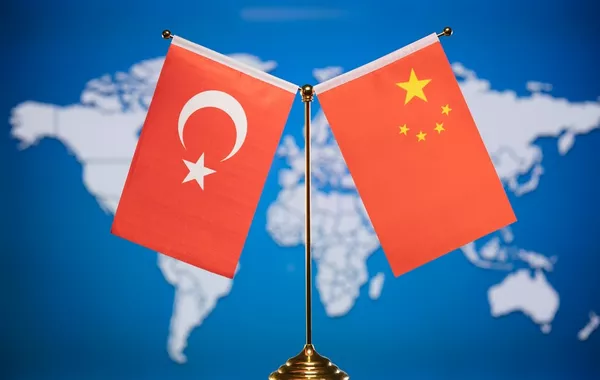
Photo: Xinhua
However, Iran’s reality remains constrained. U.S. sanctions continue to limit access to international finance, insurance, and technology. Relations with neighboring countries remain uneven, and domestic economic challenges persist. Inflation, budget deficits, and currency restrictions complicate long-term planning.
Türkiye, although not under sanctions, faces its own economic headwinds. Persistent inflation, exchange rate volatility, and the political costs of large infrastructure spending make Ankara cautious. The convergence of two financially strained partners raises a simple but uncomfortable question: if both sides are struggling, who will actually carry the financial burden?
Large cross border rail projects are rarely funded through state budgets alone. They depend on blended financing, private capital, and public-private partnerships. Yet Iran’s recent history offers little encouragement. The Rasht-Astara railway, a critical missing link in the International North-South Transport Corridor, has been delayed for years due to funding issues and hesitancy from Tehran itself. If a strategically vital domestic project has stalled for so long, skepticism about Iran’s ability to push through a new international railway is understandable.
From a geostrategic perspective, however, the logic of the route is difficult to dispute. The project does not undermine existing transport architectures; instead, it complements them. It aligns naturally with the Belt and Road Initiative and could strengthen the North-South corridor by providing alternative and bypass routes. In an era where redundancy and flexibility in logistics are becoming as important as speed and cost, such diversification is not a luxury but a necessity.
This is precisely why China inevitably enters the conversation. For both Tehran and Ankara, Beijing represents more than just a source of capital. Chinese participation would mean integration into a wider logistics ecosystem, access to long-term financing, and a degree of political insulation from Western pressure. Chinese infrastructure funds, experienced in operating under complex political conditions, are uniquely positioned to assess whether the project makes economic sense and whether the risks are manageable.
If China steps in, the railway could shift from a regional aspiration to a functional component of Eurasia’s east-west connectivity. If it does not, the silence would speak volumes. Chinese reluctance would signal doubts about commercial viability rather than geopolitical goodwill, and that would be far more damaging to the project than any critical commentary.

Photo: Shutterstock
The railway’s significance grows even further when viewed through the lens of the South Caucasus. The potential linkage with the Zangezur Corridor introduces a transformative dimension. A continuous route connecting Iran, Azerbaijan, Nakhchivan, Türkiye, and onward to Europe would reshape regional logistics. Iran would strengthen its role as a transit hub, Azerbaijan would gain additional transport flexibility, and Türkiye would further consolidate its position as a gateway between Europe and Asia. In such a configuration, the Marand-Cheshmeh Soraya line would cease to be a bilateral initiative and instead become a backbone of regional connectivity.
Yet this scenario depends on multiple political and financial conditions aligning simultaneously. Regional tensions, unresolved disputes, and competing interests could easily derail even the most promising infrastructure visions. Without firm commitments and credible financing, strategic logic alone will not carry trains across borders.
Ultimately, the Marand-Cheshmeh Soraya railway embodies a recurring Eurasian paradox. It is strategically sound, geographically logical, and rhetorically attractive, yet perpetually at risk of remaining unfinished. The gap between declared intentions and actual implementation remains wide. Closing it will require not only external financing but also political courage and institutional discipline from all parties involved.
If China does choose to engage, this project could become a rare example of pragmatic connectivity triumphing over politics in a fractured Eurasian landscape. If it does not, the railway may serve as yet another reminder that geography alone no longer guarantees relevance. In today’s world, influence belongs not to those who sit at crossroads, but to those who can afford to build them.
By Tural Heybatov