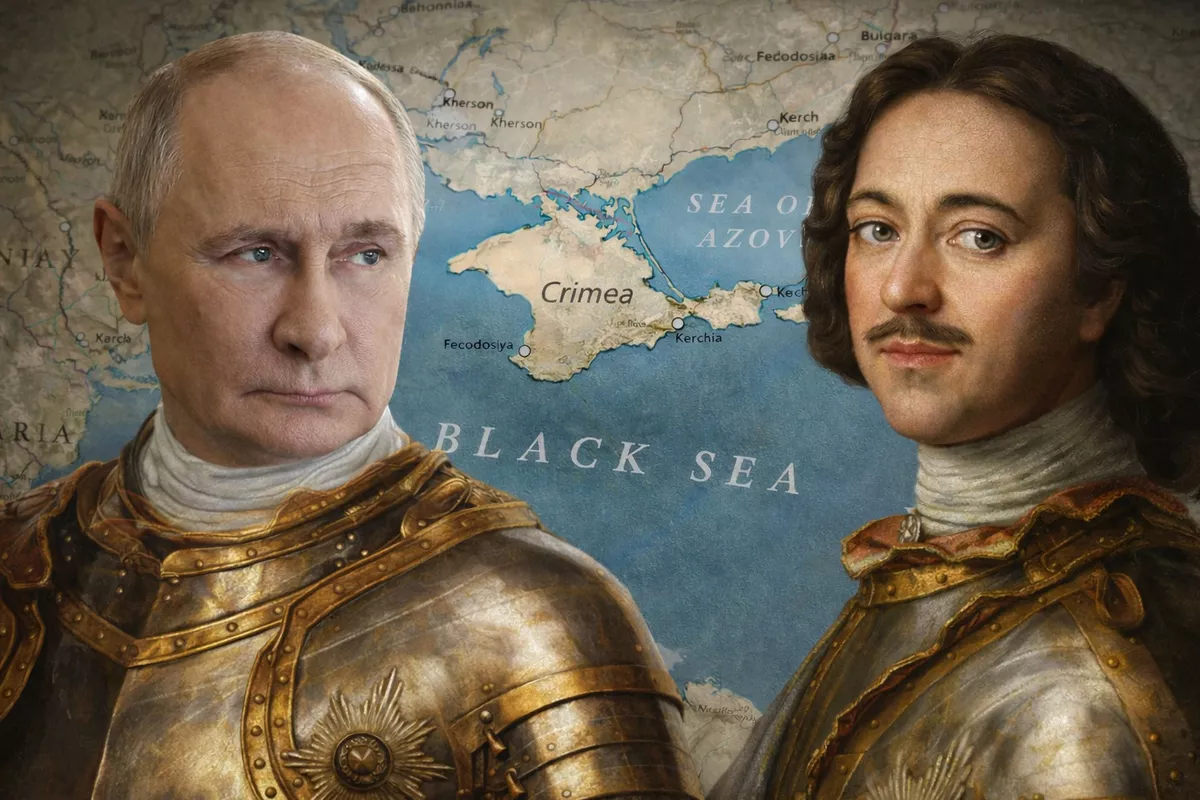
Control over Black Sea ports is no longer merely a matter of trade. For Moscow, it represents an attempt to reshape not only regional economic routes but also the military geography of Southern Europe and Eurasia. In late 2025, Vladimir Putin openly warned that Russia could seek to “cut Ukraine off from the sea,” framing such a move as a potential response to Ukrainian strikes and Western support for Kyiv.
This statement reflects a deeper strategic logic. Russia’s actions in 2025-2026 increasingly resemble a long-standing geopolitical ambition: to dominate the northern Black Sea while denying rivals access to it.
Today, the confrontation revolves around two competing models of maritime control:
- Russia’s model, based on its own commercial hubs and naval bases along the eastern Black Sea coast and in Crimea;
- Ukraine’s model, centered around the “Greater Odesa” port cluster - Odesa, Chornomorsk, and Pivdennyi - which has become the backbone of Ukraine’s export economy during the war.
The current map of port control
Source: russiaspivottoasia
Russia controls:
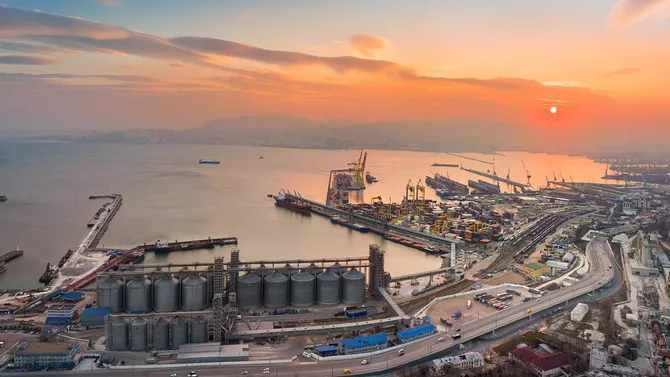
- Novorossiysk (Krasnodar region) - the largest Russian commercial port on the Black Sea, handling oil, bulk cargo, and serving as a key logistical hub for the Black Sea Fleet
- Tuapse and Taman - major oil and multipurpose terminals along Russia’s southern coast.
- Crimean ports (Sevastopol, Kerch, Feodosia, Yevpatoria, Yalta) - de facto under Russian control since 2014, though internationally recognized as Ukrainian territory.
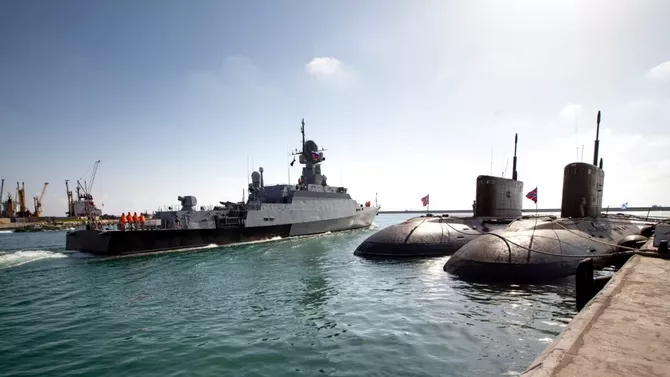
The most strategically significant is Sevastopol, historically the principal base of the Black Sea Fleet. However, under pressure from Ukrainian strikes, a significant portion of Russia’s combat-ready naval assets has reportedly been relocated toward Novorossiysk, reducing vulnerability in Crimea while maintaining operational capability.
For Moscow, these ports represent not just infrastructure, but strategic depth - naval basing, air defense positioning, intelligence coverage, and logistical dominance across the northern Black Sea.
Ukraine controls:
- Odesa - Ukraine’s main commercial and grain export port.
- Chornomorsk (formerly Illichivsk) - a major transport hub with container and grain terminals.
- Pivdennyi (Yuzhny) - the deepest and most industrially capable port, critical for bulk cargo handling.
Together, these three ports form the Greater Odesa port cluster, which has become vital to Ukraine’s economic survival during wartime.
Formally, Ukraine also retains control over Mykolaiv and Kherson, though their full maritime operations remain limited due to security and navigational constraints.
The military significance of port control
Source: voanews
For Russia, port control translates into geopolitical leverage. Naval bases, deepwater berths, repair facilities, and coastal defense systems provide the ability to project force, protect sea lanes, and influence regional maritime security.
The relocation of naval assets from Sevastopol to Novorossiysk highlights the evolving tactical environment but does not diminish Russia’s broader objective: maintaining dominance over northern Black Sea waters.
For Ukraine, retaining control of Odesa, Chornomorsk, and Pivdennyi is a matter of national survival. An operational maritime corridor allows Ukraine to sustain exports, secure foreign currency revenues, and remain connected to global markets.
Strikes on port infrastructure and maritime routes are therefore not symbolic - they aim to disrupt Ukraine’s economic lifeline.
Economic turnover of Ukraine’s Black Sea ports
According to official data from Ukraine’s Sea Ports Authority for 2024:
- Pivdennyi: approximately 35.6 million tons
- Chornomorsk: approximately 26.0 million tons
- Odesa: approximately 18.3 million tons
Combined, these three ports handled over 80 million tons of cargo in one year, confirming their central role in Ukraine’s trade system.
Early 2025 data indicate continued cargo movement despite security risks and periodic strikes.
Impact on grain exports
The Greater Odesa cluster is the core of Ukraine’s grain export system. The majority of agricultural exports - wheat, corn, barley, oilseeds - pass through these ports.
The functioning of the maritime corridor directly affects:
- Ukraine’s foreign currency revenues
- The stability of its agricultural sector
- Global grain prices
- Food security in import-dependent countries
When maritime exports function normally, shipping by sea remains the most cost-effective option. If ports are disrupted, insurance costs surge, logistics slow down, and alternative land routes become overburdened.
In recent years, up to 80-90% of Ukraine’s grain exports have moved through the Odesa maritime corridor, underscoring its strategic and economic importance.
Historical parallel: Peter the Great and the Southern Sea strategy
Russia’s drive toward warm-water access is not new. In the late 17th century, under Peter the Great, one of the primary strategic objectives was breaking Ottoman dominance in the Azov and Black Sea regions.
During the Azov campaigns of 1695-1696, Russian forces captured the fortress of Azov, securing access to the Sea of Azov. Peter subsequently founded Taganrog in 1698, establishing one of Russia’s first southern naval bases.
Under the Treaty of Constantinople (1700), the Ottoman Empire recognized Russia’s control over Azov and surrounding fortifications. However, Russia did not obtain full and free access to the Black Sea. Control of the Kerch Strait remained outside Russian hands, effectively limiting naval maneuverability beyond the Sea of Azov.
Thus, Peter achieved a breakthrough, but not full Black Sea access. A comprehensive Russian Black Sea port system emerged later in the 18th century, after further wars with the Ottoman Empire.
The historical analogy is clear. From Peter the Great to the present, access to southern seas has been associated with power, trade, and strategic autonomy.
Today, Russia already possesses major commercial and naval infrastructure on its side of the Black Sea and in Crimea. However, its strategic rhetoric about cutting Ukraine off from the sea signals something more profound: not merely protecting its own access, but denying maritime access to its rival.
Ukraine, meanwhile, relies on the Greater Odesa corridor as its primary maritime gateway. Its ability to maintain that access is not only an economic matter measured in millions of tons - it is a political statement of sovereign resilience under pressure.
By Tural Heybatov