Central Asia’s Up And Coming Economic Hub: Kyrgyzstan’s Ambitious Strategy – OpEd
In recent months, Kyrgyzstan has begun to position itself more assertively within the economic landscape of Central Asia. On April 13, 2026, officials from Kyrgyzstan’s Ministry of Economy and Commerce visited Washington, D.C. to outline a notably ambitious vision: To transform the country into a regional hub for investment, trade, transport and tourism. Such an aspiration is central to the country’s broader grand strategy to regionally and globally position itself as a geoeconomically and environmentally conscious, forward-looking state.
As the Minister of Justice of the Kyrgyz Republic, Ayaz Baetov, put it in a recent piece for International Business Times, one of the defining economic developments of the decade is the re-emergence of Central Asia as a major corridor of trade and investment between East and West. Thus, Baetov posited, while for centuries Kyrgyz tribes lived and provided security to travellers along the Silk Road through which goods, capital, and ideas passed, “today, those same routes are being rewired for the twenty-first century, and the currents of global capital are beginning to flow along them once again”, The Caspian Post reports via Eurasia Review.
While in Washington, Kyrgyz officials reemphasised the priorities for the country’s strategic development codified by President Sadyr Japarov last year with the National Development Program. The key target indicators for the program include ambitious, but achievable goals, such as: entering into the top 30 countries in achieving Sustainable Development Goals; obtaining at least 20% investment in fixed capital to GDP by 2030; and achieving a total GDP of at least 30 billion US dollars. In Washington, Bakyt Sydkov, the Economy Minister, articulated the government’s goal of doubling per capita GDP by 2030, which, based on current trends, is seemingly reachable. For example, in 2025, per capita GDP was around $2,500 whereas in 2021 the World Bank calculated it to be $1,350. Evidently, then, Kyrgyzstan is not starting from zero.
In recent years, there has been measurable economic progress. Growth rates have been stable and on a general upward trend, and there has been improvement in the business environment and a broader adoption of innovative and modern financial practices. For example, in March 2025, Standard & Poor’s reaffirmed the sovereign credit rating of the Kyrgyz Republic at B+ with a stable outlook.
On January 24, 2025, the Coin National Exchange (CNE), the world’s first state-owned cryptocurrency exchange, was officially launched in Kyrgyzstan. The platform serves as a secure trading platform for crypto assets and supports government digital financial instruments. Therefore, there is already a strong foundation upon which the current strategy can build.
The National Development Program emphasises the importance of four key sectors upon which the government will focus for the remainder of the decade to achieve targets: industrialisation, energy, trade/connectivity, and tourism.”
Industrialisation is necessarily central to the strategy of situating Kyrgyzstan as an economic hub. Aside from enhancing economic resilience since a broader industrial base reduces exposure to shocks in commodity prices, expanding manufacturing creates higher value-added output, strengthens supply chains, and generates more stable, formal employment. The country has, so far, made great strides in this sector. Industrial production has, on average, climbed 17.4% year-on-year in March 2026, which is up from 13.1% in the previous month. As one analyst noted, “this marked the strongest expansion in industrial activity since March 2025, driven by higher output in the manufacturing sector…For the January-March 2026 period, industrial activity was 14.0% higher than in the same period a year earlier.” For foreign investors, a credible industrial policy, which Kyrgyzstan is clearly forging, signals that the country is an emerging production platform with scale potential.
Energy represents another critical pillar. Expanding energy capacity could serve a dual function: ensuring domestic energy security while enabling electricity exports to neighbouring markets. However, the government is also actively developing a diverse portfolio of renewable and sustainable energy projects, including: hydropower plans; solar power plants; and wind power plants. Such initiatives are aimed at strengthening energy security which is simultaneously about aligning with its own, and broader, regional ecological efforts to position Kyrgyzstan as a meaningful and sustainable energy player within Central Asia.
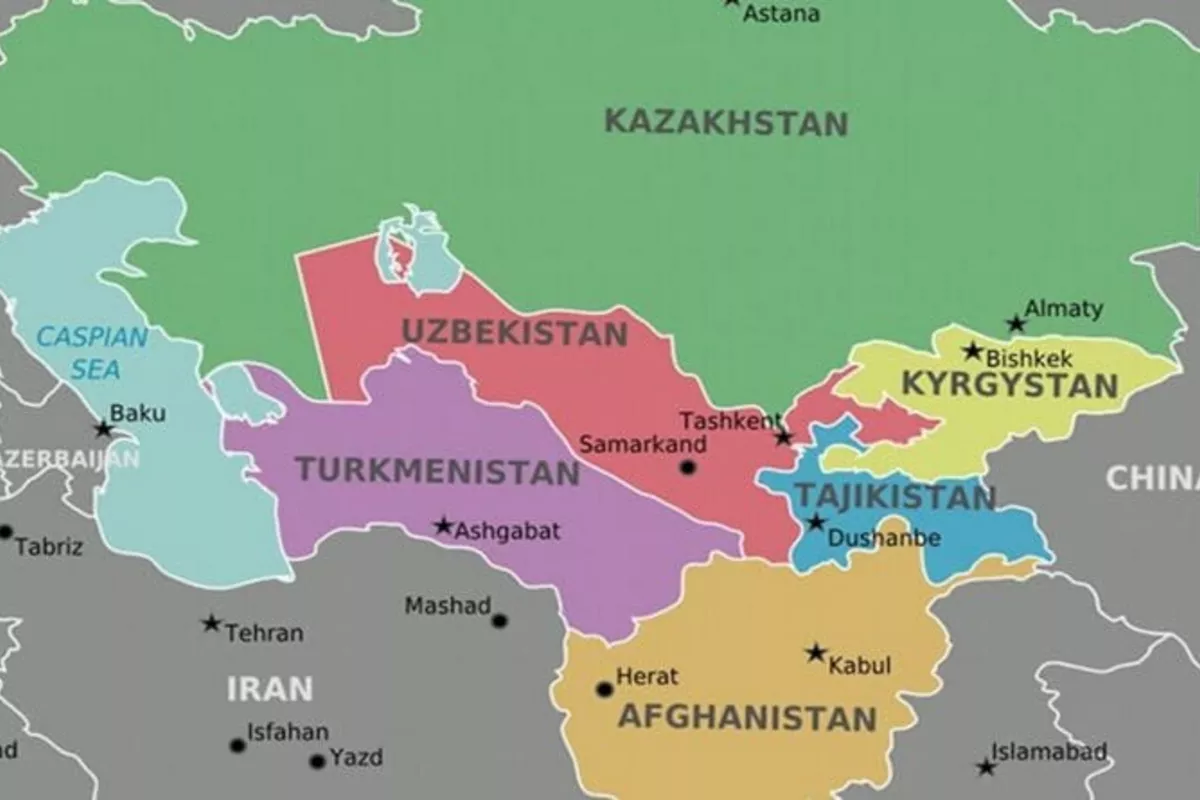
Trade and connectivity form the third pillar and arguably the most strategically important. Kyrgyzstan’s geographic position-situated between major markets such as China and the wider Eurasian space-offers inherent advantages. By investing in transport corridors, customs efficiency, and logistics infrastructure, the country is capitalising on its role as a transit economy. Initiatives in this area would also complement existing regional frameworks, reinforcing Kyrgyzstan’s integration into broader supply chains.
Tourism, the fourth priority, is perhaps the most immediately accessible avenue for growth. With its mountainous landscapes and cultural heritage, Kyrgyzstan has long been viewed as having the potential to become a Central Asian tourism hub. Central to this strategy is a tax-advantaged zone in Tamchy, marketed as a potential “new Dubai,” which aims to “host a wide variety of services, from fintech to logistics.” Construction of this special financial investment zone began in February 2026. The development of Tamchy as a tax-friendly investment zone is not only an initiative to attract outside investment, but it is clearly tied to the tourism sector, particularly given its proximity to Lake Issyk-Kul.
Three decades after its founding, the Government of Kyrgyzstan is engaged in a broad, ambitious, and concerted economic strategy aimed at lifting the country’s living standards, as well as making it a regional economic hub. While there is still some catching up to do in nominal GDP terms with its neighbours, such as Kazakhstan, the economic progress made by Kyrgyzstan has been noticeable. This progress has been made possible due to the government’s emphasis on the sectors that will drive innovation, growth, trade, and sustainability into the future.
By Dr. Bailey Schwab