Recent protests in Iran may indirectly benefit Syria by constraining Tehran’s regional reach. A reduction in support for proxy forces could ease security pressures and lower regional tensions. As Iran’s influence diminishes, Damascus gains greater room to consolidate state sovereignty, diversify external partnerships, and pursue stability anchored in institutions and pragmatic regional engagement.
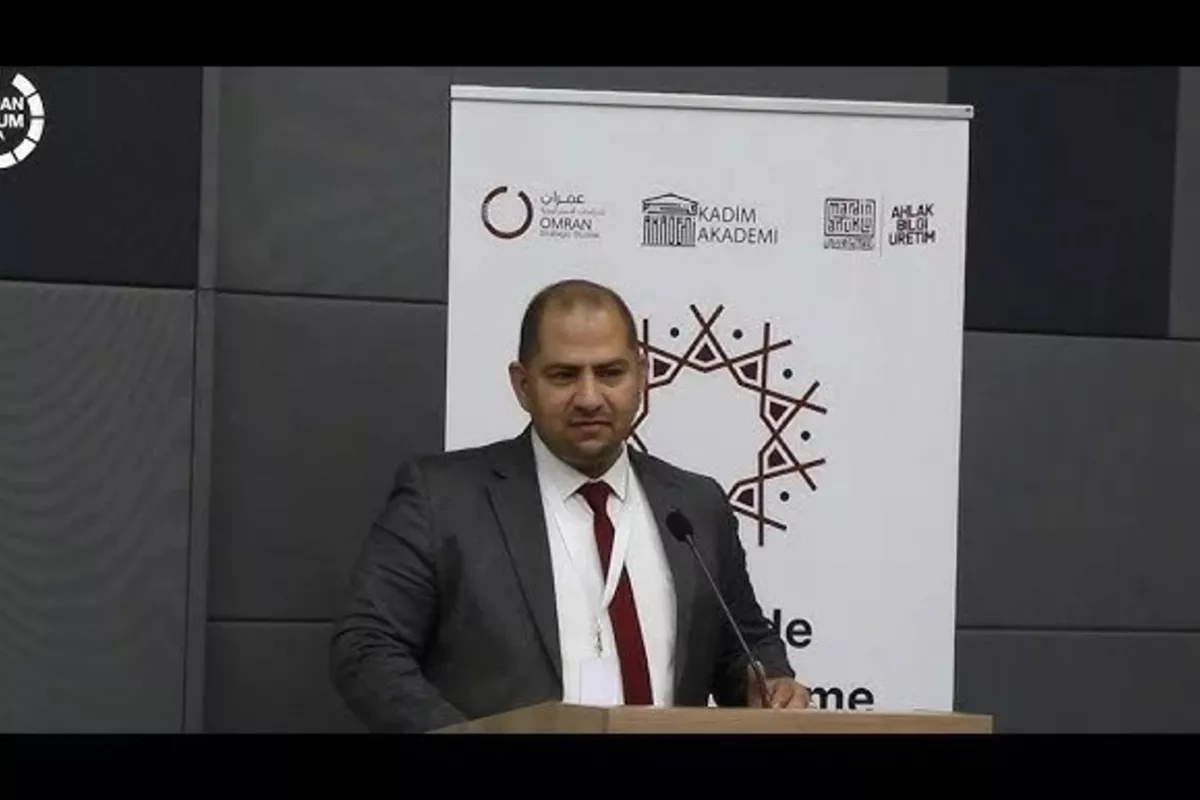
The Caspian Post analytical website spoke to Dr. Ammar Kahf, Co-Founder and Executive Director of Omran for Strategic Studies and a board member of the Syrian Forum, about the potential regional implications of political change in Iran and its impact on Syria’s security environment, diplomatic posture, and economic trajectory.
- How could the recent protests in Iran, if they lead to a change of power, affect Syria’s political and security environment?
- The protests in Iran are unprecedented in their spread and intensity, yet they remain opaque in terms of leadership and concrete demands. If they lead to a change of power, or even prolonged internal distraction, the impact on Syria would likely be indirect but positive.

photo: Reuters
Iran has already retreated significantly from Syria compared to previous years. Any further inward focus by Tehran would reduce its ability to meddle in Syria’s internal affairs, limit destabilizing activities, and ease security pressures. This would give Syria greater room to consolidate stability through state institutions rather than navigating external interference.
- How might a weakening of Iran’s support for proxy forces, including Hezbollah, influence the regional security balance and developments in Syria?
- A weakening of Iran’s proxy network would be a net stabilizing factor for the region. Proxy-based strategies have been a major source of escalation, fragmentation, and cross-border insecurity.
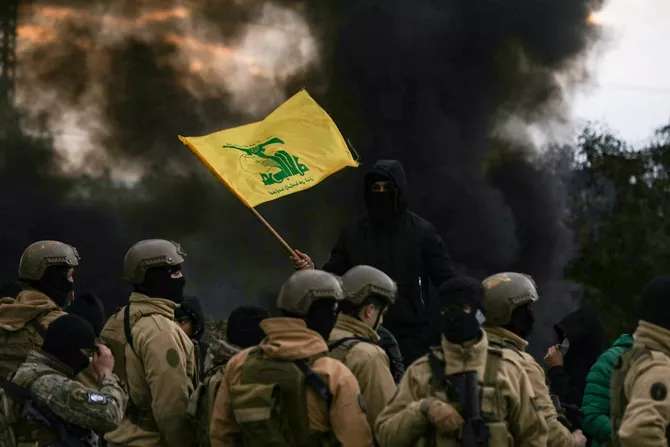
photo: Press TV
For Syria specifically, reduced proxy activity lowers the risk of becoming an arena for regional confrontation, particularly with Israel. It also supports Syria’s shift toward a state-centered security model, where authority is exercised through formal institutions rather than armed non-state actors.
- If Iran’s long-standing military and political leverage over Syria diminishes, how could this reshape Damascus’s regional position?
- In practice, Iran’s leverage over Syria already diminished significantly after December 8. What remains today is residual and indirect - such as pressure over past financial debts to the former regime or attempts to influence through regime remnants and information campaigns.
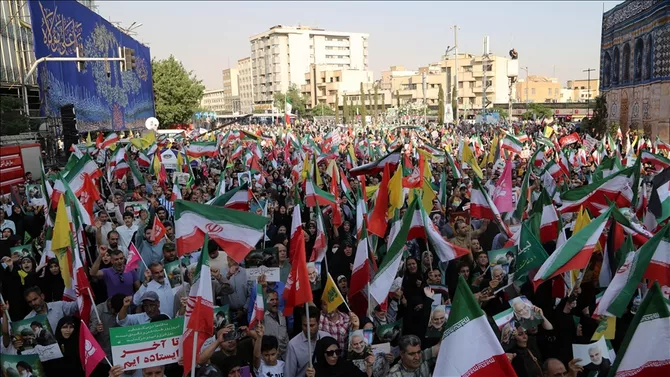
photo: CNN
This shift enables Damascus to reposition itself as a sovereign regional actor, free from being perceived as part of Iran’s regional project. It strengthens Syria’s ability to diversify partnerships, normalize relations with Arab states, and pursue pragmatic diplomacy based on national interest rather than ideological alignment.
- Could a possible political transformation in Iran prompt the United States, Israel, and Russia to adopt new approaches toward Syria?
- These are largely separate issues. U.S. and Israeli policies toward Syria have been driven primarily by concerns over Iranian weapons transfers and military entrenchment. That channel has effectively ended, and Syria has cut a new path distinct from Iran’s regional agenda.
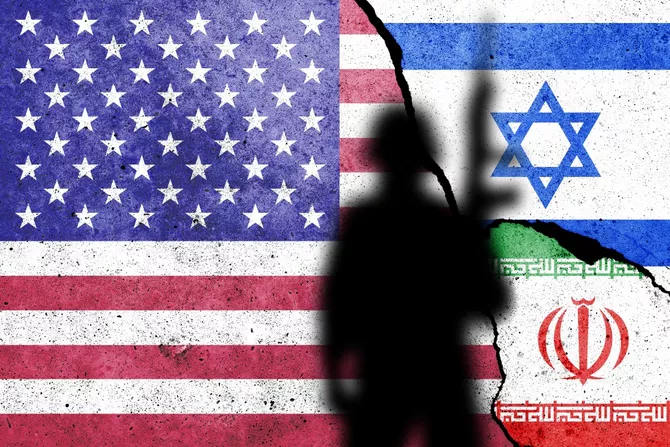
photo: CNN
Russia has already adapted to this reality and prioritizes centralized authority and stability in Syria. Any adjustments by external powers will depend far more on Syria’s own performance - in border control, internal security, and governance - than on Iran’s internal political trajectory.
- Overall, how might a change of power in Iran affect the regional security architecture in the Middle East and Syria’s role within it?
- A change of power in Iran could improve regional security, but the outcome is highly conditional. It depends on who comes to power and how the transition unfolds.
If new leadership prioritizes domestic recovery and constructive regional integration, this would reduce tensions and allow states like Syria and Iraq to stabilize without external disruption. However, if power shifts toward more radical or ideological actors, regional instability could persist or even deepen.
photo: Reuters
Syria’s role in either scenario will be shaped by its ability to consolidate sovereignty and remain outside ideological regional confrontations.
- How could a change of power in Iran or a weakening of central authority impact Syria’s economic situation and reconstruction process?
- Economically, Syria has already decoupled its recovery path from Iran. Since December 8, Damascus has pursued a new trajectory focused on regional reintegration, trade, and investment independent of Iranian support.
A weakening of Iran’s authority may reduce certain pressures - such as debt claims linked to the former regime, but it will not be decisive for reconstruction. Syria’s economic recovery depends primarily on regional confidence, access to markets, institutional reform, and gradual sanctions relief, not on Iran.
- Could political changes in Iran lead to new alliances or confrontation lines among regional actors, and where would Syria stand in such a scenario?
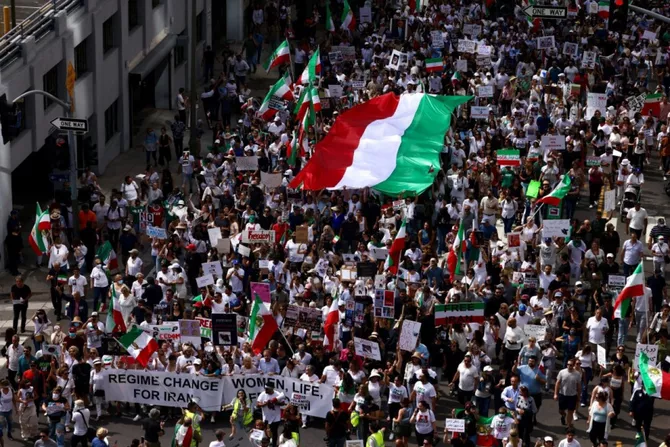
photo: APA
- Yes, political change in Iran could produce multiple scenarios, ranging from de-escalation to renewed polarization.
Some regional actors may seek accommodation, while others may hedge against uncertainty. In this environment, Syria’s strategic interest is to avoid rigid bloc politics and position itself as a stabilizing actor focused on sovereignty, non-interference, and economic cooperation.
Syria’s optimal position is not alignment with or against Iran, but anchoring itself within a pragmatic regional order that prioritizes stability and development.