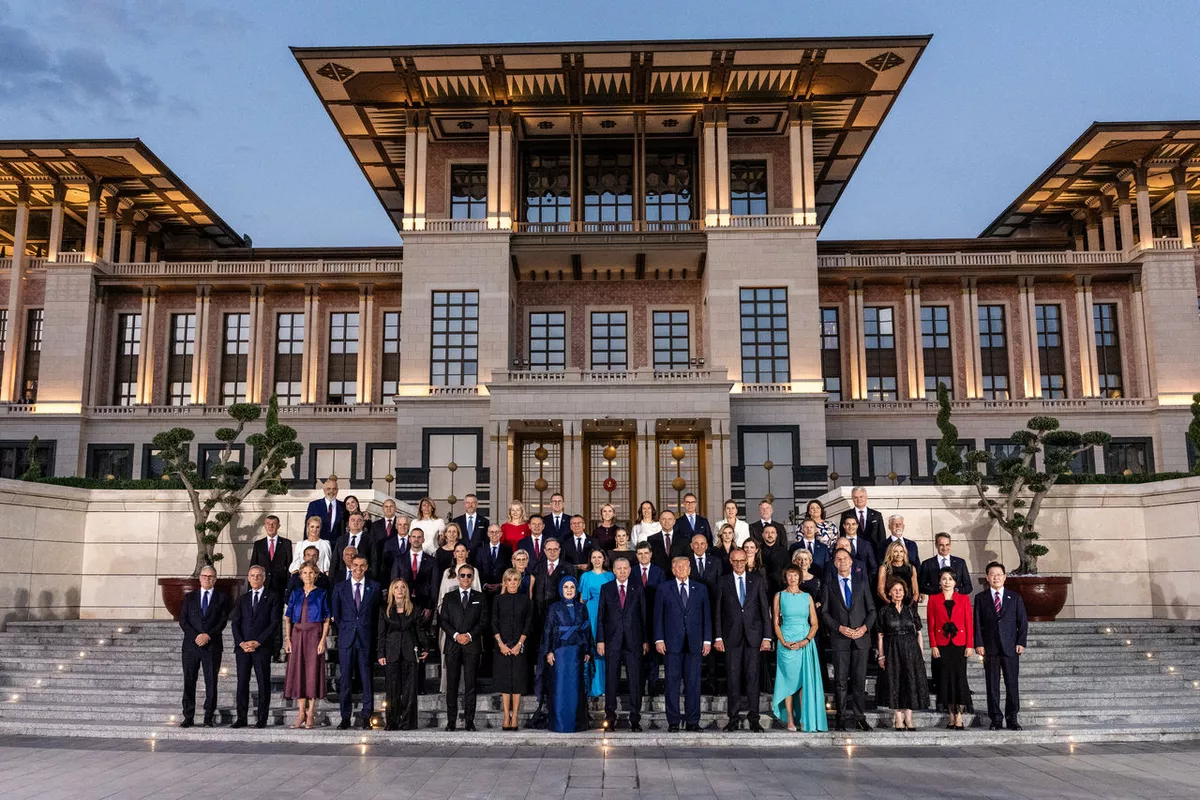
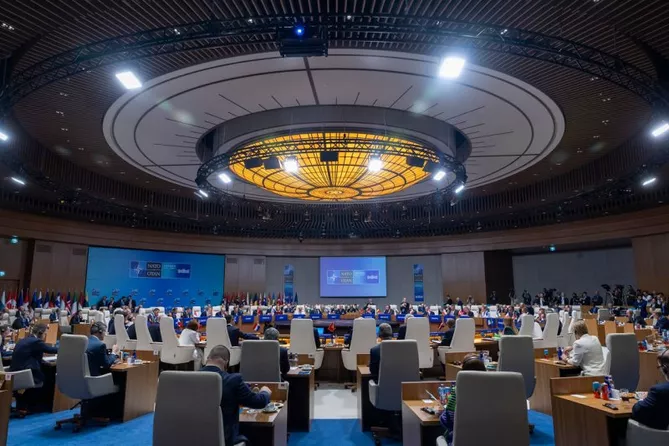
The final declaration of the 36th NATO Summit in Ankara was more than a routine diplomatic document. It was a political message addressed simultaneously to Russia, Ukraine, Iran, the Alliance's European members and, perhaps most importantly, the United States itself.
The central message was clear: the heads of state and government of the North Atlantic Alliance reaffirmed their "ironclad commitment to collective defence" under Article 5 of the Washington Treaty. In other words, an attack against one ally remains an attack against all.
At first glance, this may seem like a familiar NATO formula. Yet under the current circumstances, its repetition carries far greater political significance. After months of debate over the future of American involvement in European security, possible changes to Washington's commitments, and Europe's need to assume greater responsibility for its own defence, the Ankara declaration was designed above all to demonstrate one thing: NATO remains united, and its core security guarantees remain intact.
This explains why the document repeatedly emphasises unity, collective strength and shared responsibility. NATO is seeking to show that, despite internal disagreements over defence spending, strategic priorities and the role of the United States, the Alliance not only remains functional but is preparing for a long-term strategic confrontation.
Source: Anadolu Agency
Russia is described in the declaration as a long-term threat to Euro-Atlantic security and stability. This is no longer merely a temporary response to Moscow’s war against Ukraine. It reflects a new strategic reality. The Alliance effectively acknowledges that confrontation with Russia will be prolonged and will therefore require not only political statements but also substantial investment in defence.
In this context, the announcement of more than $50 billion in new procurement is particularly significant. This is not just about money. It is about strengthening NATO's industrial base, improving interoperability among allied forces and building a more resilient transatlantic defence system. Increasingly, NATO is thinking not in terms of short-term responses but of comprehensive modernisation.
That is why the declaration places such strong emphasis on preserving the Alliance's military edge through investment in armed forces, advanced technologies, intelligence capabilities and interoperable defence systems. The Ankara declaration shows that NATO is seeking to move from political unity to military and technological transformation.
Ukraine occupies a separate and highly important place in the document. The allies confirmed their long-term support for Kyiv and pledged €70 billion for military equipment, assistance and training. Moreover, the declaration underlines their intention to maintain support at a comparable level in 2027.
This is an important signal for Kyiv. NATO is not offering immediate membership, but it is demonstrating that Ukraine will remain at the centre of its defence strategy. For Russia, by contrast, it signals that expectations of Western fatigue have not been realised.
The section on Iran is also notable. NATO reaffirmed that Iran must never possess nuclear weapons and called on Tehran to respect freedom of navigation in the Strait of Hormuz. This broadens the significance of the Ankara Summit beyond Ukraine and demonstrates that the Alliance views security as an interconnected system stretching from Eastern Europe to the Middle East and key global maritime routes.
Yet the central political intrigue of the summit was not only about Russia or Iran. It was about the state of relations between the United States and its European allies. European leaders have long spoken of the need to strengthen the continent's own defence capabilities. But the reality remains clear: without the American security umbrella, Europe is not yet capable of fully guaranteeing its own security, at least in the foreseeable future.
This is precisely why the declaration places such strong emphasis on NATO unity and collective defence. For European allies, it was essential to receive public confirmation that Article 5 remains not merely a symbolic commitment but the operational foundation of the Alliance.
US President Donald Trump has not directly indicated any intention to abandon America's commitments to its allies. However, his criticism of European defence spending has long been one of the central issues in the transatlantic debate. Washington expects Europe and Canada to spend more and assume a greater share of the burden. In this sense, the decisions taken at the Ankara Summit on new defence procurement and the strengthening of Europe's defence capabilities can be seen as a partial acceptance by the allies of Trump's logic.
This may also explain why the summit proceeded relatively calmly. NATO's European members managed to avoid a repetition of the tense atmosphere seen at the 2025 Munich Security Conference, where US Vice President JD Vance sharply criticised Washington's partners and allies.
On the sidelines of the summit, particular attention was drawn to Trump's meeting with Ukrainian President Volodymyr Zelenskyy. According to media reports, the two discussed the possibility of the United States granting Ukraine a licence to produce missiles for Patriot air defence systems. Trump reportedly described such a decision as "cool" and suggested that Ukraine would no longer be able to complain about insufficient US support.
If implemented, this could become one of the most practical outcomes of the Ankara Summit. For Ukraine, the ability to produce missiles for Patriot systems is of strategic importance, as these systems remain one of the key means of defending against Russian missile attacks. For the United States, such a step would strengthen Kyiv while reducing the need to turn every new assistance package into a separate domestic political battle.
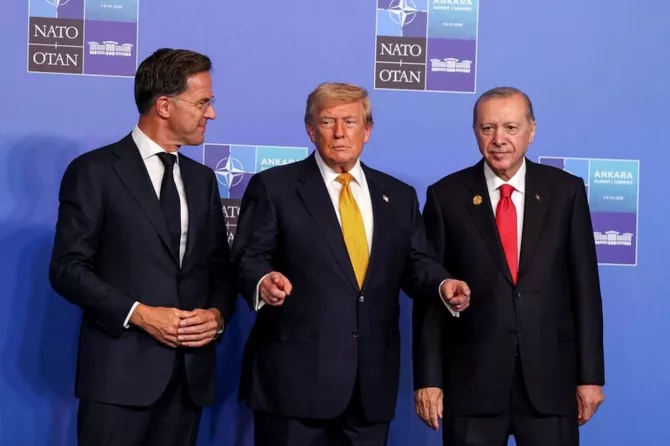
Source: Reuters
NATO Secretary General Mark Rutte, speaking after the summit, said the United States remains fully committed to the Alliance and that Trump is ready to defend NATO allies. At the same time, he stressed that Washington expects Europe and Canada to bring their defence spending closer to US levels. According to Rutte, this is a fair expectation.
At his final press conference, the NATO chief described the atmosphere at the summit as one of "incredible unity" and said the Alliance had become "stronger than ever" and was ready to defend every inch of its territory. His reference to "NATO 3.0" reflects an attempt to present the current transformation not as a crisis but as a new stage in the Alliance's development.
This is the main outcome of the Ankara Summit. NATO sought to show that internal disagreements have not undermined its foundations and that external threats are, in fact, pushing the allies towards greater cohesion. European allies received an important reaffirmation of American security guarantees. The United States received commitments from its allies to increase defence spending. Ukraine received a signal of continued long-term support.
Of course, time will determine the real significance of these decisions. Declarations alone cannot replace actual deliveries, industrial capacity or political will. But it is already clear that the Ankara Summit was NATO's attempt to present itself as a united, modernised Alliance prepared for a prolonged strategic confrontation.
That is why some political leaders have already described the meeting as historic. Not because all contradictions were resolved in Ankara, but because NATO succeeded in demonstrating the most important thing: its ability to remain united at a time when that unity is being seriously tested.