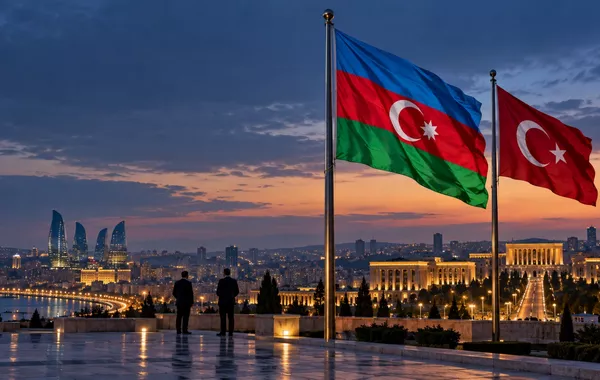
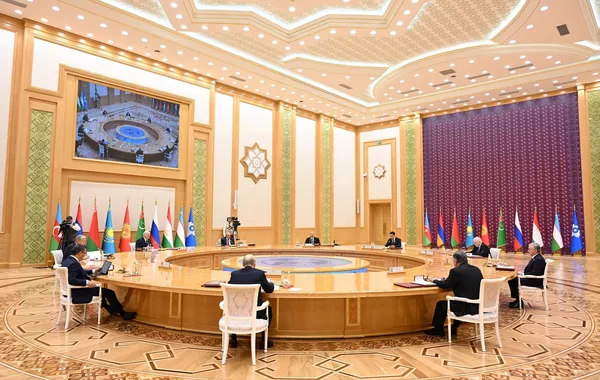
When Azerbaijan lifted restrictions on the transit of goods to Armenia in October 2025 and began supplying fuel there in December, the move was widely seen as part of a broader post-conflict normalization process. The sequence of events was important. The occupation of Azerbaijani territories had ended, the military confrontation was over, and Baku and Yerevan had already entered a new political phase. Economic contacts followed political change rather than preceding it.
Georgia now appears to be testing a very different model.
Fuel deliveries from Georgian-controlled territory to Russian-occupied Abkhazia are being presented by the government in Tbilisi both as a humanitarian measure and as an attempt to rebuild trust with the population living across the occupation line.
Yet the decision has triggered a far more serious debate than the volume of fuel itself might suggest.
The central issue is not whether civilians in Abkhazia should receive assistance during a fuel shortage. Few would object to humanitarian support for people facing genuine hardship. The real question is whether economic cooperation with a Russian-backed separatist administration can become an instrument of reconciliation - or whether, in practice, it risks gradually legitimizing the political and economic structures created by occupation.
The controversy began after Georgian media and social networks reported fuel tankers heading into Abkhazia. On August 12, Prime Minister Irakli Kobakhidze publicly confirmed the deliveries, initially stressing that they had been carried out by private business rather than by the Georgian state.
“The fuel was brought in not by us, but by business,” Kobakhidze said, adding that Georgia would continue helping Georgians and Abkhaz living in the region whenever possible, provided that such actions complied with the country’s Law on Occupied Territories.
However, it soon became clear that drawing a strict line between a purely private commercial transaction and government policy was not so easy.
It emerged that the company involved, Solidus, had received authorization to conduct economic activity in the occupied territory. The company’s owner, Giorgi Arveladze, initially spoke of around 300 tons of fuel and argued that the shipment was intended primarily to prevent the fuel crisis from placing further pressure on residents of the Gali district.
Then came a much more important admission.
On August 18, Kobakhidze said the fuel deliveries had indeed been coordinated with the government and that the decision had been driven by a desire to “restore trust.” By that point, around 680 tons of fuel had been transported from Georgian-controlled territory into Abkhazia. Further deliveries were also being discussed.

Credit: globalfdireports.com
That changed the political meaning of the story.
This was no longer simply a businessman selling fuel across an occupation line. It was an economic operation carried out with the knowledge and approval of the Georgian authorities and presented by the government as part of a broader confidence-building policy.
The timing is equally important.
For years, Abkhazia has depended heavily on Russia for fuel and other essential supplies. But Russia itself is now facing renewed pressure on its domestic fuel market. Ukrainian strikes on Russian oil refineries, seasonal demand and disruptions to production infrastructure have contributed to a new wave of shortages.
Abkhazia inevitably feels the consequences.
When Russia has sufficient resources, the separatist region receives much of what it needs from the north. But when shortages emerge inside Russia itself, the vulnerability of Abkhazia’s economic dependence becomes particularly visible.
What almost nobody expected was that Georgia itself would step in to fill the gap.
And this is where humanitarian logic collides with national security concerns.
Abkhazia is not simply a territory populated by civilians and cut off from normal economic life. Russian armed forces are also stationed there. The region hosts Russia’s 7th Military Base in Gudauta, border structures and an FSB maritime unit in Ochamchire, as well as other military facilities.
This inevitably raises a difficult question: once fuel enters territory that Tbilisi does not effectively control, who can guarantee where it ultimately goes?
The Georgian opposition offers an extremely harsh answer. Representatives of the United National Movement claim that a significant share of the fuel entering Abkhazia from Georgia may ultimately benefit Russian military and occupation structures. Beso Shengelia, in particular, has alleged that the fuel is distributed among Russian military facilities and separatist security agencies.
No publicly available evidence has been presented to substantiate these claims, and they therefore cannot be treated as established fact.
But the absence of proof does not eliminate the underlying problem.
Tbilisi does not control the territory. It does not control the distribution system. Nor can it independently track every litre of fuel after it crosses the occupation line. The Georgian government therefore cannot objectively guarantee that none of these supplies will directly or indirectly benefit Russian military structures.
That is the weak point in the humanitarian argument.
If Georgia were delivering strictly monitored humanitarian aid directly to vulnerable residents, hospitals or Georgian communities in the Gali district, the political implications would be very different. Fuel, however, is a fungible resource. Even if a particular shipment formally goes to civilian filling stations, it can free up other supplies for government, security or military use.
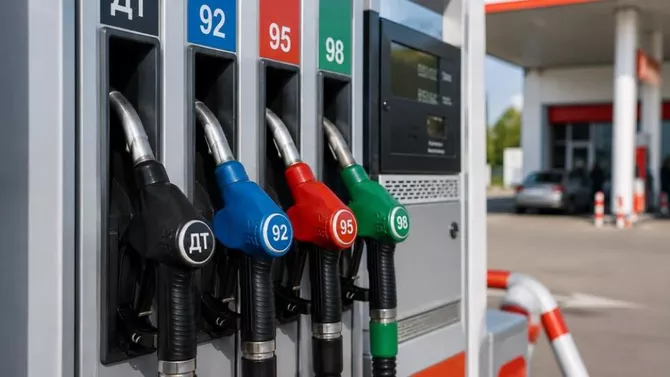
Credit: jam-news.net
This does not prove that Georgian fuel is being supplied to Russian troops.
But it does mean that Tbilisi cannot simply dismiss the question.
Meanwhile, Solidus has already indicated that it intends to purchase additional fuel for further deliveries to Abkhazia. Georgia itself does not produce petroleum products and imports them from various sources, including Europe. A new commercial chain is therefore gradually emerging in which fuel imported into Georgia may later be resold into an occupied territory.
The government argues that the broader goal is reconciliation.
Kakha Kaladze, secretary-general of the ruling Georgian Dream party, has defended contacts with the Abkhaz population as essential to the country’s eventual reunification. From this perspective, medical assistance, fuel supplies and other forms of engagement are not concessions to separatism but instruments for rebuilding human ties destroyed by decades of conflict.
There is a certain logic to this argument.
Georgia cannot expect to restore its territorial integrity through diplomatic declarations alone. Relations between communities matter. Economic contacts can reduce alienation. Humanitarian support can demonstrate that Tbilisi distinguishes between separatist structures and ordinary people living under their control.
A policy of complete isolation carries risks of its own. The more isolated Abkhazia becomes from the rest of Georgia, the deeper it is integrated into Russia’s political, economic and security space.
But a reconciliation policy must also have red lines.
There is a fundamental difference between engaging with people and legitimizing institutions.
If economic cooperation gradually develops into routine relations with the de facto authorities, if commercial arrangements multiply, if transport routes are reopened and new forms of direct interaction with separatist structures begin to be discussed, Georgia risks quietly moving from confidence-building to accommodation with the post-2008 status quo.
That is why some members of the Georgian opposition are already warning that fuel deliveries could eventually be followed by discussions about reopening the railway through Abkhazia - an idea that has repeatedly surfaced in regional politics.
For now, such predictions remain speculative.
But the concern behind them deserves attention.
Every precedent creates the possibility of another.
Today, it is 680 tons of fuel. Tomorrow, it could be regular petroleum deliveries. Then the range of traded goods could expand. After that, transport links may follow. At some point, economic pragmatism can begin producing political consequences that were never part of the original plan.
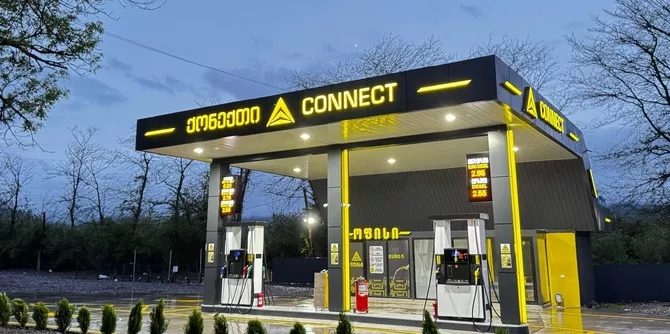
Credit: Georgia Today
Former President Mikheil Saakashvili has gone even further, portraying the fuel deliveries as a possible sign of preparations for broader political changes involving Abkhazia and the Tskhinvali region. His most dramatic predictions remain unsubstantiated and should be treated as political claims rather than evidence of an established scenario.
Yet the very fact that such theories resonate in Georgian society shows how sensitive the issue has become.
An important regional comparison is also relevant here.
During the Armenian occupation of Azerbaijani territories, Baku excluded economic interaction that could have contributed to normalizing the consequences of occupation. Direct economic cooperation with Armenia became possible only after Azerbaijan restored control over its territories, the armed conflict ended and the two countries entered a fundamentally new phase of relations.
That is why the Azerbaijani-Armenian example cannot simply be transferred to Abkhazia.
In Azerbaijan’s case, economic normalization followed a transformation of the conflict itself.
In Georgia’s case, the conflict remains unresolved. Russian troops remain in Abkhazia. Moscow recognizes the region as an “independent state.” Tbilisi regards it as occupied Georgian territory and exercises no effective control over it.
Nothing fundamental in that equation has changed.
That is what makes the Georgian government’s experiment so politically sensitive.
There is nothing wrong with wanting to help the Abkhaz population. On the contrary, Georgia has every reason to pursue a strategy that demonstrates to people living in Abkhazia that a future within a united country could offer them greater economic opportunity, security and freedom than permanent dependence on Russia.
But humanitarian policy must not become a substitute for political strategy.
And confidence-building must not quietly evolve into accommodation with structures created by occupation.
That is why the Georgian authorities need to answer several questions clearly.
Who receives the fuel? How is it distributed? What mechanisms exist to prevent Russian military formations or separatist security structures from benefiting from these supplies? Will the deliveries remain an exceptional humanitarian measure, or are they the beginning of regular trade? And, perhaps most importantly, what political limits has the Georgian government set for itself?
Without transparent answers, even steps taken with humanitarian intentions can create strategic risks.
The greatest danger may not be that Georgia is deliberately helping Russia or the separatist administration. There is no convincing evidence that this is Tbilisi’s objective.
The greater danger is that a policy launched under the banner of humanitarianism may gradually develop a political logic of its own.
Once economic ties are created, commercial interests emerge. Once commercial interests emerge, pressure grows to preserve and expand them. What begins as an emergency shipment can eventually become a permanent mechanism.
And permanent mechanisms can reshape political realities.
That is why the controversy over Georgian fuel deliveries should not be reduced to several hundred tons of gasoline.
It is about precedent.
It is about the line between humanitarian engagement and political normalization.
And it is about whether Georgia can build bridges with the Abkhaz population without strengthening the system that has kept Abkhazia outside Tbilisi’s control for nearly two decades.
Helping people is a legitimate and justified objective.
But in a territory where the military forces of a foreign state are present, even an ordinary fuel tanker can carry far more political weight than its cargo.
For Georgia, this may be an experiment in rebuilding trust.
But it may also prove to be the beginning of a much more dangerous game.