How Azerbaijan Became a Key Player in the Central Asian Format
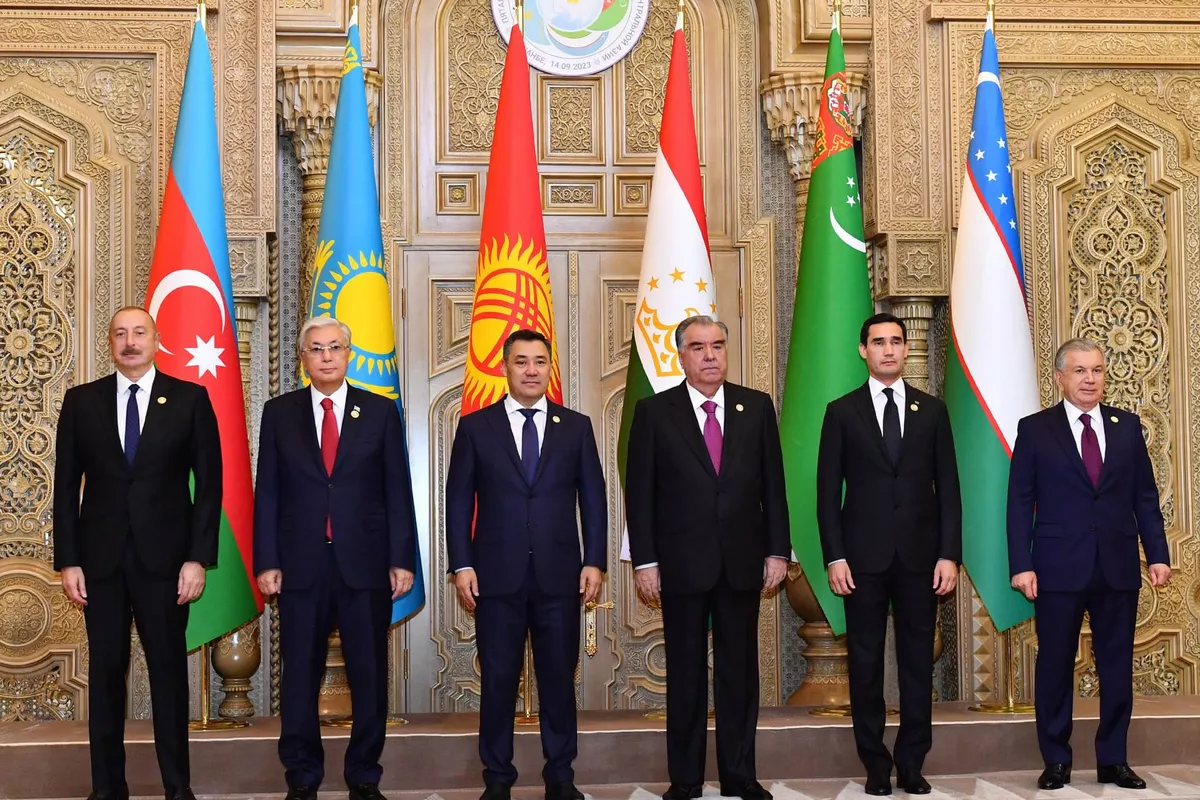
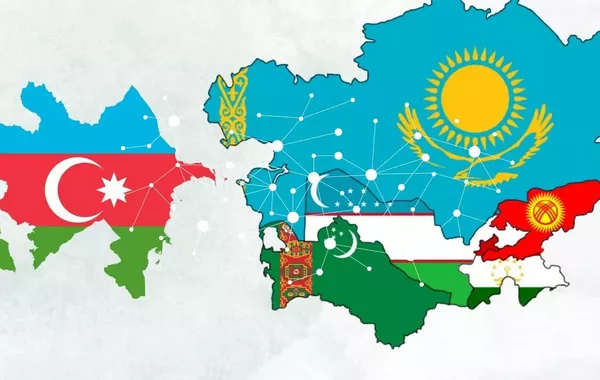
It has been some time since Azerbaijan officially became a member of the Consultative Council of Central Asia, yet this development continues to capture the attention of politicians of various stripes and analysts alike. The topic has become so prominent that it has, in many ways, overshadowed the most important outcomes of the C5+1 summit in Washington. Even the conclusions of the recently held 3rd European Union-Central Asia Economic Forum, as well as the subsequent Investors Forum in Tashkent, did little to diminish interest in the new regional format, which has effectively transformed into a C6, whether some acknowledge this or not.
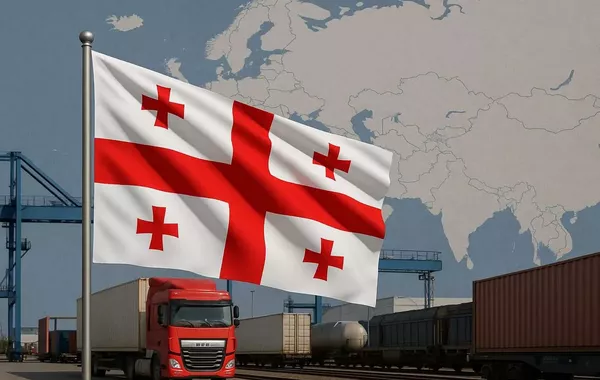
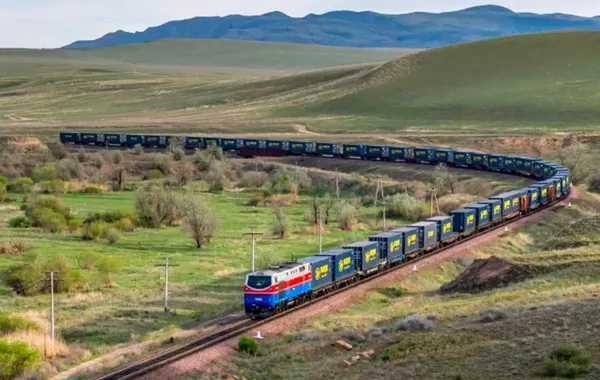
In reality, the opposite happened: the EU and Central Asian countries discussed the development of the Trans-Caspian International Transport Route (TITR, the Middle Corridor), seen as a new Silk Road and now attracting interest from actors far beyond the region. After all, the Middle Corridor is precisely what connects China with the EU.

photo: Caspian Post
The key point is that this route has become the main artery for China-Europe freight traffic. a role that has grown even more important since the previously successful Northern Route ceased to function due to the Russia-Ukraine war.
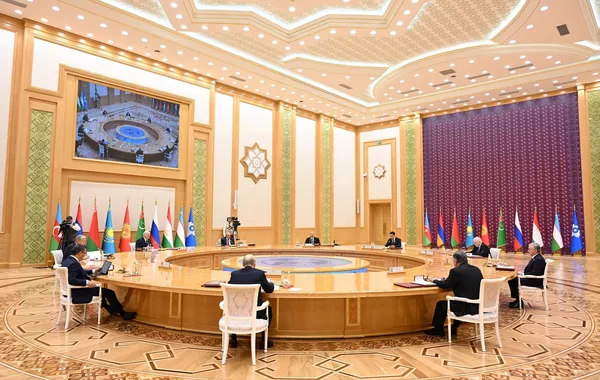
In other words, the clear prospects of the Middle Corridor increase the importance of closer integration between Azerbaijan and the Central Asian states. This is even more evident given that the corridor is also emerging as a leading route in another context. For instance, during the 7th Consultative Meeting of Central Asian states, Kyrgyz President Sadyr Japarov emphasized that the developing China-Kyrgyzstan-Uzbekistan railway is viewed, among other things, as part of the Zangezur Corridor (Trump’s Route, TRIPP), which Azerbaijani President Ilham Aliyev describes as an important branch of the Middle Corridor.
photo: Trend
These nuances have led some experts to believe that the new format, now a concrete manifestation of regionalization, may introduce certain risks to its smooth functioning, as it is becoming practically without alternatives.
However, it is unlikely, for example, that China, which maintains a special framework of relations with both Central Asia and Azerbaijan, would be interested in any escalation in this area. This is particularly clear given the Joint Declaration on Establishing a Strategic Partnership, signed in 2024 between Azerbaijan and China, which confirmed Beijing’s readiness to take an active part in the construction and use of the Middle Corridor. The declaration also reaffirmed China's commitment to “closer cooperation” with Azerbaijan and other countries along the route, with the goal of jointly ensuring the uninterrupted functioning and accelerated development of the southern corridor for China-Europe freight trains, and vice versa.
This emphasis clearly demonstrates Beijing’s interest in the stable operation of the Middle Corridor.
Against this backdrop, some analysts question how interested the United States may be in the success of projects from which China stands to benefit so openly, particularly in advancing its own interests. And although the EU has repeatedly stressed the importance of the TITR, today, amid heightened tensions in the U.S.-EU strategic relationship, it is clear that EU interests are unlikely to play a decisive role in Washington’s regional decision-making.
Yet even under such conditions, it would be historically inaccurate to discount the quality of U.S. relations with both Central Asia and Azerbaijan. In this context, Uzbek President Shavkat Mirziyoyev’s statement about plans to build a strong bridge between Central Asia and the South Caucasus is especially notable - a “connecting bridge” that implies both geographical and geopolitical dimensions.
Taking into account the recent increase in attention by nearly all Central Asian leaders and Azerbaijan to strengthening national defense capabilities, this “bridge” appears to be an important support mechanism for the military dimension of the Consultative Council’s member states. Viewed together with Azerbaijan’s growing regional role as a “center of influence in the space between the Caspian and Europe,” Central Asia expert Bruce Pannier suggests that this may cause “irritation in Moscow.”
Some observers attempt to explain this by suggesting that, under certain geopolitical scenarios, “some of Russia’s transport projects in the region,” including the North-South corridor, could come under threat. Analysts argue that this creates risks for the region with respect to maintaining peace, stability, and security.
For this reason, attention has turned to President Ilham Aliyev’s recent message to participants of the international conference on “The role of special services in ensuring the security of international transport routes.” There, he underscored the need to strengthen cooperation among intelligence and security agencies to ensure the protection of the extensive transport network that passes through the territories of regional states, connecting Europe and Asia.

photo: News.Az
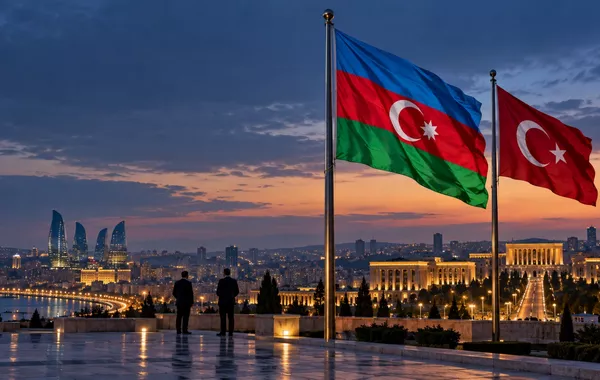
President Aliyev emphasized that “we view these transport and communication routes not only as a source of economic prosperity, but also as an important foundation for closer integration of the Turkic states in political and cultural spheres, and in the areas of defense and security.”
Highlighting “attempts at external interference and destabilization aimed at obstructing the implementation of major regional projects,” he described the strengthening of cooperation among special services as a matter of vital necessity.
Clearly, the above speaks for itself. For our part, we note that the unified space of Central Asia and Azerbaijan is genuinely emerging as a region that, to a significant extent, is shaping new trends of the modern era.