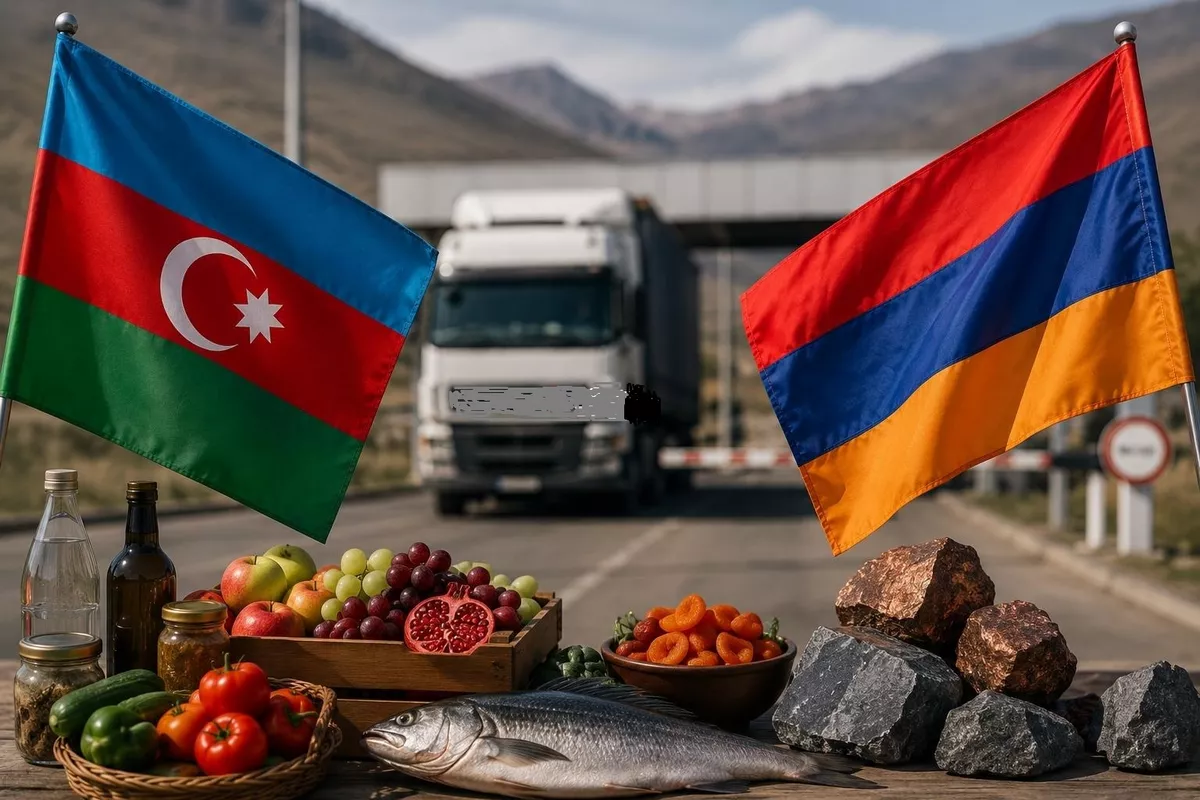
Armenian agriculture has found itself compelled to seek new export markets. For many years, Russia remained the principal destination for a significant share of Armenia’s agricultural products due to geographic proximity, established logistics and stable demand. However, Moscow’s 2026 restrictions on imports of several Armenian goods, including fruit, vegetables, flowers and other products, exposed the vulnerability of this model. Yerevan was even forced to ask Moscow to resolve the resulting trade disputes.
Such dependence is particularly dangerous for the agricultural sector. Unlike manufactured goods, harvests cannot be stored indefinitely while producers wait for market conditions to improve. Fruit, vegetables, berries and flowers must be sold within a specific season, meaning that the loss of access to a major market quickly translates into direct losses for producers.
Against this backdrop, Armenia’s interest in the European market has understandably increased. The European Union is already considering measures to facilitate access for Armenian agricultural products following the Russian restrictions. Europe, however, cannot serve as a straightforward substitute for Russia. The European market imposes considerably stricter requirements concerning quality, safety, certification and product traceability. Logistics also remains a major constraint for Armenian producers: transporting perishable goods to the EU is more expensive and requires more sophisticated infrastructure.
It would therefore be far more rational for Armenia to diversify its exports rather than simply replace the Russian market with the European one. The more destinations available to Armenian producers, the less dependent they will be on the decisions of any single country. From this perspective, neighbouring Azerbaijan could be of particular interest.
At the same time, it is still premature to speak of full-fledged trade between Armenia and Azerbaijan. The first and indispensable prerequisite for launching such trade must be the signing of a peace agreement between the two countries. Only a peace treaty can establish a stable political and legal foundation for the subsequent opening of borders, the establishment of normal interstate relations and the restoration of transport links. Baku and Yerevan have already reached a considerably more advanced stage in the peace process, but the formal conclusion of an agreement remains the most important condition for comprehensive normalisation.
This is important not only politically but also in purely economic terms. Businesses need predictability. No investor or entrepreneur will build a long-term supply chain if there is a risk of another political crisis and renewed border closures. A peace agreement must therefore serve as the foundation upon which arrangements concerning trade, customs and phytosanitary controls, mutual recognition of certificates and the movement of goods can subsequently be developed.
However, the formal signing of a peace agreement would not in itself guarantee the automatic emergence of stable economic ties. Public and political readiness for normalisation will be equally important.
Armenian activist Ishkhan Verdyan, known for supporting peace between Armenia and Azerbaijan, believes that establishing healthy relations with Azerbaijan is among the priorities of Prime Minister Nikol Pashinyan’s current term in office.
“If we examine the government programme presented to parliament, establishing healthy relations with Azerbaijan is one of Prime Minister Pashinyan’s priorities during his current term. He has the desire and the political will, and he is actively seeking ways to implement this idea,” Verdyan says.
In his view, however, political will at the leadership level is not enough. One of the main obstacles may be the absence of a meaningful public dialogue within Armenia on relations with Azerbaijan.
“Pashinyan has not yet succeeded in establishing effective communication with his own citizens on the issue of Azerbaijan. He sees the situation in one light, while a significant part of Armenian society sees it differently. In Verdyan’s view, the opposition contributes to this divide by constantly intensifying nationalist and chauvinistic rhetoric,” the activist says.
In this context, normalisation has not only diplomatic but also practical economic significance. Sustainable trade is impossible without personal security, trust and predictability. If entrepreneurs fear political instability, public hostility or another possible border closure, they will be unable to plan long-term supplies and investments.
According to Verdyan, as long as ethnic hatred and discriminatory rhetoric persist, the very possibility of normal interaction between people from the two countries may remain at risk. Without such interaction, it is difficult to speak of developing full-fledged trade.
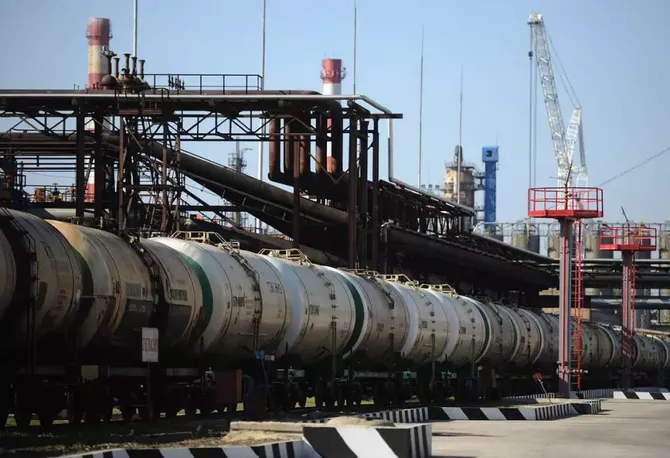
photo: fhnews.az
At the same time, the activist believes that potential direct trade between Armenia and Azerbaijan is consistent with the logic of both geography and regional politics.
“If events develop successfully, the two countries could become strategic partners with shared economic and political interests. This objective is achievable, and with sufficient effort, stable and mutually beneficial trade relations could emerge between Armenia and Azerbaijan,” Verdyan argues.
If this process is realised, Azerbaijan’s principal advantage for Armenian agriculture would be its geographic proximity. Russia is a much larger market, while the EU has incomparably greater purchasing power. For perishable goods, however, distance has an economic value of its own.
Armenian producers do not necessarily need a market with hundreds of millions of consumers. They need buyers whom they can supply quickly and at minimal transport cost. For this reason, following the conclusion of peace and the opening of the border, Azerbaijan could potentially become an additional market for Armenian fruit, vegetables, berries, flowers and processed agricultural products.
Moreover, the potential benefits would not be limited to direct bilateral trade. Restoring transport links could produce a much greater strategic effect. The opening of routes through Azerbaijan could provide Armenia with additional access to the Caspian Sea and, from there, to the markets of Central Asia. The economic significance of such a model would extend far beyond bilateral trade: Armenian goods would gain new routes to external markets, while Azerbaijan would strengthen its position as a regional transport and logistics hub.
Azerbaijan would, of course, be unable to replace Russia in terms of demand. Moreover, Azerbaijan’s agricultural sector is itself a significant producer and exporter, meaning Armenian goods would face competition in the Azerbaijani market. This would not necessarily be a fundamental problem. Competition could encourage producers in both countries to improve quality, reduce costs and invest in the processing, packaging and storage of agricultural products.
Over time, economic normalisation could also lead to the creation of more sophisticated production chains. These might include joint ventures in processing and packaging, logistics, wholesale trade and agricultural storage. The economic benefits of peace would then be reflected not only in access to a new market but also in the creation of jobs and investment opportunities.
Achieving this will require serious technical preparation. Following the signing of a peace agreement, the parties will have to develop border-crossing rules, customs procedures, phytosanitary requirements, certification arrangements and mechanisms for resolving potential trade disputes. Product quality will be particularly important, since phytosanitary concerns were among the factors behind the current difficulties facing Armenian exports to Russia.
The present crisis therefore represents both a challenge for Armenia and an incentive to adopt a more sustainable development model. Whereas a significant share of Armenian agricultural exports was previously oriented towards a single principal buyer, Yerevan must now pursue several destinations simultaneously. If relations are normalised, Russia could retain its importance as a major market. The EU could become a promising destination for products that meet strict European standards, while Azerbaijan, provided that peace is concluded, could give Armenia access to a nearby regional market and new transport opportunities.
In this sense, potential trade between Armenia and Azerbaijan would have significance far beyond the value of individual consignments of fruit or vegetables. Its principal effect could be to transform the economic geography of the South Caucasus itself.
Armenian-Azerbaijani trade should not be viewed primarily as an alternative to the Russian or European markets, but as an additional component of a more diversified Armenian export model. This is especially important for agriculture: access to several markets allows producers to reduce their dependence on political decisions and economic conditions in any one country.
The potential benefits for Armenia would not be limited to selling its own products in Azerbaijan. The opening of transport routes could alter the very logic of Armenia’s foreign trade by providing Armenian companies with shorter routes to the Caspian region and Central Asia. In such a scenario, Azerbaijan would become not merely a potential buyer of Armenian goods, but part of a broader regional trade infrastructure.
Such a scenario would, of course, be possible only if political normalisation proves sustainable. The signing of a peace agreement must serve as the starting point for creating the necessary legal and economic mechanisms. If this process is brought to the stage of practical implementation, agriculture could become one of the first sectors in which the benefits of peace are measured not through political statements but through tangible economic results.
For Armenia, this would create an opportunity to gradually move away from a model in which the fate of its harvest depends largely on a single external market and towards a more flexible system based on multiple export destinations. Ultimately, such diversification could become the principal condition for the resilience of Armenia’s agricultural sector in the years ahead.