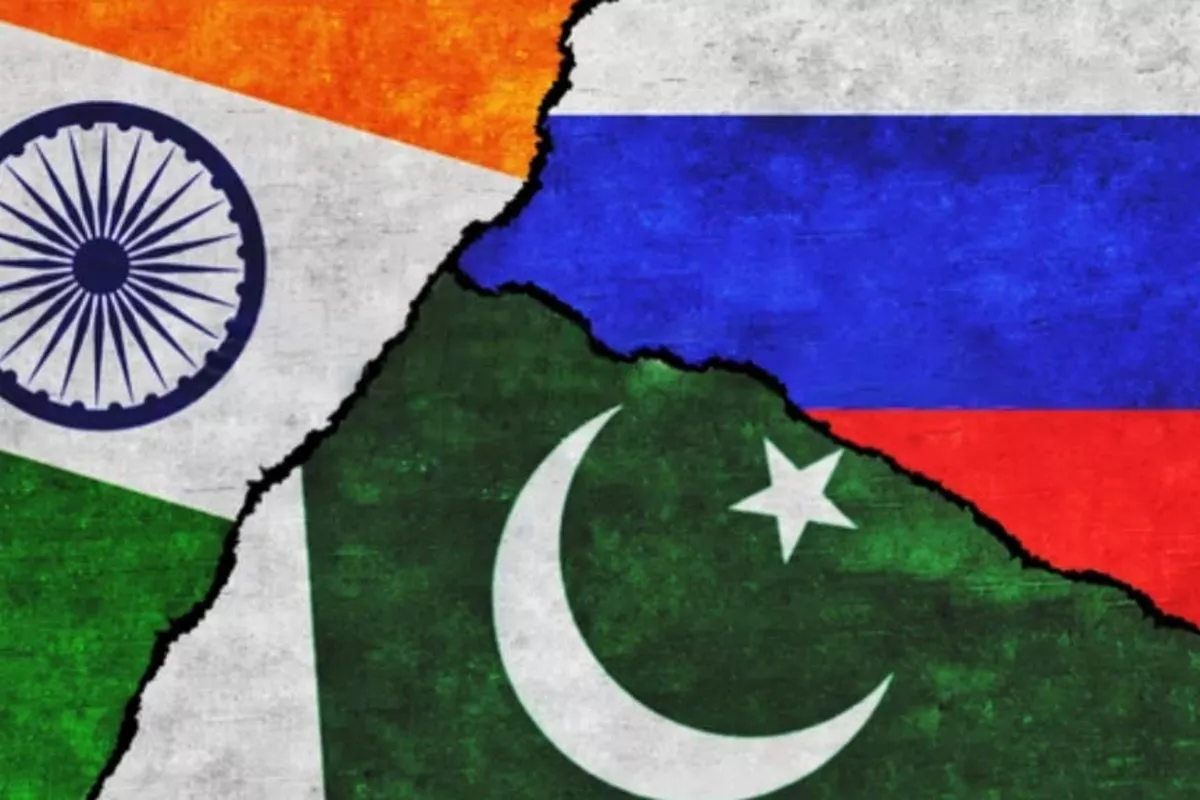
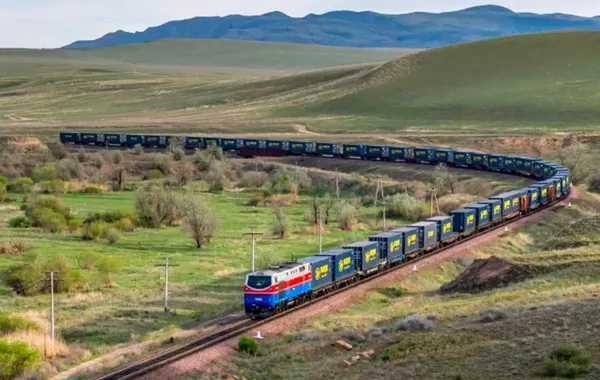
It is no secret that relations between Russia and India in recent years have been friendly. The two countries actively cooperate in many areas. This includes mutual trade, in which Russia supplies India with crude oil and petroleum products, and India willingly purchases them despite Western sanctions. It also includes Russia’s deliveries of certain types of weapons and military equipment to India. At the same time, there are reciprocal deliveries from India to Russia of food products, medicines, and textiles. Admittedly, sanctions have created a number of problems, primarily related to payments for supplies and transactions in foreign currency. Nevertheless, relations exist, and they are clearly positive.
However, it is also no secret that India’s relations with Pakistan remain problematic. This is a long-standing and serious conflict with a military dimension, which periodically escalates into armed clashes between the two countries. This situation is particularly alarming because both India and Pakistan possess nuclear weapons, and no one can guarantee that one day, after another escalation, one of these countries will not resort to nuclear force against its rival.
It is against the backdrop of these relations - India’s ties with Russia, which is a friend and partner of India, and its conflict with Pakistan, which is India’s adversary and rival - that certain events and processes have begun to unfold. These processes will clearly affect relations among the countries involved.
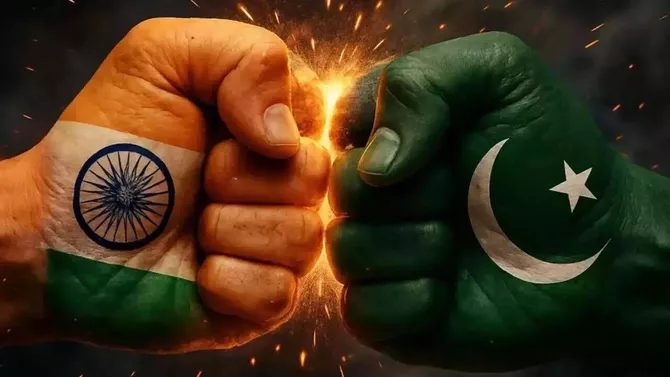
photo: CNN
We are referring to relations between Russia and Pakistan, and in particular to recent contacts and negotiations between Pakistani diplomats and officials and their Russian counterparts, as well as the prospects for the development of Russia-Pakistan relations. First of all, it is necessary to mention statements made in recent days by Pakistan’s ambassador to Russia.
“...Pakistan and Russia continue work on the construction of the ‘Pakistan Stream’ gas pipeline,” Pakistan’s ambassador to the Russian Federation, Faisal Niaz Tirmizi, told the media. “...This project remains extremely important. We continue to work on it, although it may take some time,” the diplomat said.
The Pakistan Stream gas pipeline project emerged quite a long time ago - negotiations between Pakistan and Russia began back in 2015. Initially, it was known as North-South. The pipeline is intended to connect liquefied gas receiving terminals in the ports of Karachi and Gwadar in southern Pakistan with industrial gas consumers in Punjab province in the north of the country. Its length is expected to exceed 1,100 kilometers, with a capacity of up to 16 billion cubic meters of gas per year. However, despite the long history of the project, it has still not been implemented, although both sides regularly declare their interest in its realization.
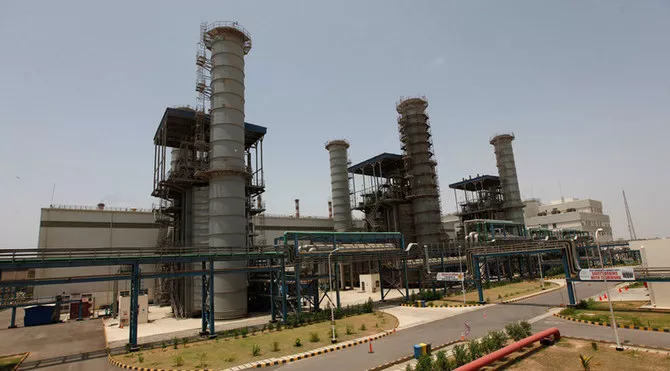
photo: arabnews
At the same time, many questions arise as to why Russia needs this project, since the gas transported through the pipeline will not be Russian. There are no Russian gas resources in this region near Pakistan’s coast. The gas will come from Qatar, with which Pakistan already has a long-term agreement. To this list of questions about the project’s logic for Russia, one can add the fact that it was initially agreed that Russia would hold 51% of the shares in Pakistan Stream. Today, according to updated agreements, Russia will own only 26%. Of course, such a stake could still bring Russia some income - if the project proves profitable in principle. The cost of construction is estimated at $2.5 billion. Initially, it was assumed that Russia would finance 85% of this amount. Now, however, Russia is expected to invest only $600 million. This is not the $2 billion originally envisioned, but it is still a significant sum.
In my view, Russia’s interest in this project, despite these questionable aspects, can be explained by the existence of certain hidden factors, and perhaps even already reached agreements between Russia and Pakistan on additional projects. In support of this assumption, one can cite the following information.
“...Moscow and Islamabad are negotiating joint exploration of gas fields,” Ambassador Tirmizi told Russian media. According to him, several weeks ago a Russian delegation visited Pakistan, and the sides are working out possible projects to explore gas resources on Pakistani territory. In the future, the diplomat also did not rule out the participation of Pakistani companies in similar projects in Russia.
In addition, “...Pakistan is also interested in joint development of oil fields,” the ambassador stated earlier. According to him, the Russian delegation has already identified fields it is ready to develop.
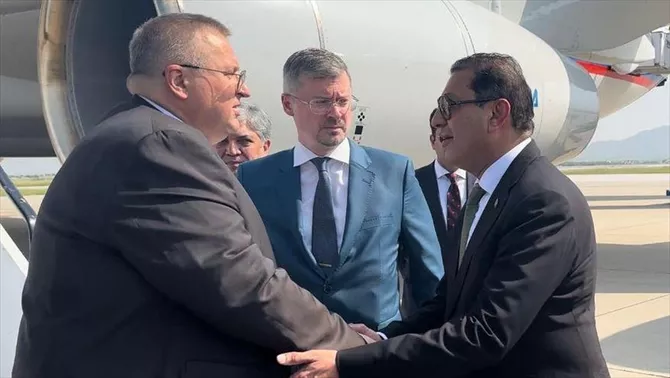
photo: TASS
These agreements are clearly significant for understanding Russia’s participation in projects with Pakistan. In recent years, Russian oil companies have lost almost all opportunities in the Middle East and the Persian Gulf. They have been completely pushed out of Iraq. Cooperation has not worked out in the UAE or Oman. Iran is also not particularly open to such engagement. Under these circumstances, Pakistan could become a relatively promising location where Russian oil and gas companies might still be able to operate. However, alongside these potentially attractive projects, I would suggest considering another factor.
I have been to Pakistan and have communicated with people from various fields, including government officials. As a result, I have developed a certain understanding of state governance, business structures, and other aspects of political and social life in the country. I can state quite confidently that Pakistan’s system of power is highly unconventional.
It is well known that Pakistan has experienced military coups on more than one occasion, with the armed forces taking power. I can also say with confidence that even when power is formally in the hands of a civilian, legally elected president and prime minister, there exists another force in the country - one to which these civilian leaders listen very carefully. That force is the Pakistani military.
I have observed this directly. There is a provincial governor, and there is a commander of military units stationed in that province. When situations arise that require decisive action, the final word belongs not to the governor, but to the military commander.
The same logic applies at the highest levels of power. Pakistan has a president and a prime minister, and one of them is formally the commander-in-chief of the armed forces. This is a standard model of governance. In Russia, the commander-in-chief is the president. In the United States, the commander-in-chief is the president. In China, the commander-in-chief is the chairman of the Communist Party. Similar arrangements exist around the world.
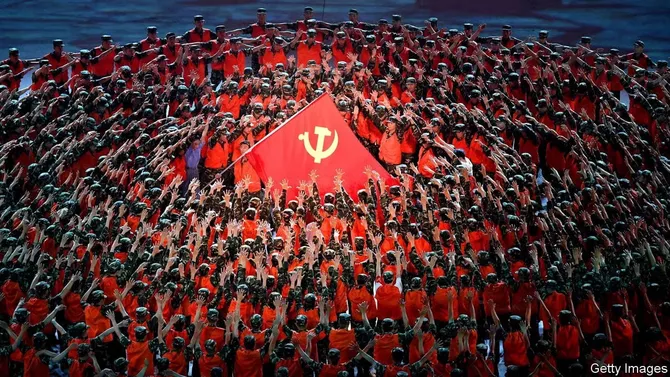
photo: Xinhua
In Pakistan, however, some key military-political decisions are made not by the president and not by the prime minister, but by the minister of defense. This decision-making structure also applies to Pakistan’s use of nuclear weapons.
Pakistan’s nuclear arsenal is itself a highly interesting subject. Given the decision-making characteristics described above, Pakistan has implemented extensive measures to ensure nuclear security and minimize the risk of accidental or unauthorized use of nuclear weapons.
Pakistan possesses nuclear warheads and delivery systems - ballistic missiles. What is unusual is that, unlike in other nuclear-armed states, Pakistan keeps its missiles on combat duty without nuclear warheads. The missile may be installed on a launcher, but it does not carry a nuclear warhead. The warheads themselves are stored in a separate facility located several hundred kilometers away from the missile units.
If a decision is made to use nuclear weapons, the procedure involves ordering the transport of warheads from storage to the missile locations and installing them on the missiles. Only after that could a launch take place.
Because missiles in a state of constant readiness are not equipped with nuclear warheads, the risk of a rash nuclear strike - for example, as a result of an ill-considered or poorly coordinated decision by either political leaders or military commanders - is significantly reduced.
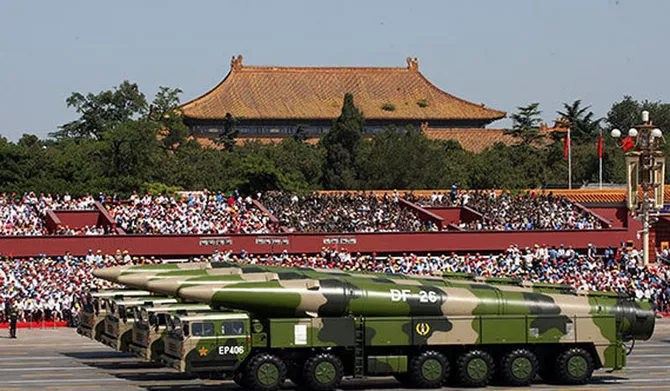
photo: theweek
Moreover, even if a decision to carry out a nuclear strike were made and implementation began, the leadership would still have ample time to reconsider. Transporting and installing warheads is not a process that takes minutes or even tens of minutes. This creates opportunities to reassess the situation and potentially reverse the decision - a safeguard that does not exist when missiles with nuclear warheads are already on duty and can be launched within minutes.
Why is all this relevant? Because not a single strategic decision - whether political, military, or economic - is possible in Pakistan without decisive involvement by the military. This means that all the discussed options for expanding Pakistan’s relations with Russia involve active participation by Pakistan’s armed forces. In turn, this suggests that military-technical cooperation between Russia and Pakistan is a priority issue. We are likely to see concrete developments in this area in the near future.
But this inevitably raises the same question - what about India? For India, any strengthening of Pakistan’s economic and military potential is an entirely negative development. This is especially true if such strengthening takes place with the active participation of Russia, a country India traditionally considers a friend.
There is a strong sense that Russia’s attempt to “sit” on two chairs at once - the Indian and the Pakistani - will ultimately result in Russia failing to secure either position. Instead, it risks falling between them, losing both partners, and suffering significant strategic "pain" in the process.