The latest shipment of humanitarian aid from Azerbaijan to Ukraine, dispatched from the Sumgait Technologies Park, is more than a routine logistical operation. It is a deliberate political and moral choice that reflects Baku’s long-standing approach to humanitarian responsibility, energy security, and civilian resilience in times of war.
This shipment includes low-voltage panels, generators, transformers, and tens of thousands of meters of electrical cables and wires, with a total value of $1 million. The cargo was organized by Azerbaijan’s Ministry of Energy under a presidential order signed on January 16, 2026. Its purpose is clear: to help restore Ukraine’s battered energy infrastructure at a moment when electricity and heating have become matters of survival rather than comfort.
Ukraine’s Prime Minister Yulia Svyrydenko publicly expressed gratitude to Azerbaijan, emphasizing support for the energy sector - one of the most fragile components of Ukraine’s wartime economy. Russian strikes have left Kyiv and surrounding regions in a severe energy crisis. Even after partial restoration, electricity is supplied on a schedule, while heating remains unavailable for many households. In winter conditions, such shortages pose a direct humanitarian risk.
What distinguishes Azerbaijan’s actions is not the scale of a single delivery, but the consistency of its policy. Baku’s assistance to Ukraine is systematic rather than symbolic. In August 2025, Azerbaijan allocated $2 million in humanitarian aid to support Ukraine’s energy recovery. Earlier decisions followed in February 2025 and July 2023, when funds were earmarked for similar purposes.
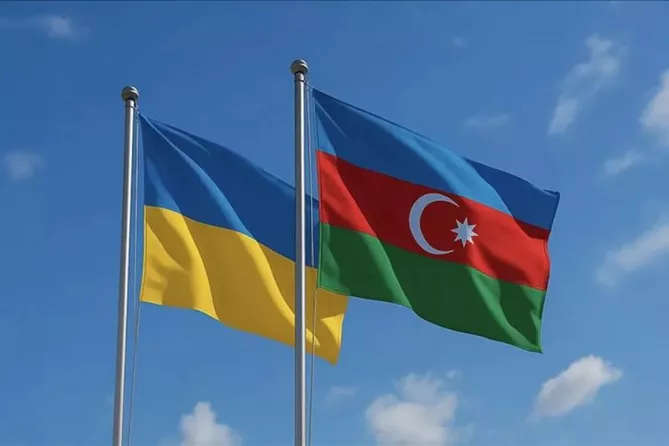
Photo: Shutterstock
These resources were used to procure electrical equipment manufactured in Azerbaijan, supporting both Ukraine’s reconstruction needs and Azerbaijan’s domestic industry. By the end of 2023, Azerbaijan’s total humanitarian assistance to Ukraine had reached approximately $34 million. In 2024 alone, humanitarian and reconstruction-related support exceeded 70 million manats, or more than $40 million. Overall, the cumulative volume of aid has already surpassed $45 million and continues to grow.
This trajectory is not accidental. It reflects Azerbaijan’s own historical experience. Baku understands what infrastructure collapse means. It understands the strategic and humanitarian consequences of energy shortages. It understands what happens when civilians become hostages to geopolitics.
Importantly, Azerbaijan’s humanitarian policy is not selective or one-dimensional. Alongside assistance to Ukraine, Baku has provided humanitarian aid to other conflict-affected civilian populations, including financial support delivered through UN mechanisms for Gaza. This multi-vector approach undercuts attempts to frame Azerbaijan’s actions as politically opportunistic. Instead, it points to a broader doctrine centered on civilian needs rather than geopolitical alignment.
Unsurprisingly, Azerbaijan’s active humanitarian engagement with Ukraine has generated waves of disinformation. Allegations of covert military supplies and ammunition production were circulated online and subsequently rejected by Baku. Azerbaijani officials emphasized that national legislation strictly prohibits private military production and that all assistance is civilian in nature. None of these claims were substantiated, and none altered Azerbaijan’s policy course.
What is revealing is that Azerbaijan has continued its humanitarian engagement despite such pressure. This suggests a strategy driven not by external approval or media narratives, but by internal conviction and long-term calculation.
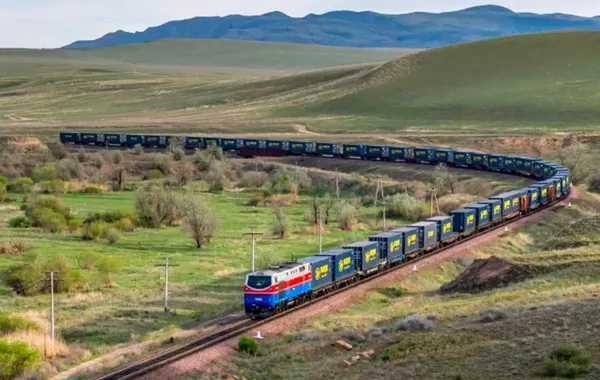
Beyond humanitarian aid, Azerbaijan is also positioning itself as a potential contributor to Ukraine’s future energy security. Although natural gas supplies are not being discussed as free deliveries, the very possibility of transporting Azerbaijani gas to Ukraine through newly approved regional routes could provide Kyiv with critical diversification at a moment of acute vulnerability. Energy connectivity, in this context, becomes an extension of humanitarian logic rather than a purely commercial endeavor.
History provides an important parallel. Years ago, Azerbaijan ensured that Georgia did not freeze during periods of separatism and Russian pressure. Today, Baku is applying the same logic to Ukraine: energy is not merely a commodity - it is a humanitarian lifeline.
In a broader sense, Azerbaijan’s approach reflects a deeper understanding of what real solidarity looks like in times of war. It is not measured by slogans or declarative diplomacy, but by sustained action - by generators that keep hospitals running, by cables that restore light to homes, and by long-term commitments that extend beyond news cycles.
This is not a moral framework invented in response to the current crisis. Azerbaijan’s own history of war, displacement, infrastructure destruction, and recovery has shaped a political culture that recognizes the human cost of conflict far beyond battlefield statistics. For Baku, civilian suffering is not an abstraction.
That is why Azerbaijan’s humanitarian engagement with Ukraine remains steady rather than reactive. It does not fluctuate with diplomatic fashion or international attention. It persists because Baku understands that rebuilding energy systems and restoring civilian resilience is a long-term process, not a single gesture.
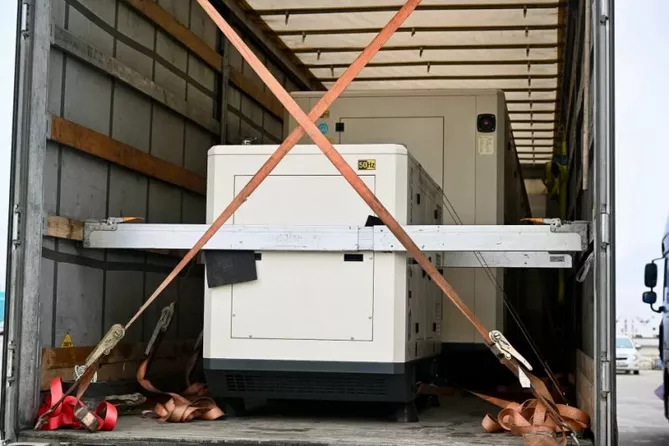
Photo: AZERTAC
At the same time, Azerbaijan’s policy sends a broader message to the international community. Middle powers are not condemned to passivity in global crises. They can act independently, pragmatically, and responsibly - without militarization, ideological posturing, or transactional humanitarianism.
Ultimately, Azerbaijan’s support for Ukraine is not about rhetoric or alignment. It is about principles shaped by experience: civilian protection, infrastructure recovery, energy security, and international responsibility. In a fragmented global environment increasingly dominated by short-term calculations, this consistency stands out.
By choosing sustained humanitarian engagement over symbolic gestures, Azerbaijan positions itself not merely as a donor, but as a responsible regional actor - one that understands that helping others endure hardship is also an investment in long-term stability.
In that sense, Azerbaijan’s choice is not only about Ukraine. It is about affirming a worldview in which resilience, dignity, and human security remain central - even when global politics becomes increasingly unstable.