For many years, the State of Israel successfully resisted attempts to pressure it into recognising the so-called Armenian genocide. In the Knesset, the issue was repeatedly raised by the small pro-communist Hadash party, composed mainly of Arab members. Each time, these initiatives were overwhelmingly rejected by Israeli lawmakers, who understood that the purpose of such efforts was to damage Israel's relations with Türkiye.
In recent years, however, President Recep Tayyip Erdoğan has increasingly launched verbal attacks against the State of Israel, accusing it of various crimes. At the heart of the dispute lies what the Turkish leader appears to see as an uncomfortable geopolitical reality: in the Middle East, a weakened Iran is being replaced by a new regional power that, thanks to its military capabilities and technological superiority, seeks to play a leading role.
The actions of the Israeli Air Force during the confrontation with Tehran demonstrated that no air defence system is an insurmountable obstacle for the Israel Defense Forces (IDF). Moreover, Israel's multilayered missile defence system proved remarkably effective, significantly deterring its potential adversaries.
It should also be noted that Israel has successfully countered Ankara's efforts to strengthen its position in Syria. Taken together, these developments have fuelled President Erdoğan's increasingly anti-Israel rhetoric, which Jerusalem says it takes "very seriously". Israeli officials believe that his statements contain implicit threats to Israel's existence.
Speaking at a cabinet meeting, Prime Minister Benjamin Netanyahu said:
"Hardly a day goes by without Erdoğan calling for the destruction of Israel. We take these statements very seriously because, if there is one lesson we have learned from our people's history, it is that when someone says they intend to destroy you, you must take them seriously."
According to The Times of Israel, Erdoğan and other senior Turkish officials have intensified their threats against Israel in recent weeks. Turkish broadcaster A Haber reported that Interior Minister Mustafa Çiftçi called in early June for the "liberation" of Jerusalem. At the end of May, President Erdoğan declared that "the tyrant Netanyahu" would soon "learn a lesson" from Muslims around the world.
"We are waiting for four million or five million Muslims to witness this with their own eyes. May Allah be our helper and supporter."
According to The Times of Israel, during Eid al-Fitr prayers marking the end of Ramadan in March 2025, Erdoğan also prayed for God to "destroy Israel", saying:
"May Allah, for the sake of His holy name... destroy and devastate Zionist Israel."
In another speech, the Turkish leader suggested that Türkiye could "enter Israel".
Foreign Minister Hakan Fidan has argued that, after Iran, Israel "cannot live without an enemy" and is attempting to portray Ankara as its "new enemy". At the same time, he insisted that Türkiye's policy is to avoid being drawn into war.
This deterioration in bilateral relations helps explain Jerusalem's latest move.
As Israeli Foreign Minister Gideon Sa'ar stated:
"Israel joins the 34 countries that have fulfilled their moral duty by recognising the historical truth and rejecting attempts to deny it."
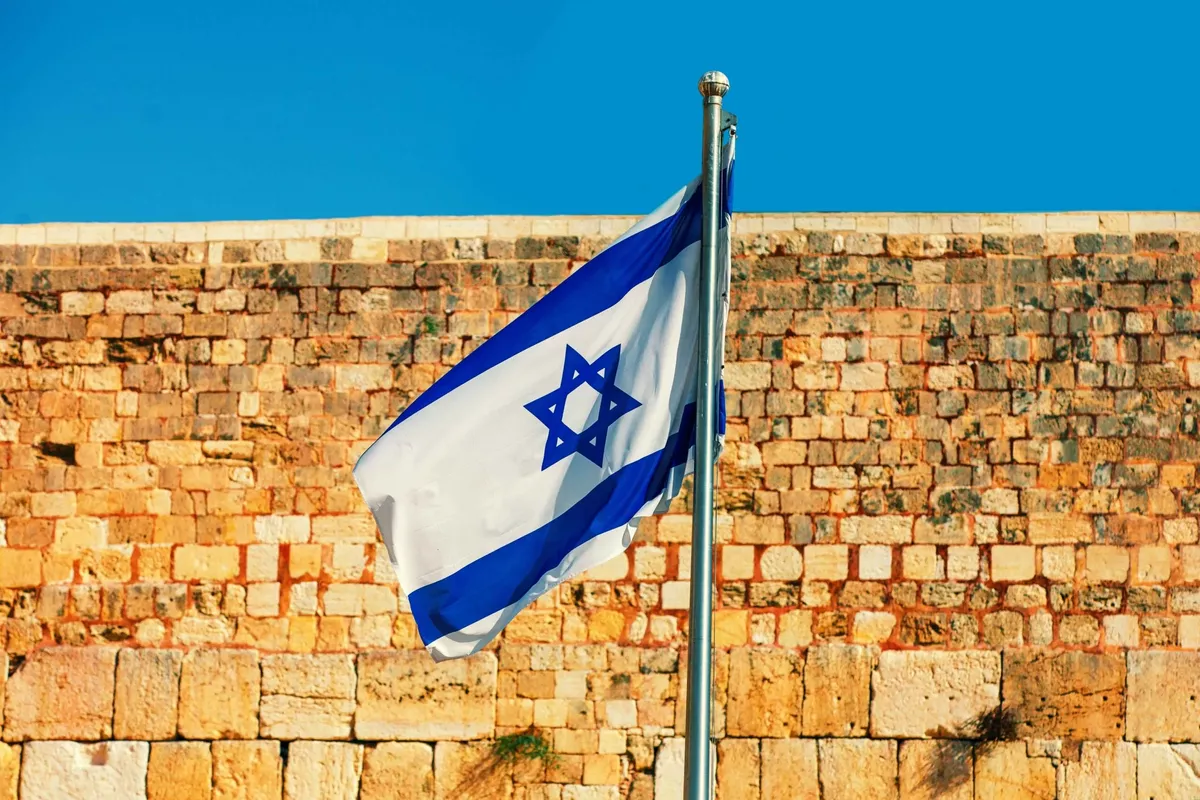
The Israeli government unanimously approved a decision recognising the mass killings of Armenians in the Ottoman Empire during the First World War as genocide. However, the decision must still be approved by the Knesset. Consequently, it remains a declaration of intent.
For decades, Israel maintained that there had been only one genocide in modern history - the genocide of the Jewish people. The current declaration comes amid continuing tensions between Israel and Türkiye.
For Israel, the issue of recognising the Armenian genocide has always been political. Jerusalem traditionally avoided promoting the issue because it valued its close relationship with Türkiye, which became the first Muslim-majority country to recognise the State of Israel in 1949.
For many years, the two countries maintained close economic, political, and military ties. Their armed forces conducted joint exercises and exchanged intelligence. In recent years, however, Türkiye has transformed from one of Israel's regional partners into one of its harshest critics.
The dispute has also had significant economic consequences. In 2025, Israeli imports from Türkiye amounted to approximately $900 million-more than half the 2024 level. Israeli exports to Türkiye fell 55-fold to just $11 million. These declines are largely attributed to Türkiye's de facto embargo on Israeli goods introduced in May 2024.
For comparison, bilateral trade between the two countries totalled nearly $10 billion in 2022.
By raising the sensitive issue of the Armenian genocide, Israel appears to be highlighting what it sees as Türkiye's increasingly aggressive behaviour while also seeking to convince the United States that Türkiye should not be allowed to acquire F-35 fighter jets, which Israel already operates.
For reasons that remain unclear to many observers, Erdoğan argues that Israel's actions in the Middle East pose a direct threat to Türkiye.
"Türkiye's security does not begin in Hatay - it extends to Aleppo, Damascus, and Beirut. We will not tolerate any fait accompli in our brotherly countries, nor will we ignore aggression against them."
Interior Minister Mustafa Çiftçi went even further:
"Just as we witnessed the liberation of Damascus, Aleppo, and Karabakh, God willing, one day we will witness the liberation of Jerusalem. These places will once again be ours, under our rule and authority, because we have a world-class leader like Erdoğan."
President Erdoğan has also escalated his rhetoric against Israel to an unprecedented level, accusing the Jewish state of planning to seize Turkish territory.
This raises an obvious question: how could a country with a population of around 10 million and a territory approximately 35 times smaller than Türkiye's realistically conquer a nation possessing NATO's second-largest standing army?
Erdoğan further argued that Gaza represents the front line of the conflict and that Hamas is defending Türkiye by holding that front.
"Do not think Israel will stop in Gaza. Unless this rogue state, this terrorist state, is stopped, sooner or later it will set its sights on Anatolia because of its illusions about the Promised Land. Israel is attacking us. In Gaza, Hamas is defending Anatolia's front line. Are you so blind that you cannot see this?"
He also compared Netanyahu to Hitler, a comparison that many consider to have crossed the boundaries of political discourse.
According to this interpretation, Erdoğan's hostility towards Israel is partly connected to Türkiye's economic difficulties in recent years. At the same time, he recognises that many Arab states increasingly view Israel not as an enemy but as a reliable partner capable of transforming the region through advanced technologies.
There is also growing recognition that the age of hydrocarbons is gradually coming to an end, and that those countries that successfully adapt their economic and political models will be best positioned to benefit from the transition.
According to this perspective, that is the essence of the current conflict.