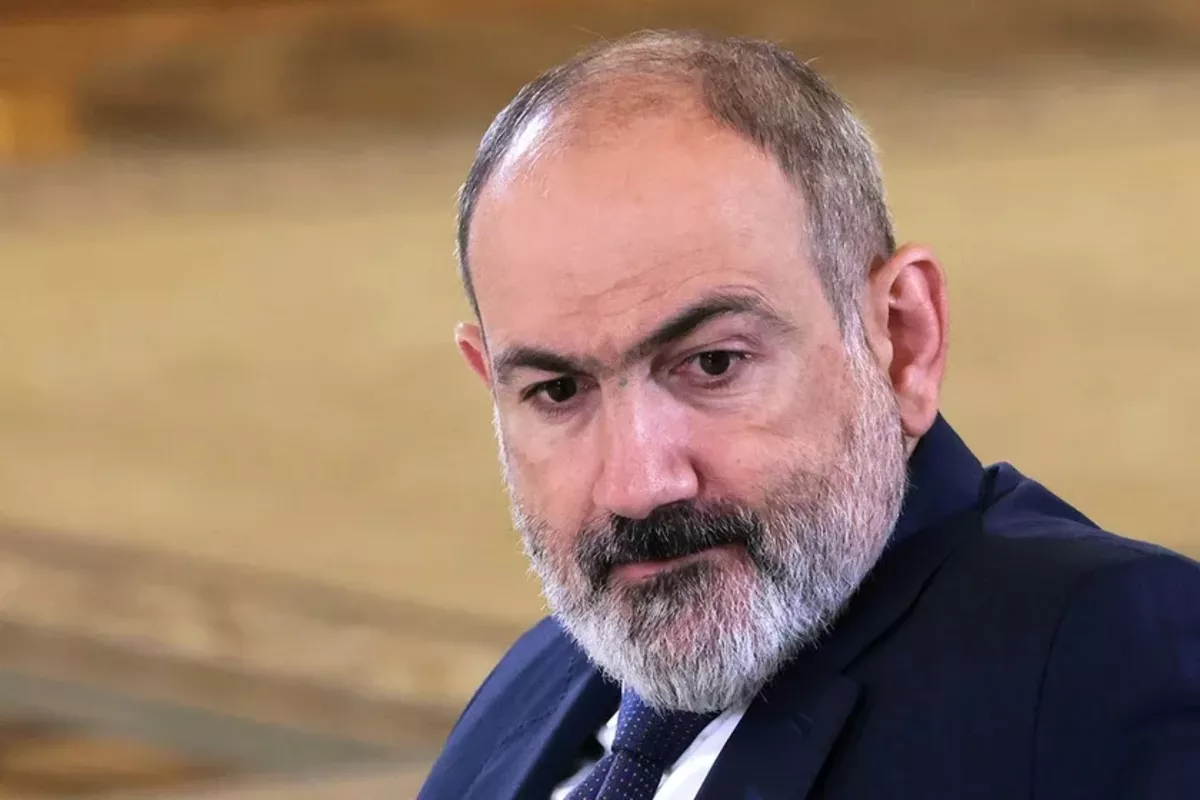
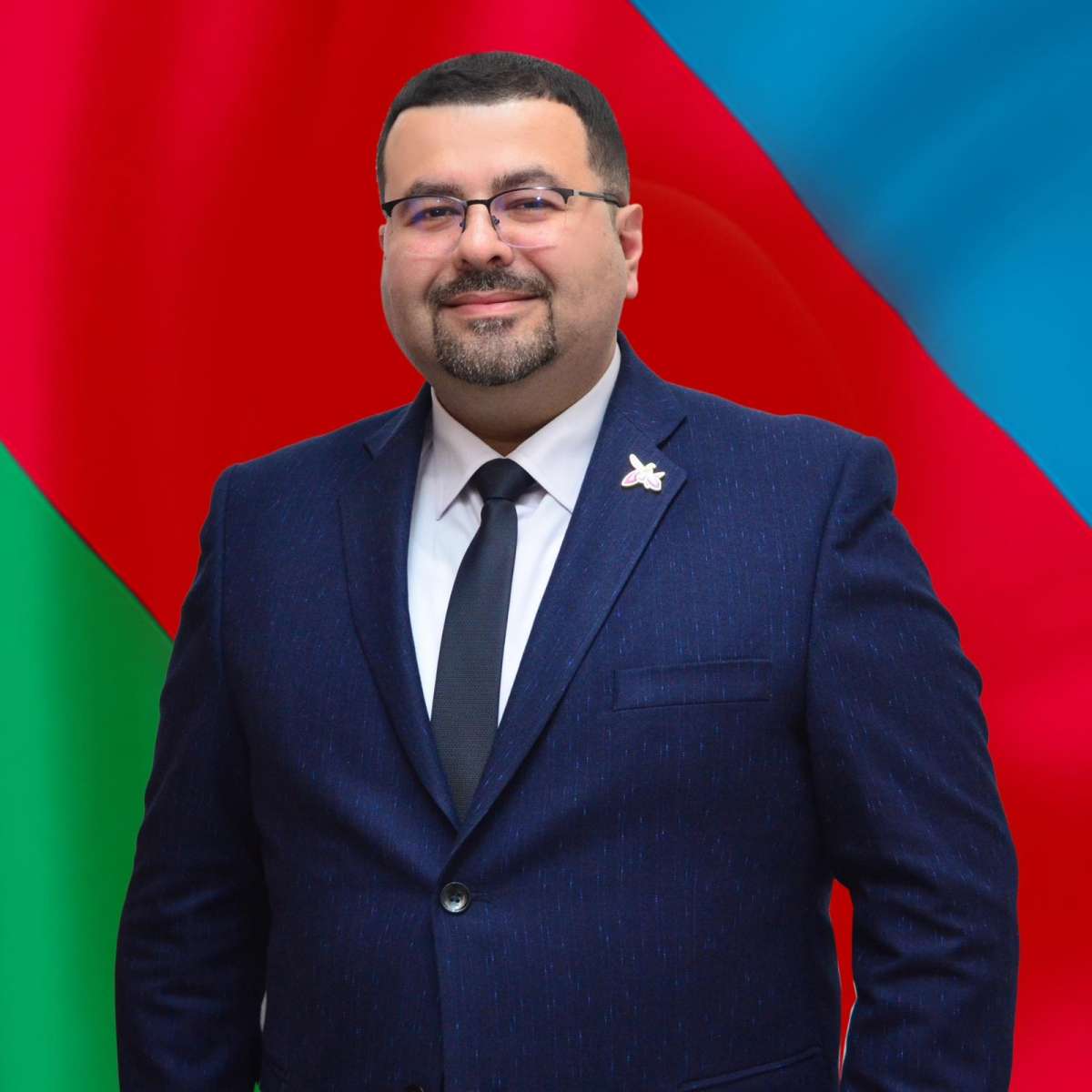
The Armenian authorities’ reported decision to replace Ambassador to Russia Gurgen Arsenyan may at first glance look like an ordinary diplomatic reshuffle amid the prolonged crisis in relations between Moscow and Yerevan. However, reports in the Armenian media suggest that the reasons may be much deeper. The issue may concern not so much the ambassador’s professional performance as his growing divergence from Prime Minister Nikol Pashinyan’s foreign policy course.
It is important to note that, as of August 22, no official decree dismissing Arsenyan from his post had been published. When Armenian media reported on August 21 that Pashinyan had decided to recall the ambassador, the prime minister’s spokesperson, Melania Harutyunyan, merely stated that official information would be released when available. Arsenyan has served as Armenia’s ambassador to Russia since August 2024.
Nevertheless, several Armenian media outlets claim that the political decision has already been made.
One explanation was offered by Zhoghovurd newspaper. According to its sources, Pashinyan was dissatisfied with Arsenyan’s work because the ambassador had allegedly failed to reduce tensions in Armenian-Russian relations. The publication described the decision as final.
Credit: modern.az
However, a report published by Hraparak on August 22 presents a different and much more politically sensitive version of events.
According to the newspaper, Arsenyan was informed of his impending recall approximately five days before the article appeared. The formal explanation was that Yerevan intends to send a professional career diplomat to Moscow who would be tasked with helping normalize relations with Russia. The Armenian authorities reportedly want to move away from political appointments to one of the country’s most important diplomatic posts.
Yet Hraparak’s sources claim that the real problem was different.
During his time in Moscow, Arsenyan reportedly developed close contacts with members of the Russian political establishment and gradually began to diverge from the line pursued by official Yerevan. According to the newspaper, he opposed a number of steps and statements that he considered excessively anti-Russian and urged the Armenian leadership to avoid further confrontational moves and return to a more constructive dialogue with Moscow.
If this information is accurate, Arsenyan’s recall takes on an entirely different meaning.
An Ambassador Caught Between Moscow and Yerevan
Arsenyan has indeed adopted a noticeably more cautious tone toward Russia than many representatives of Armenia’s current political establishment.
In October 2025, he described Armenians and Russians as brotherly peoples and stressed that Russia remained Armenia’s largest economic partner, its biggest investor and one of the most important markets for Armenian exports.
Even after a serious diplomatic episode in May 2026, when Arsenyan was summoned to the Russian Foreign Ministry following Ukrainian President Volodymyr Zelenskyy’s appearance in Yerevan, the ambassador sought to avoid dramatizing the situation. He argued that Armenian-Russian relations remained broadly at the same level and that the bilateral agenda should continue “in its natural course” regardless of political developments inside Armenia.
This is where the fundamental contradiction appears.
Arsenyan, judging by the available information, seems to have viewed his mission as minimizing the damage to relations with Moscow. Pashinyan’s government, by contrast, has increasingly been constructing a foreign policy in which Russia no longer enjoys the exclusive status it once had.
On August 13, Pashinyan essentially articulated this approach in explicit terms. He stated that Armenia would continue diversifying its economic relations even if its current disputes with Russia were resolved. According to the Armenian prime minister, Moscow expects “exclusive relations,” while Yerevan no longer accepts such an approach.
Several days earlier, speaking at a meeting of the Eurasian Intergovernmental Council, Pashinyan also argued that cooperation between EAEU member states and other partners should not be viewed as a “zero-sum game.” He emphasized Armenia’s right to develop relations with different centers of power.
This suggests that the issue is no longer simply a temporary diplomatic dispute. Armenia is undergoing a structural reorientation of its foreign policy.
Economic Pressure Has Complicated the Relationship
Trade has become another highly sensitive issue.
Russia remains a critically important economic partner for Armenia, accounting for roughly 35% of the country’s foreign trade. At the same time, Russian regulatory agencies have in recent months imposed restrictions on imports of several categories of Armenian goods, including agricultural products, flowers, fish and alcohol.
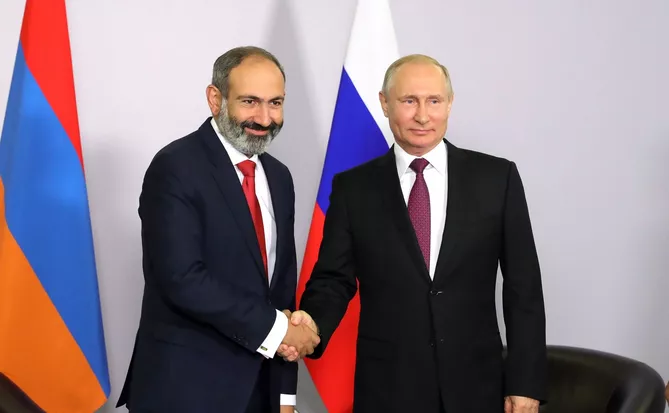
In July, Pashinyan personally appealed to Russian President Vladimir Putin to help remove these restrictions, arguing that they contradicted the legal framework governing bilateral relations as well as the principles of the Eurasian Economic Union.
Credit: kremlin.ru
For Armenia’s ambassador in Moscow, this created an extremely difficult position. On the one hand, he was expected to work toward restoring trade flows and maintaining functional relations with the Russian authorities. On the other, he was required to represent Yerevan’s evolving foreign policy, which includes closer ties with the European Union, the United States and Ukraine, as well as a gradual reduction of Armenia’s dependence on Russia.
Under such circumstances, an ambassador holding his own views about how far Yerevan should go in confronting Moscow could easily become a political problem for the government.
Why Now?
The timing of the reported dismissal is also significant.
Following the June parliamentary elections and Pashinyan’s reappointment as prime minister on August 2, the government gained an opportunity to reshuffle personnel and bring the diplomatic corps into closer alignment with its broader foreign policy agenda.
Replacing the ambassador in Moscow may therefore serve two purposes at once.
First, Yerevan genuinely needs a highly experienced professional diplomat to manage its extremely complicated relationship with Russia. Despite the political cooling, the two countries remain deeply connected through trade, energy, migration, security and humanitarian ties. Pashinyan has repeatedly stated that Armenia does not seek a complete rupture with Moscow and does not intend to pursue a policy directed against Russia.
Second, the new ambassador will likely be expected not only to negotiate effectively with Moscow but also to implement the government’s political line without attempting to modify it based on personal contacts or assessments of the Russian establishment.
In that sense, Arsenyan’s recall may represent not so much an attempt to “make peace with Moscow” as an effort by Pashinyan to establish tighter political control over one of Armenia’s most important diplomatic channels.
This creates an apparent paradox.
Officially, the ambassador’s replacement may be explained by the need to improve relations with Russia. Yet according to Hraparak, Arsenyan may have been removed precisely because he was too strongly in favor of preserving those relations and opposed policies he regarded as unnecessarily anti-Russian.
For this reason, the identity of his successor will be far more revealing than Arsenyan’s dismissal itself.
If Yerevan sends an experienced career diplomat to Moscow with a genuine mandate to restore working-level dialogue, it would indicate an attempt to stabilize Armenian-Russian relations. If, however, the new ambassador is a figure closely associated with the harder line pursued by Armenia’s current leadership, the reshuffle will become further evidence that Pashinyan intends to continue revising the entire model of relations with Russia.
For now, one conclusion appears increasingly plausible: Arsenyan may have found himself caught between two competing political logics - the need to preserve workable relations with Russia and Yerevan’s determination to reduce its traditional dependence on Moscow.
In Armenia’s emerging foreign policy system, an ambassador who understands the Russian position too well - and is prepared to argue against further confrontation - may no longer be seen as an asset, but as a problem.