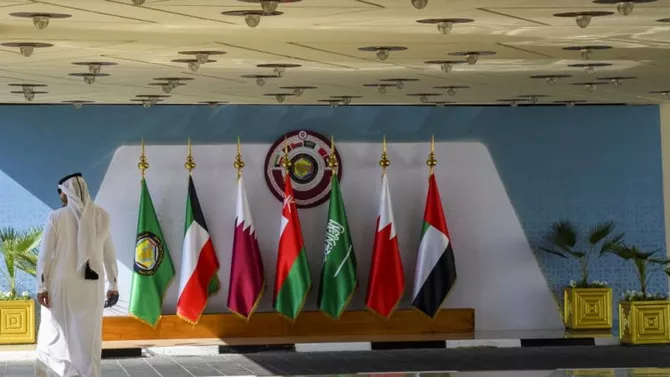
The participation of Bahrain, Kuwait, Qatar and the United Arab Emirates in the 36th NATO Summit in Ankara should not be seen merely as a matter of protocol. It was another indication that a new system of political, military and economic relationships is emerging in the Middle East, gradually reshaping the region’s traditional balance of power.
The Gulf states cooperate with the North Atlantic Alliance through the Istanbul Cooperation Initiative, or ICI, which provides an institutional framework for NATO’s engagement with Arab monarchies. Yet the statements made in Ankara suggest that the parties intend to move beyond the initiative’s previous boundaries.
Credit: Getty images
Qatar and Kuwait called for deeper cooperation with NATO. Doha, in particular, announced a partnership programme and expressed support for the establishment of a NATO-backed regional peacekeeping operations centre in Qatar. This does not mean that a fully fledged NATO branch is about to appear in the Middle East. Nevertheless, it reflects the growing demand among regional states for additional mechanisms of security and coordination.
At the same time, it would be a mistake to examine these developments exclusively through a military and political lens. The transformation is also encompassing transport, energy, digital technologies and infrastructure. Indeed, transport and logistics projects may ultimately become the foundation of a new regional order.
Middle Eastern states increasingly recognise that security cannot be guaranteed without reliable trade routes, modern ports, railways, energy networks and digital infrastructure. As a result, rigid bloc-based arrangements are gradually giving way to a system of overlapping partnerships in which countries may cooperate in one sphere while competing in another.
One of the clearest signals was the memorandum on transport, transport corridors, communications and information technologies signed by Türkiye and Oman in late 2025. The agreement demonstrated Ankara’s determination to link the development of multimodal transportation with a broader strategy aimed at strengthening its position between Asia, Europe and the Middle East.
Transport and logistics subsequently became a central issue in talks between Türkiye and Saudi Arabia. Pakistan and Egypt were gradually drawn into the discussions, prompting some analysts to speak of an emerging four-party Middle Eastern framework.
It is still too early to describe this mechanism as a conventional military and political alliance. It is more accurately viewed as an attempt to create a regional platform for coordinating policies on security, economics and infrastructure. Under certain circumstances, it could function as a rapid-response coordination group whose members would align their positions on the region’s most pressing crises.
The emergence of such a format can be explained by several factors. On the one hand, Türkiye, Saudi Arabia, Egypt and Pakistan are all interested in preventing further regional destabilisation. On the other hand, Middle Eastern powers are becoming less certain that Washington will continue to serve as a permanent guarantor of the existing order.
US President Donald Trump’s “America First” policy is encouraging regional states to diversify their foreign relations. This does not necessarily mean abandoning the United States. Rather, it reflects an effort to develop additional mechanisms that would allow them to act independently if American priorities change.
Some experts regard the growing cooperation between Türkiye, Saudi Arabia, Egypt and Pakistan as an attempt to counterbalance Israel’s plans to reshape the regional order. However, reducing this process solely to opposition to Israel would be an oversimplification. Each participant has its own interests, while their principal common objective is to prevent the unilateral dominance of any single regional power.
In June, Ankara and Riyadh signed a memorandum of understanding on cooperation in logistics services. This once again brought attention to the proposed Türkiye-Syria-Jordan-Saudi Arabia railway, with the possibility of its eventual extension to Oman.
The implementation of such a project would require major investment, political stabilisation and extensive reconstruction, particularly along the Syrian section. Nevertheless, the fact that it is being seriously discussed demonstrates the importance regional states attach to establishing a land transport axis between Anatolia and the Arabian Peninsula.
At the same time, Tehran has expressed its readiness to support cooperation with Gulf states in the field of regional security. Iran has proposed dialogue with the coastal states of the Persian Gulf with the aim of creating an independent collective security mechanism based on consensus and free from foreign military intervention.
At first glance, the Iranian concept appears to contradict the Gulf monarchies’ expanding cooperation with NATO. In reality, however, the two trends may develop simultaneously. The Gulf states are not seeking to make a final choice between the West and Iran. Instead, they are attempting to acquire the widest possible range of foreign policy instruments.
For this reason, the emerging Middle Eastern architecture is unlikely to be built around a single centre of power. It will more probably take the form of a complex network of agreements, temporary coalitions and functional partnerships.
Relations between Türkiye and Qatar occupy a particularly important place within this system. Cooperation between the two countries has expanded significantly over the past year and now extends well beyond traditional political and defence ties. One notable example is their strategic partnership in a project to develop a next-generation communications satellite with software-defined network architecture.
This cooperation illustrates how competition for influence in the Middle East is increasingly shifting into the fields of advanced technology, digital communications and space infrastructure. A state possessing its own satellite systems and data transmission capabilities gains not only economic advantages but also additional instruments of national security.
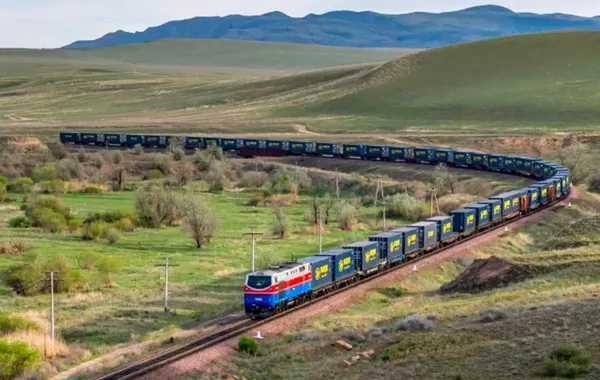
Another significant development was the signing in early July of a memorandum of intent between Türkiye and Egypt on cooperation in the use of international transport corridors. In this context, particular importance is being attached to the Middle Corridor and the Development Road initiative, a major transport and logistics project involving Türkiye, Iraq, Qatar and the UAE.
The central objective of the Development Road is to create a route allowing goods from the Persian Gulf to reach Europe more rapidly through Iraq and Türkiye. Combined with the Middle Corridor, the project could reshape the distribution of trade flows between Asia, the Middle East and European markets.
For Ankara, the issue goes far beyond generating additional transit revenues. Türkiye is seeking to move from the role of a country through which goods merely pass to that of a multimodal logistics and energy hub capable of influencing the configuration of regional trade routes.
Cooperation with the European Union is also an important component of this strategy. The completion of the joint EU-Türkiye project titled Strengthening Intermodal Transport Services in the Turkish Railway Sector, or U-IMT, is expected to improve the competitiveness of rail freight, increase the capacity of the Middle Corridor and advance cooperation on transport infrastructure.
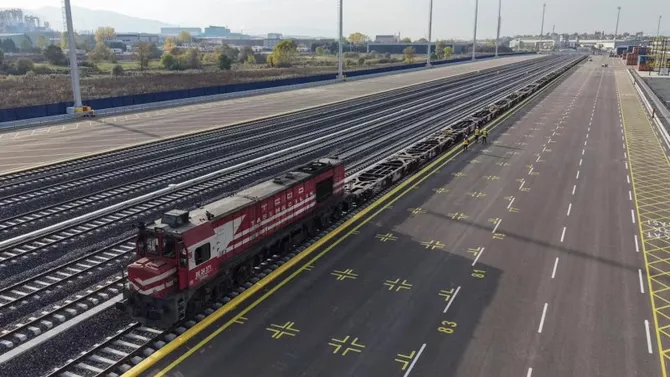
Credit: Railport/Canvas Strategy & Creativity.
Türkiye’s Minister of Transport and Infrastructure Abdulkadir Uraloğlu has repeatedly emphasised that Ankara will continue implementing projects aimed at expanding the country’s logistics capabilities and strengthening trade corridors between the Gulf region and Europe.
Türkiye’s policy is therefore becoming increasingly comprehensive. Cooperation with NATO, closer relations with the Gulf monarchies, participation in transport projects, technological partnership with Qatar and engagement with the European Union are all elements of a single broader strategy.
Against this backdrop, discussions about Türkiye’s possible return to the F-35 fighter programme are acquiring additional significance. Israeli media have actively debated the prospect of Washington selling the aircraft to Ankara, arguing that such a deal could strengthen Türkiye’s position at the expense of the interests of Israel, Greece and Egypt.
Possession of F-35 fighter jets would carry not only military but also political and psychological significance. Advanced combat aircraft can act as a deterrent even without being used in military operations. Türkiye’s potential return to the programme would therefore inevitably affect the regional balance.
Particular attention has also been paid to remarks made by Donald Trump on the sidelines of the NATO summit in Ankara. The US president said that Türkiye had, in many respects, demonstrated greater loyalty to the United States than some other partners, while once again referring to the special “chemistry” in his relationship with Recep Tayyip Erdoğan.
Such statements are increasing concern in Israel, especially amid signs of a certain cooling in its relations with Washington. It would nevertheless be premature to speak of a fundamental rupture between the United States and Israel.
Washington appears to be trying to restore room for manoeuvre and strengthen its ties with Türkiye without abandoning its strategic partnership with Israel. The main conclusion is that the Middle East is ceasing to be a region whose political configuration is determined exclusively by external powers. Regional states are increasingly creating their own mechanisms of cooperation, combining security, transport, trade, technology and energy.
The emerging regional architecture has not yet acquired its final shape. It includes cooperation between the Gulf monarchies and NATO, closer ties between Türkiye and Saudi Arabia, cautious dialogue between Gulf states and Iran, an expanding Turkish-Qatari partnership and the development of new transport routes.
Logistics may ultimately prove to be the factor that gives these processes long-term stability. Military alliances often depend on changing political circumstances, while railways, ports, energy networks and trade corridors create lasting interdependence.
The formation of a new regional configuration is unlikely to be painless. The interests of Türkiye, Israel, Iran, Saudi Arabia, Egypt and other states frequently overlap but do not always coincide. Competition for control over routes, technologies and political platforms may therefore generate new tensions.
The process, however, is already under way. The Middle East is becoming not only an arena of military rivalry but also one of the most important hubs of the global transport and economic system. The future regional balance of power will largely depend on which states are most successful in linking security with logistics, technological development and economic connectivity.