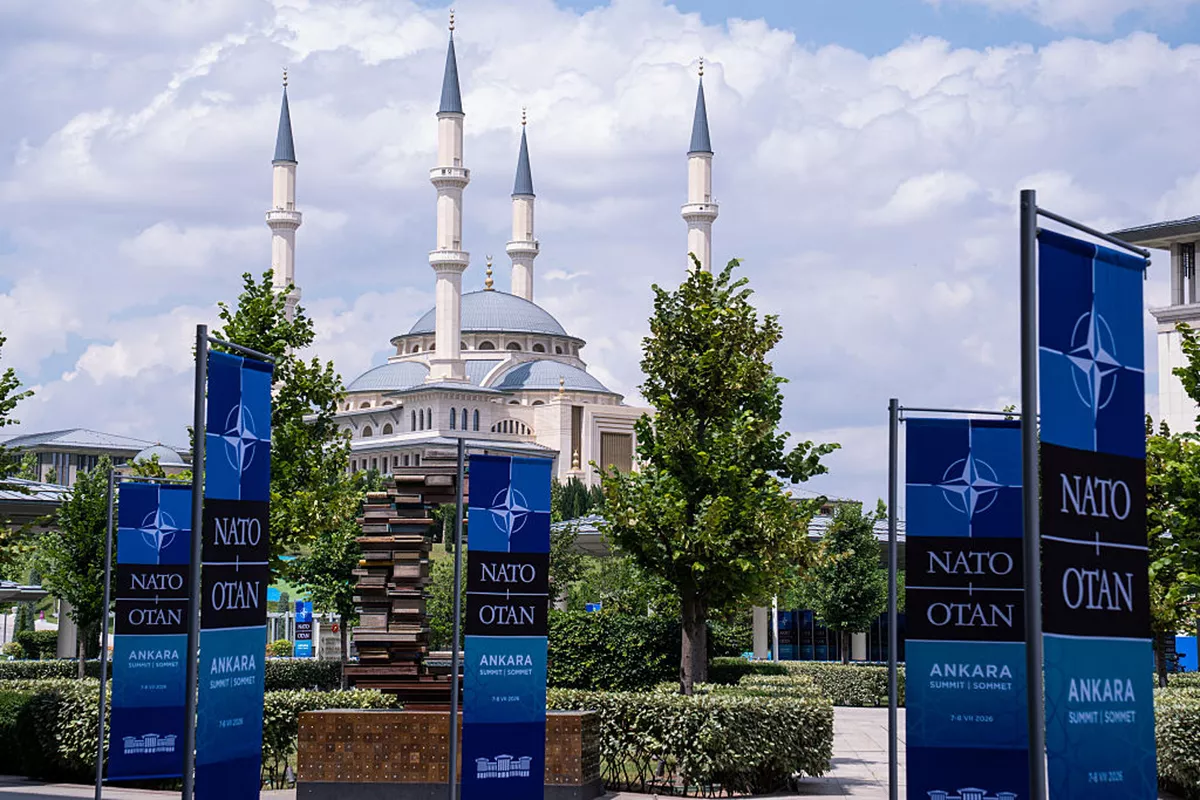
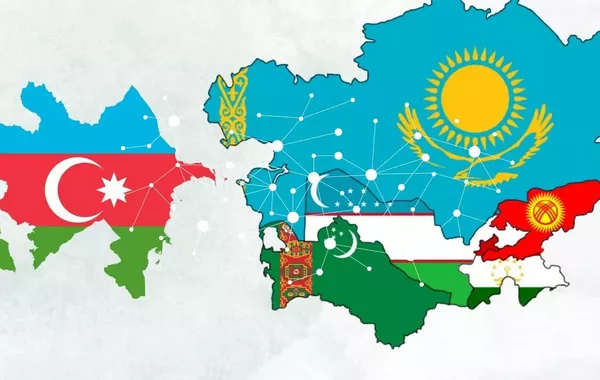
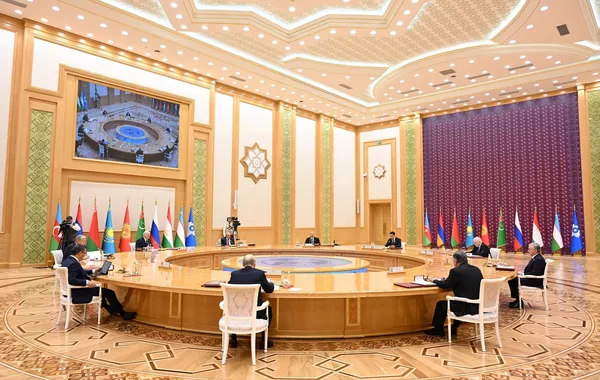
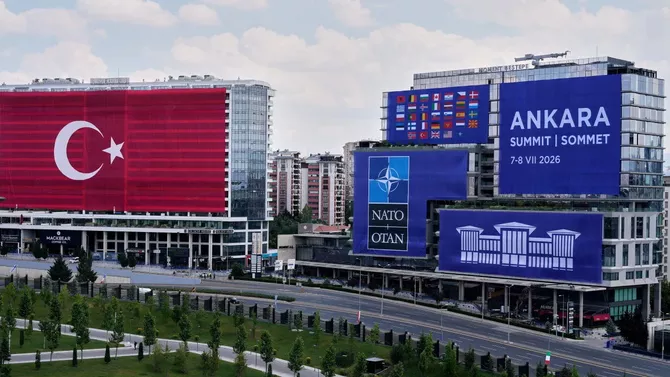
The NATO summit in Ankara is not merely a gathering of the leaders of the North Atlantic Alliance. Nor is it simply a discussion about defence spending, Ukraine or the future of transatlantic security. Its significance is much broader: for the first time in many years, NATO's strategic focus is shifting so clearly towards the space where the Black Sea, the South Caucasus, the Middle East, the Caspian region and Central Asia intersect. That is why the Ankara summit carries particular importance for the South Caucasus.
The official agenda centres on three key priorities: increasing defence investment, expanding military-industrial production and continuing support for Ukraine. NATO is clearly moving from political declarations to practical implementation. Behind this agenda, however, lies a much deeper process: the Alliance is adapting to a new reality in which Europe's security can no longer be viewed separately from the Black Sea, Türkiye, the South Caucasus, and the transport and energy routes linking East and West.
Ankara was not chosen as the summit venue by chance. Today, Türkiye is no longer merely NATO's southern flank. It is becoming one of the central hubs of the emerging security architecture. Its geography makes it a bridge between Europe, the Black Sea, the Caucasus, the Middle East and the Mediterranean. Against the backdrop of Russia's war against Ukraine, instability in the Middle East, and the growing importance of transport corridors, Türkiye is effectively becoming a power without which NATO cannot build a comprehensive strategy along its eastern axis.
Source: The Economist
For the South Caucasus, this means the region is no longer viewed as a peripheral area of European security. Since the start of the war in Ukraine, the Caucasus has assumed far greater strategic importance. Energy routes, transport corridors, logistics networks and political links connecting Europe with the Caspian region and Central Asia all pass through the region. As a result, Azerbaijan, Georgia and Armenia are attracting growing attention not only from regional powers but also from the wider Euro-Atlantic community.
The Black Sea factor is particularly important. Alongside the Ankara summit, Türkiye, Romania and Bulgaria have moved to expand their joint Black Sea mine-clearing initiative to include the protection of critical infrastructure, including energy facilities, telecommunications assets and underwater pipelines. The initiative was originally established after the outbreak of the war in Ukraine to deal with drifting mines. Its remit is now being broadened. For the South Caucasus, this has direct significance: security in the Black Sea directly affects the stability of the routes linking the Caucasus with Europe.
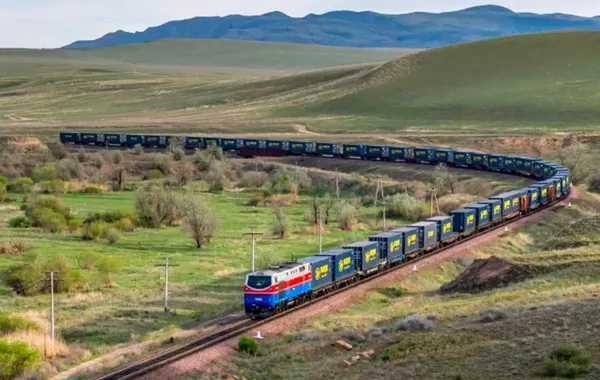
If the Black Sea becomes an area of increased NATO attention, the South Caucasus automatically acquires greater strategic value. Georgian ports, Azerbaijan's transport infrastructure, the Middle Corridor, Caspian routes and energy supplies to Europe are all becoming elements of a single strategic system. This is no longer solely about economics; it is about the security of communications. In the new reality, a transport corridor is not simply a road or railway. It is a strategic asset.
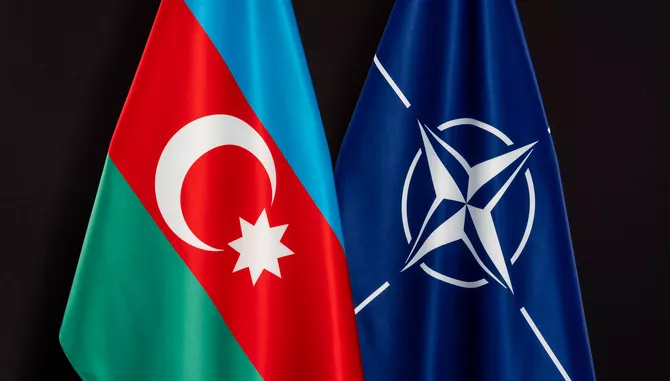
For Azerbaijan, the Ankara summit is especially significant for several reasons. First, Baku is Türkiye's closest strategic partner in the South Caucasus. Second, Azerbaijan plays a key role in Europe's energy security. Third, a crucial section of the Middle Corridor passes through Azerbaijani territory-a route whose importance has grown since traditional transit routes through Russia were disrupted. Fourth, Azerbaijan lies at the crossroads of several regions: the Caucasus, the Caspian, Central Asia, Iran and the Black Sea.
Source: NATO
This does not mean NATO is directly expanding its presence in the South Caucasus or preparing a new military configuration in the region. Such a conclusion would be overly simplistic. Instead, the Ankara summit demonstrates that NATO's strategic thinking is broadening. The Alliance is increasingly compelled to consider not only the front line in Ukraine but also the wider infrastructure that underpins regional resilience-from the Black Sea to the Caspian.
In this context, Türkiye is gaining additional political weight. Ankara wants its role in the regional security architecture to be recognised not only politically but also in practical terms-through its defence industry, regional initiatives, logistics capabilities and diplomatic mediation. For Türkiye, the priority is to ensure that allies' defence commitments are translated into real capabilities and that cooperation between NATO and the European Union remains inclusive and mutually reinforcing.
For the South Caucasus, Türkiye's strengthened role within NATO could have a dual effect. On the one hand, it increases the region's importance in the eyes of the Alliance. Through Türkiye, NATO gains a deeper understanding of the realities of the Caucasus, the Caspian region and Central Asia. On the other hand, it further reinforces the importance of the Azerbaijan-Türkiye strategic partnership. Baku and Ankara have long acted as close allies, but the evolving international environment makes their partnership even more significant for regional stability.
Ukraine is another key issue. The Ankara summit is taking place against the backdrop of an ongoing war, and support for Kyiv remains one of its central themes. NATO's focus on arms production, defence procurement and long-term assistance suggests the conflict has entered a prolonged phase in which industrial capacity, logistics, supply chains and strategic depth have become decisive. Within this framework, the South Caucasus is not a frontline region, but it is increasingly becoming part of the wider strategic rear.
This is where the summit's principal significance for the region emerges. The South Caucasus has the potential to become not a zone of confrontation but a space of connectivity. If regional transport links are opened, the Middle Corridor continues to develop, and energy and transport infrastructure is adequately protected, the Caucasus could become one of the principal bridges between Europe and Asia. Achieving this, however, requires stability, predictability and a rejection of blockade politics.
The Ankara summit also illustrates that security is no longer defined solely by military bases and defence spending. It now encompasses energy infrastructure, ports, cables, pipelines, railways, digital networks and political resilience. In this sense, the South Caucasus is already part of the emerging security architecture, even if it is not formally part of NATO.
The main conclusion for the region is clear: after the Ankara summit, the South Caucasus is likely to be viewed increasingly not as a distant periphery but as a vital segment of a broader geopolitical arc stretching from Eastern Europe and the Black Sea to the Caspian region and Central Asia. For Azerbaijan, this creates new opportunities, but also greater responsibilities. The greater the region's strategic importance, the greater the need for stability, diplomatic balance and secure infrastructure.
The NATO summit in Ankara may ultimately be remembered as the moment when the Alliance fully recognised that European security begins not only along Europe's eastern borders but also along the routes connecting Europe with the Caucasus, the Caspian region and Central Asia. If so, the South Caucasus will no longer be merely an observer. It will become an integral element of the emerging strategic landscape.