Will Iran’s Turmoil Force China to Rethink Middle East Strategy?
In a compelling South China Morning Post opinion piece, Arash Beidollahkani explores how Iran’s ongoing instability could prompt China to rethink its long‑standing Middle East strategy, challenging Beijing’s assumption that domestic unrest in Tehran would remain manageable and not disrupt key strategic interests.
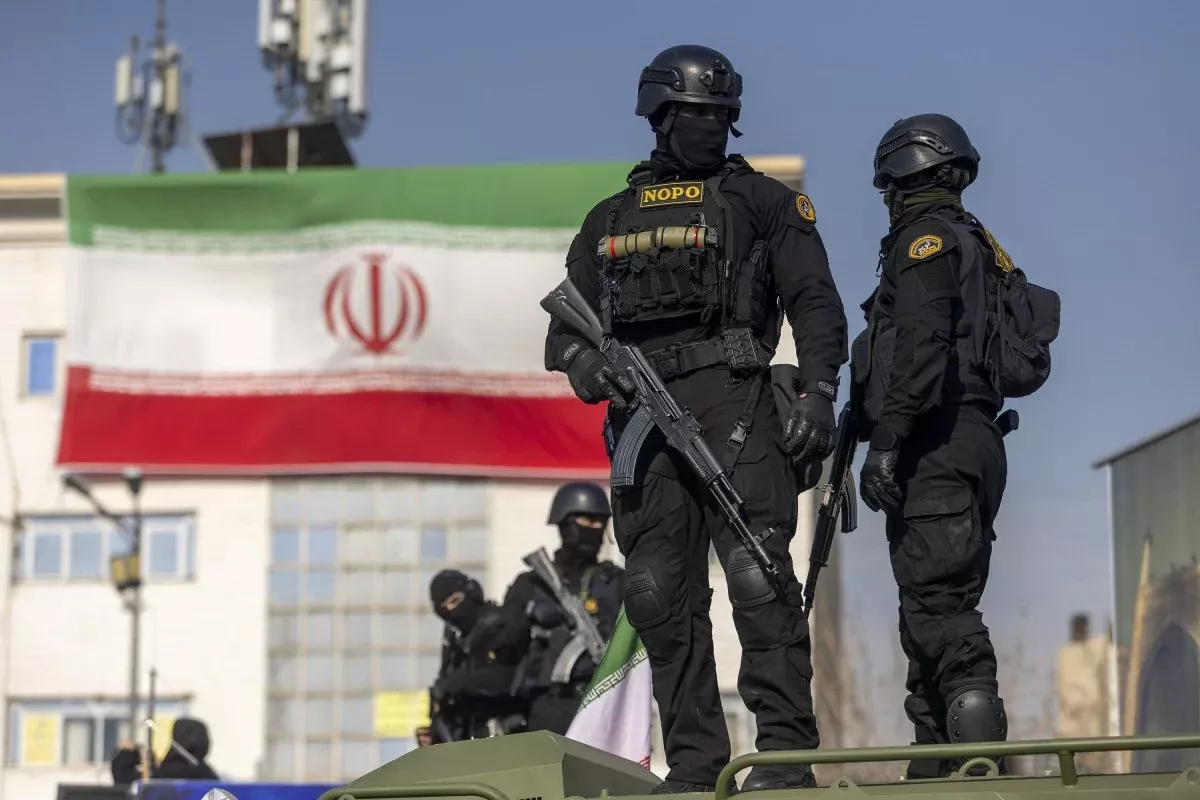
Iran’s streets have once again become a site of uncertainty, but this time the tremors extend far beyond its borders. Unrest that began in late December spread across multiple provinces and continued into January. It was met with a level of repression that has only deepened public anger.
What sets this moment apart is not just the scale of repression, but the way sustained instability is beginning to undermine long-held assumptions among Iran’s external partners, especially China.
For years, Beijing approached Iran as a paradox it could manage - a sanctioned and isolated state that is politically durable and strategically useful. China’s policy rested on the belief that Iran, however turbulent internally, remained fundamentally predictable. Domestic unrest was treated as background noise, unlikely to disrupt energy flows, infrastructure projects or diplomatic coordination. That assumption is increasingly difficult to sustain.
Under sanctions, Iran has become economically dependent on China in ways that go beyond a normal partnership. Beijing is no longer simply a major trading partner. It is effectively Iran’s primary economic lifeline. Nowhere is this imbalance clearer than in the energy sector. China absorbs most of Iran’s oil exports, purchasing crude oil under highly discounted and fragile arrangements shaped by sanctions enforcement and political risk. What is often described as cooperation increasingly resembles asymmetry, one that has benefited China significantly.
This dynamic has insulated Beijing from many of the costs associated with dealing with a sanctioned state. Cheap energy, preferential access and limited competition have allowed China to secure long-term advantages. The unrest exposes the vulnerability of this model. Energy security depends not only on supply, but on political continuity. As instability becomes persistent rather than episodic, even discounted oil begins carrying strategic risks.
The protests across Iran reflect a deep exhaustion that cuts across regions, classes and generations. Widespread arrests and lethal force signal a leadership that prioritises survival over adaptation. For China, this creates a dilemma that its traditional posture of non-interference cannot easily resolve.
Beijing’s broader Middle East strategy has long been built around stability rather than alignment. It avoids ideological positioning, favours economic leverage and seeks to remain insulated from domestic politics. Iran challenges this approach. When instability becomes structural, neutrality ceases to be a shield. Infrastructure investments, transport corridors and energy contracts all assume a minimum level of internal coherence. When that coherence erodes, commercial pragmatism loses its reliability.
Recent international reactions have further complicated the picture. In response to the scale of repression and reported killings in Iranian cities, US President Donald Trump warned that any country continuing to trade with Iran would face renewed penalties, including a 25 per cent tariff on its trade with the United States.
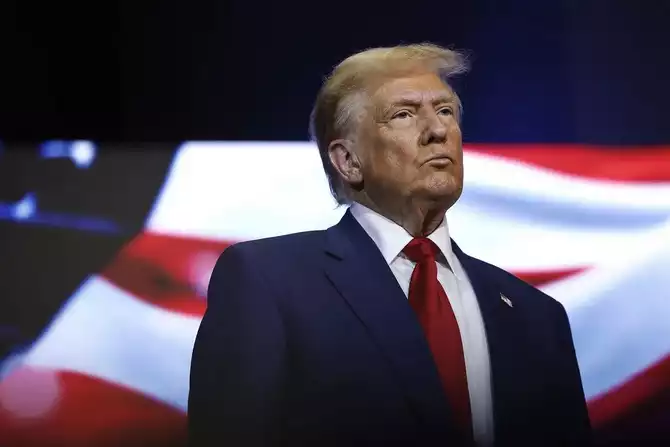
Photo credit: Reuters
Although the warning was framed broadly, its meaning was clear. China was the primary target. Beijing’s reaction was telling. Among Iran’s remaining economic partners, China seemed to be the only major power to show visible anger. Its own strategic and commercial interests were directly put at risk.
This episode highlighted a deeper vulnerability. By concentrating energy imports and long-term investments in a heavily sanctioned and politically volatile country, Beijing has narrowed its own strategic options. What once appeared as patience and foresight now risks becoming entanglement.
Beyond economics, Iran plays a symbolic role in China’s vision of a multipolar order. It represents resistance to Western pressure and the possibility of strategic autonomy outside US-led systems. But symbolism cannot substitute for stability. A partner preoccupied with an internal crisis is less capable of regional coordination and more prone to unpredictable behaviour. Over time, this weakens rather than strengthens China’s position.
The Belt and Road Initiative magnifies these tensions. Large-scale infrastructure projects rely on political continuity and social compliance. They struggle in environments shaped by rolling protests, labour disruptions and heavy-handed security responses. Iran’s unrest underscores the limits of an investment model that treats domestic politics as a secondary concern.
The longer-term implications are more profound. Any serious disruption to Iran’s political order, or a shift in the nature of governance, would almost certainly trigger a reorientation of Tehran’s foreign policy. Even without outright regime change, a post-crisis Iran would likely seek improved relations with the West, potentially through sanctions relief and renewed agreements, reopening its energy sector to European and American companies.
Such a shift would fundamentally alter China’s strategic calculus. Preferential access to cheap Iranian energy would no longer be guaranteed. Competition would replace exclusivity. China may face higher costs and reduced leverage. Regional security dynamics would also change, potentially diminishing Iran’s role as a counterweight to Western influence and forcing Beijing to reconsider its broader Middle East posture.
None of this suggests the imminent collapse of the Iranian state. The security apparatus remains powerful and the leadership has survived previous crises. But endurance should not be mistaken for stability. What is unfolding is a slow erosion of legitimacy, one that matters deeply for external partners.
Iran’s unrest is not yet forcing Beijing into dramatic choices. However, it is steadily shrinking China’s margin for ambiguity. Tehran’s political future is now closely linked to the future of China’s strategy in the Middle East.
Any meaningful change inside Iran would reverberate across China’s energy security, regional influence and long-term interests. In that sense, the protests are not only a domestic challenge for Iran. They are a quiet but consequential test of how China manages risk, dependency and power in an increasingly unstable region.