Kazakhstan’s Chairmanship: Strengthening Central Asia’s Nuclear-Weapon-Free Zone
As nuclear risks resurface in global security debates, Central Asia’s long-standing commitment to nonproliferation is gaining renewed relevance. In an article for The Diplomatic Insight, researcher and Managing Editor Irsa Khalid examines Kazakhstan’s leadership role in reinforcing the region’s Nuclear-Weapon-Free Zone. Titled “Kazakhstan’s Chairmanship: Strengthening Central Asia’s Nuclear-Weapon-Free Zone,” the piece highlights Astana’s diplomatic efforts to deepen regional cooperation, uphold nonproliferation norms, and strengthen Central Asia’s collective security architecture amid shifting geopolitical realities.
Kazakhstan assuming the chairmanship of the Treaty on a Nuclear-Weapon-Free Zone in Central Asia (CANWFZ) for 2026 represents a defining chapter in the history of global security. This rotating transition comes during the 20th anniversary of the Semipalatinsk Treaty, a document that transformed a region once heavily affected by over 450 nuclear tests into a premier example of proactive disarmament, The Caspian Post republishes the article.
Kazakhstan now stands as a central figure in a year dedicated to reflecting on two decades of progress while steering the international community toward a future defined by the total delegitimization of nuclear weapons.
The history of the Semipalatinsk Treaty is rooted in the post-Soviet transition of Central Asia and earlier national disarmament decisions, particularly Kazakhstan’s voluntary renunciation of nuclear weapons in the 1990s. Following the collapse of the Soviet Union, the newly independent Central Asian states faced the challenge of managing a massive nuclear infrastructure, including Kazakhstan’s inheritance of the world’s fourth-largest nuclear arsenal.
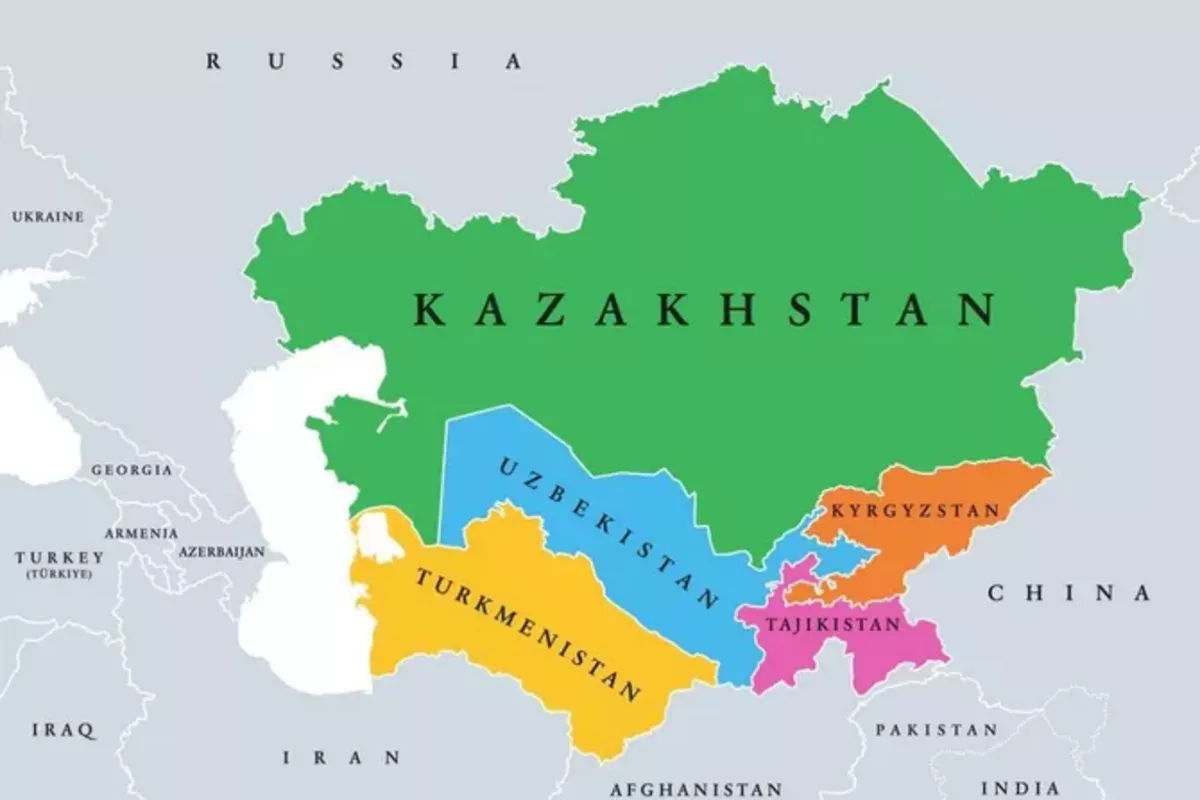
The journey toward a nuclear-free zone began with the 1992 Almaty Declaration and culminated on September 8, 2006, when the treaty was signed at the former Semipalatinsk test site. This location was chosen deliberately, symbolizing the closure of a dark chapter of atmospheric and underground testing. By 2009, the treaty entered into force, legally binding Kazakhstan, Kyrgyzstan, Tajikistan, Turkmenistan, and Uzbekistan to a future devoid of nuclear weaponry.
The success of the treaty is most evident in its role as a “regional firewall” that has prevented Central Asia from becoming a theater for nuclear competition. Surrounded by major nuclear-armed powers, the region could easily have become a site for tactical deployment or an arena for proxy tensions. Instead, the treaty has developed a unique brand of “nuclear-free diplomacy,” allowing these five nations to maintain their sovereignty and security without relying on nuclear deterrence.
This has proved successful in insulating Central Asia from the nuclear sharing trends seen in other parts of the world, effectively creating a stable buffer zone in the heart of Eurasia.
The impact of this agreement on Central Asian cooperation has been transformative. It served as one of the first major successful platforms where all five neighboring states, despite differing political systems and occasional border disputes, aligned on a singular, high-stakes security objective. This shared commitment has created a “zone of confidence” that facilitates broader regional integration. Beyond military security, the treaty’s requirement for the IAEA Additional Protocol has boosted the region’s profile as a reliable partner in the peaceful use of nuclear technology.
By mandating the highest international standards of verification, the treaty provided the necessary legal and security assurances for Kazakhstan to host the IAEA Low Enriched Uranium (LEU) Bank. This facility serves as a global last-resort reserve, ensuring that countries can access nuclear fuel for energy production without needing to develop their own enrichment capabilities, thereby reducing proliferation risks worldwide.
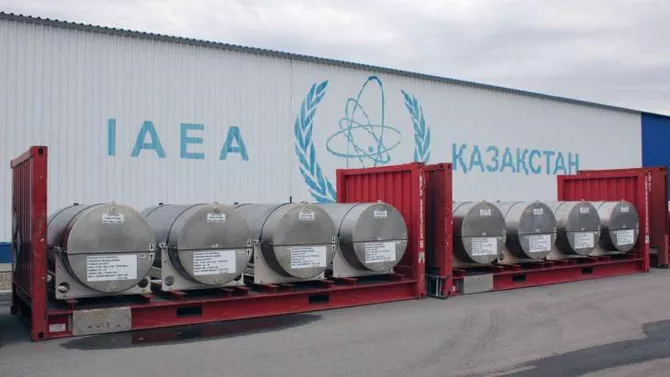
photo: World Nuclear News
The legal framework of the CANWFZ Treaty remains a benchmark for international law due to its strict verification requirements. It is the first agreement of its kind to mandate that all signatories adopt the IAEA Additional Protocol. This requirement ensures that the International Atomic Energy Agency has the broadest possible access to information and sites, creating a transparent environment where nuclear energy is used exclusively for peaceful purposes.
Kazakhstan intends to use its 2026 chairmanship to advocate for these high standards as a universal model for other regions, demonstrating that rigorous oversight is the most effective way to build cross-border trust.
The Semipalatinsk Treaty is also unique because it includes legally binding obligations for environmental rehabilitation. Article 6 of the treaty requires member states to address the ecological damage and health risks left behind by decades of nuclear testing and uranium mining. Kazakhstan has consistently led efforts to institutionalize international assistance for these regions.
Throughout 2026, the chairmanship will focus on finalizing the mechanisms for an International Trust Fund. This initiative aims to provide financial and technical support to affected populations, ensuring that the legacy of the Cold War is addressed through scientific cooperation and humanitarian care.
Strategic stability remains a core priority of the 2026 term, particularly as global nuclear risks reach levels not seen in decades. The chairmanship will focus on reinforcing the negative security assurances granted by the five permanent members of the UN Security Council. These guarantees ensure that nuclear-armed states are legally bound never to use or threaten to use nuclear weapons against the members of the zone.
This status prevents Central Asia from being drawn into modern nuclear-sharing arrangements or becoming a site for foreign nuclear basing. Maintaining this regional firewall is essential for preventing the escalation of geopolitical tensions in the heart of Eurasia.
Additionally, the importance of Kazakhstan’s role in 2026 cannot be overstated, as the country’s own history of disarmament grants it unique diplomatic credibility in a fractured global landscape. Today, Central Asia faces complex security dynamics shaped by the erosion of traditional arms control guardrails, such as the expiration of the New START treaty, and the rise of new regional challenges.
By assuming this chairmanship, Kazakhstan acts as a middle-power stabilizer, ensuring that Central Asia remains a bastion of predictability amidst global uncertainty. This leadership demonstrates that regional restraint, backed by enforceable rules and collective discipline, is not a sign of weakness but a sophisticated strategic choice that secures the region’s autonomy and promotes a more stable international order.
Astana has also positioned itself as a constructive interlocutor between different strands of the global disarmament architecture, including the NPT and the Treaty on the Prohibition of Nuclear Weapons (TPNW). While the CANWFZ is legally distinct from both treaties, its principles are consistent with the NPT’s non-proliferation objectives and with the humanitarian concerns that underpin the TPNW. Kazakhstan’s 2026 chairmanship therefore underscores the value of regional nuclear-weapon-free zones as complementary instruments within the broader international security framework.
Taken together, the 2026 chairmanship represents continuity rather than transformation, reaffirming two decades of regional cooperation in nuclear restraint. Kazakhstan’s leadership highlights the enduring relevance of nuclear-weapon-free zones in contributing to predictability and stability in the international system by emphasizing verification, dialogue, and respect for existing legal commitments.