Hormuz Disruption Hits LNG Flows Harder Than Oil Shipments
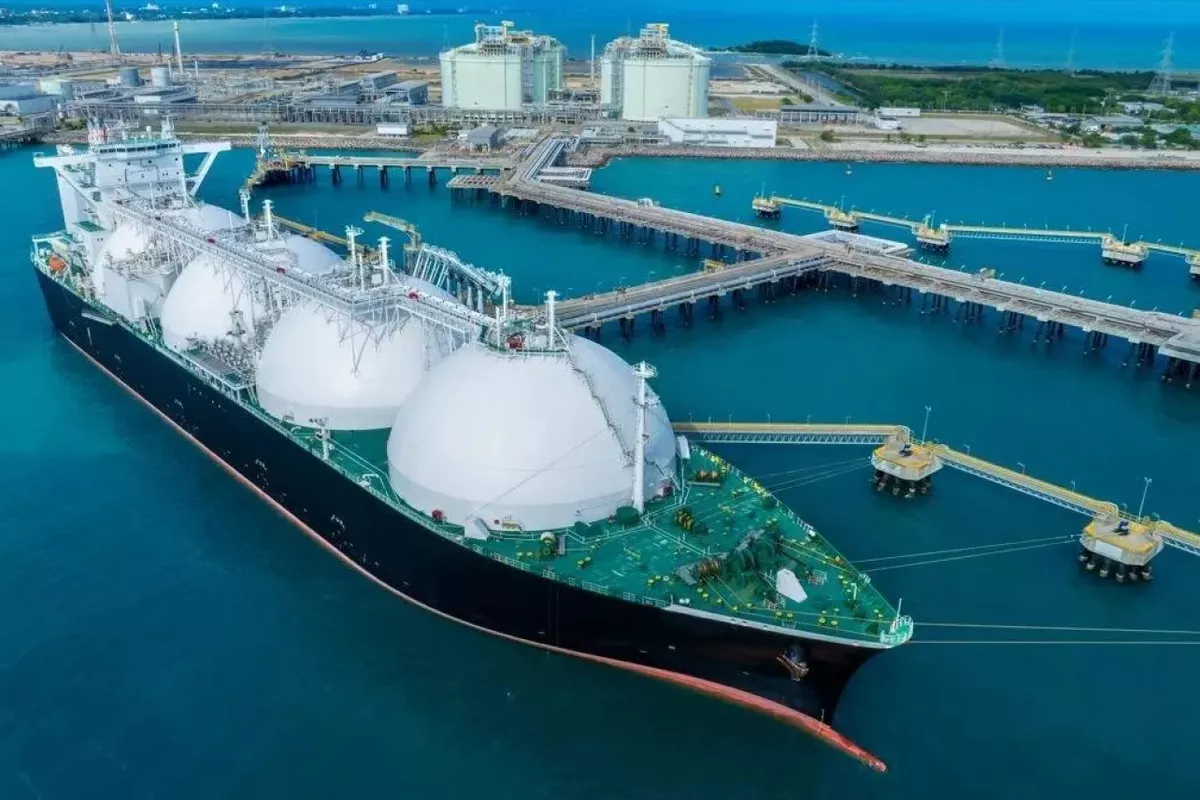
Security concerns in the Strait of Hormuz are disrupting energy shipping, with oil tanker traffic continuing at reduced levels while LNG shipments have experienced a much steeper decline.
Data from the US Energy Information Administration (EIA) show that total oil flows through the Strait of Hormuz dropped from 21.6 million barrels per day (bpd) in the fourth quarter of 2025 to 4.9 million bpd in the second quarter of 2026, The Caspian Post reports, citing Anadolu Agency.
Over the same period, LNG flows fell from 10.5 billion cubic feet per day (bcf/d) to 0.8 bcf/d.
The figures represent a 77% decline in oil flows and a 92% drop in LNG flows through the strategic waterway, highlighting the significantly greater disruption affecting LNG shipments.
The Strait of Hormuz is the only maritime route for LNG exports from Qatar and the United Arab Emirates (UAE), while around one-fifth of global LNG supplies pass through the waterway.
The Gas Exporting Countries Forum (GECF) estimates that the escalation of the conflict resulted in the loss of more than 300 Qatari LNG cargoes and around 20 UAE cargoes between March and June.
Weekly figures from London-based maritime data and analytics company Clarksons Research also illustrate the divergence between oil and LNG traffic.
In the week ending June 27, 66 crude oil tankers and 16 LNG carriers passed through the Strait of Hormuz. By the week ending Aug. 29, only four crude oil tanker transits were recorded, while no LNG carriers passed through the waterway.
Oil shipments have had greater access to alternative routes. According to the EIA, oil flows through the Bab el-Mandeb Strait increased from 5.4 million bpd in the fourth quarter of 2025 to 8.1 million bpd in the second quarter of 2026. This was partly due to Saudi Arabia redirecting some of its oil through the East-West Pipeline to the Red Sea port of Yanbu.
Mehdy Touil, LNG lead specialist and shareholder at Calypso Commodities, told Anadolu that structural differences between the oil and LNG sectors help explain the different shipping trends.
He said oil benefits from a larger and more flexible tanker fleet, as well as extensive storage capacity, while LNG lacks the same level of flexibility.
LNG is transported by cooling natural gas to around minus 162 degrees Celsius and converting it into liquid form. Touil noted that LNG carriers are specialized vessels designed for cryogenic transportation, creating important differences from an insurance perspective and resulting in lower risk tolerance compared with other hydrocarbon trades.
He also identified the concentration of Qatar’s LNG export infrastructure as a major constraint.
Qatar’s LNG export facilities are concentrated at Ras Laffan, and all of the country’s seaborne LNG exports must pass through the Strait of Hormuz. This leaves Qatari LNG without an alternative maritime route.
Touil said cargoes can be rerouted, but Qatar’s large-scale export infrastructure, built over decades, cannot be moved.
He added that replacing LNG supplies disrupted through Hormuz with additional production from other suppliers would be difficult in the short term because most liquefaction facilities are operating at maximum capacity, and in some cases above it.
Developing new LNG export facilities would take several years, Touil said, adding that he does not expect another producer to replace Qatar’s central role in the global LNG market in the near future.