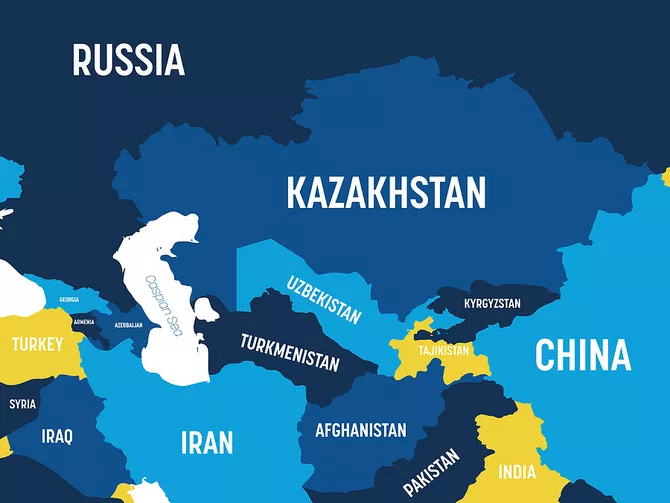
The Turkic world is rapidly reshaping Eurasia’s geopolitical landscape. What once seemed like a romantic vision of unity has evolved into a developing system of security, economic corridors, and shared cultural space, with its center in Baku and Ankara. As some countries lose influence, others are swiftly rewriting the rules of the game.
But is the world prepared for Turkic states to act as independent players rather than the “periphery” of former empires? What concerns do Moscow and Tehran conceal behind diplomatic language? And why has Central Asia yet again found itself at the crossroads of global interest?
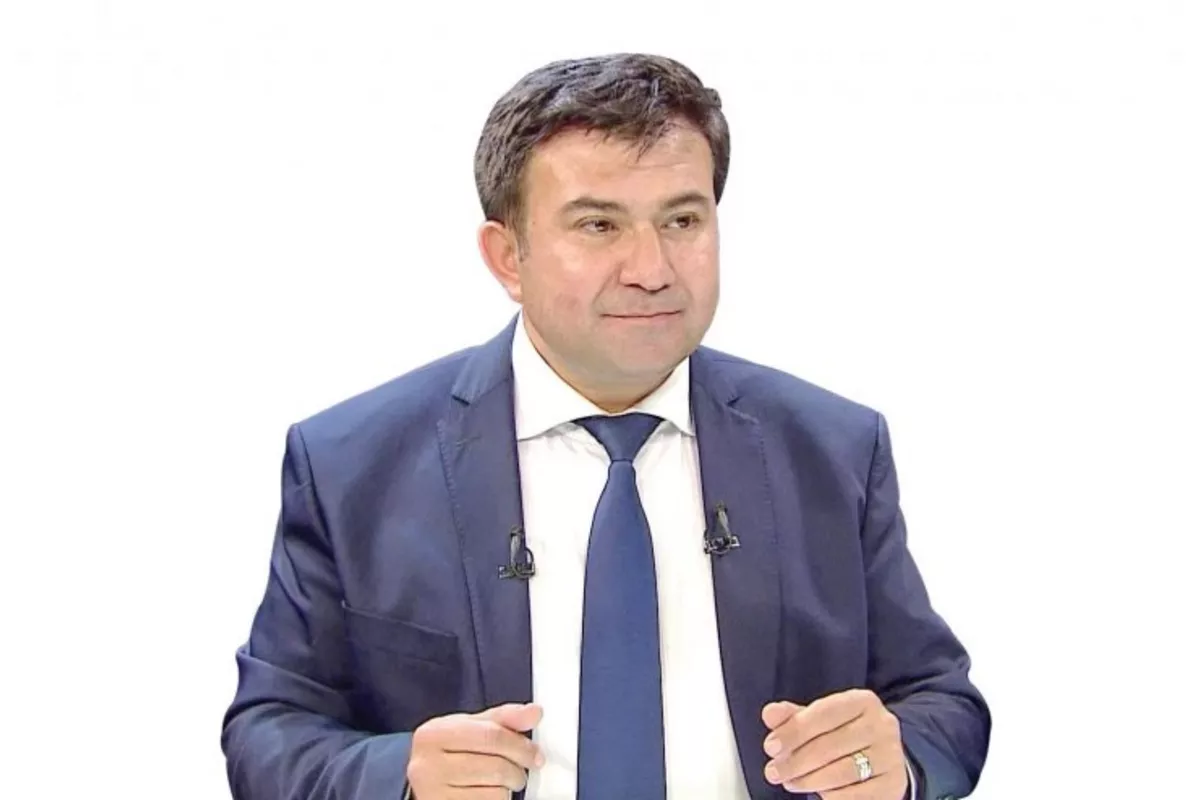
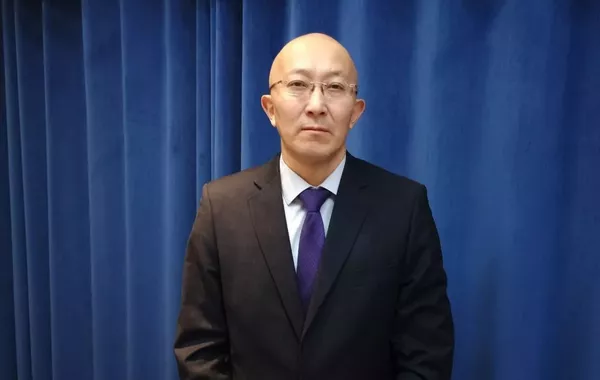
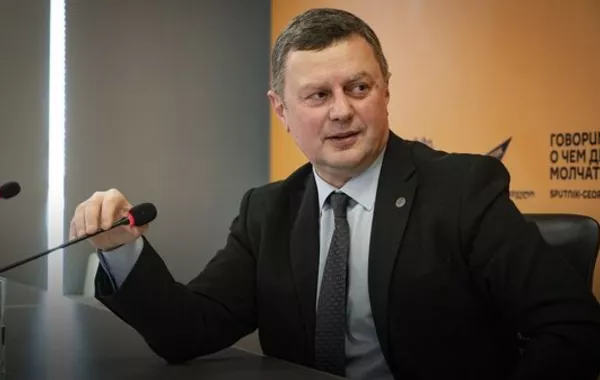
These questions are at the heart of a candid conversation with Turkish political scientist Hüsamettin İnac, Professor of International Relations at Dumlupınar University, who explains how Turkic integration is emerging as a new factor in the global balance of power.
- In your opinion, what key factors allowed the Turkic states of Central Asia to gradually move from formal independence to real strengthening of their sovereignty and independent foreign policy?
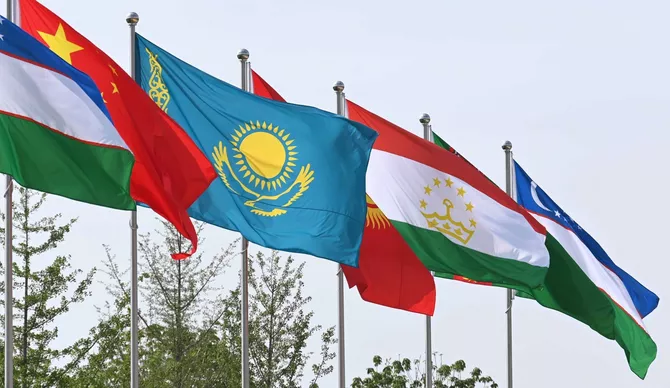
Photo credit: turkic.world
- The Turkic states of Central Asia gained independence in 1991 after the collapse of the Soviet Union. However, since they had never experienced real independence or exercised their own sovereignty before, the first years brought serious difficulties, and these countries decided to maintain their dependency on Russia within the framework of the Commonwealth of Independent States.
Unfortunately, Türkiye was also going through extremely difficult times then: a severe economic and political crisis prevented the establishment of full-fledged ties with the Turkic states.
Nevertheless, we can say that the formation of these ties had already begun in the early 2000s. During this period, the Central Asian states gradually resolved internal issues and settled border problems. A large part of the population consisted of Russians, but over time, a significant portion of the Russian-speaking community left the region, and the countries moved confidently toward real independence.
- Do you believe that Türkiye was able to transform from a regional participant into a key strategic center of the entire Turkic world precisely thanks to transport and energy integration projects?
Source: Reuters
- During that period, Türkiye was building close relations with the European Union and strengthening itself as a state more committed to democratic values, human rights, the rule of law and constitutional freedoms. After the Justice and Development Party came to power in 2002, these processes accelerated further.
Initially created as the Council of Turkic States, the structure was renamed the Organization of Turkic States in 2020. It formed an independent secretariat and became an effective mechanism that develops joint policies and adopts an integration model that has strengthened over the years.
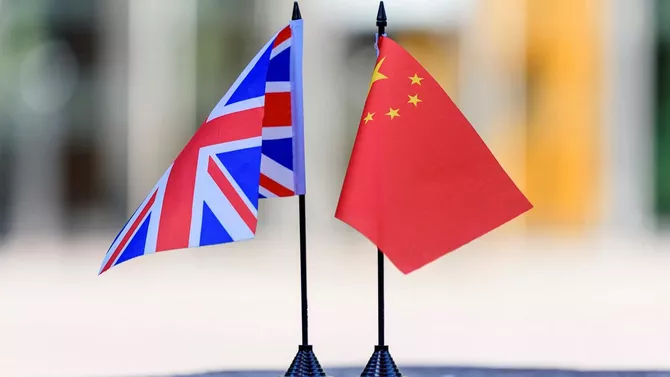
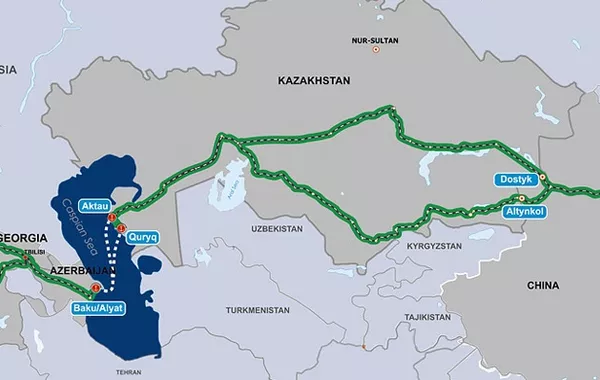
A key factor boosting cooperation was the Belt and Road Initiative connecting China and the United Kingdom - that is, Beijing and London. Its main corridor runs through the Caspian region, across the territories of the Turkic world, leading into Türkiye and Europe, which over time further strengthened relations.
Another important direction was energy cooperation, since the Turkic states of Central Asia (except Kyrgyzstan) possess large reserves of natural gas and oil. Agreements were gradually concluded for the export of these resources to Europe through Türkiye.
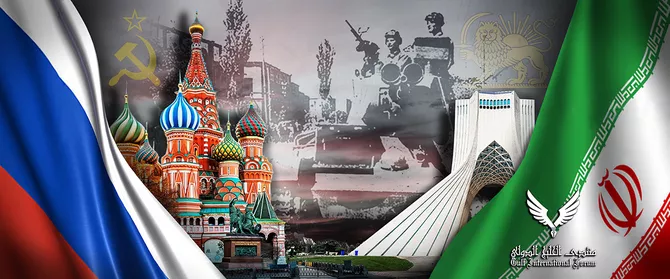
- Considering the rapid strengthening of Turkic military-political integration, with Baku becoming its central hub, what challenges and risks may arise from external actors, primarily Russia and Iran, and how does the Organization plan to neutralize them?
Source: TASNIM
- Of course, when discussing these relations, the special bond between Türkiye and Azerbaijan must be highlighted. It is based on deep historical ties going back to the liberation of Baku in 1918. As is known, Azerbaijan in 1918 created the first national independent Turkic state, and the Ottoman Empire, particularly the Caucasian Islamic Army, played a major role in this.
Victory in the Second Karabakh War in November 2020 further strengthened and cemented this special relationship.
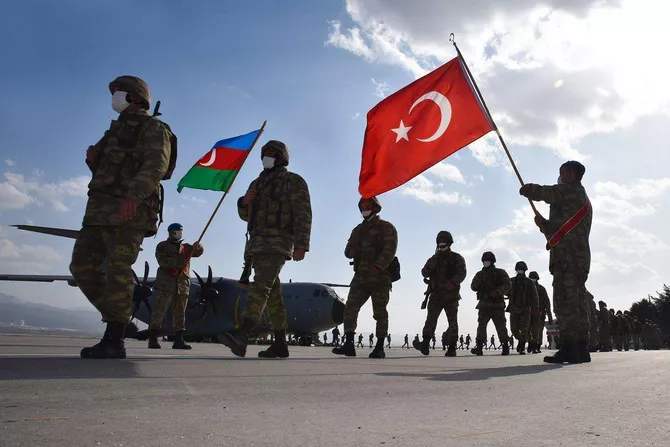
Since Türkiye used its drones and strike UAVs in the region, and through its deterrent power prevented Russia from intervening in the war, it made a tremendous contribution to military advising, preparation, and the restructuring of the Azerbaijani army. These factors played a decisive role, and the 44-day Patriotic War became the starting point of an entirely new process. Other Turkic states also saw the geopolitical multiplier effect created by cooperation between Türkiye and a Turkic state in the South Caucasus. Later, Uzbekistan joined this alignment.
Recently, Uzbekistan and Azerbaijan signed a strategic cooperation agreement largely similar to the Shusha Declaration signed with Türkiye. And at the latest summit in Ashgabat, the Organization of Turkic States decided to create a new security and defense architecture, with Azerbaijan, that is, Baku, as its center. From now on, joint military exercises of Turkic states will be held in Baku, forming an integration model resembling both NATO and the European Union. Naturally, this caused serious concern in some regional countries.
Russia, which only a year earlier rejected apologies and compensation demands after the downing of an Azerbaijani aircraft and tolerated unfair treatment of the Azerbaijani diaspora on its territory, eventually decided to normalize relations with Azerbaijan, recognized compensation claims, and preferred to move toward restoring ties.
Thus, today, even Turkmenistan, which previously maintained a fully neutral and non-aligned status, will gradually play a more active and leading role within the Organization of Turkic States. The integration of Turkmen gas with Türkiye through Azerbaijan will further strengthen relationships. However, unfortunately, certain problems persist in Kazakhstan and Kyrgyzstan.
- Given that the war in Ukraine has distracted Russia from Central Asia, but a possible peace agreement may return its attention to the region, what strategic steps must Turkic states prioritize now to strengthen their positions and prevent a new cycle of geopolitical dependence on Russia?
Source: TASS
- In Kazakhstan, Russian influence remains quite strong. In Kyrgyzstan, as is known, Chinese influence dominates, and both countries are showing increasing determination to deepen integration with external partners. Looking at the bigger picture, we can say that Türkiye’s new model of interaction with the Turkic states of Central Asia and the creation of a new architectural space through the Organization of Turkic States place Ankara in an important position in the competition between Russia and China.
If we look back at the recent historical period, not so long ago Russia perceived the region solely as its “backyard,” and China, through Uzbekistan and Afghanistan, exercised strong influence there. But today we observe a gradual weakening of this Chinese influence. As Türkiye’s influence grows, and as the sovereignty and independence of the Turkic states increase, China’s influence is declining.
Furthermore, the ongoing four-year war launched by Russia against Ukraine has significantly limited Moscow’s ability to focus on the region. At the same time, the revived agenda of the Zangezur Corridor, now under the name “Trump’s Road of Peace”, has become an important factor for strengthening the U.S. presence in the region. There are also serious contradictions between China and Russia regarding Siberia.
China, a giant state with a huge population and powerful economy, almost always emerges as the winning side in cooperation with Russia. However, as Ukraine acts jointly with NATO and Europe, the exclusionary policy of President Trump has led to the formation of a closer alliance between Russia, China and India. For the Organization of Turkic States, this can be considered a positive factor at this stage.
Because while these powers deal with their internal contradictions, they lack the time and resources to concentrate on Central Asia. Yet, if the war in Ukraine reaches a peaceful settlement under the “28-point plan” or “Trump plan,” Russia’s interest in the region will unfortunately intensify once again. And this may lead to attempts by Moscow to limit Türkiye’s role both in the South Caucasus and in Central Asia.
However, Russia, especially in the context of the Ukraine war, has taken the position of a state that, due to its imperial expansionist nature, has been effectively pushed out of the international system, above all by Europe. Therefore, its economic, political, and diplomatic recovery will likely take time. And the Turkic states must use this time as efficiently as possible.
- What concrete steps, in your view, should Türkiye and Azerbaijan take in the coming years to protect the development of a unified defense system and cultural space from external pressure and attempts to “divide” the Turkic world?
Source: APA
- It is particularly important to strengthen the defense industry and, jointly with Türkiye, build a unified air defense system, as well as develop military cooperation to a higher, institutionalized level. Independence is impossible without economic self-sufficiency. Therefore, economic consolidation and further strengthening are issues that must be resolved within the next 3-4 years.
It is no less important to deepen cultural ties. “Soft power” plays a key role in shaping public opinion within states and preparing societies for closer interaction. Today, Türkiye receives thousands, tens of thousands of students from the Turkic world, especially from Azerbaijan.
These processes must be further strengthened through institutions such as Yunus Emre, Mevlana, Maarif, TİKA, and others. At this stage, one of the most serious challenges for the Turkic world may be attempts by imperialist and expansionist powers, especially manipulative practices recently demonstrated by the European Union, to undermine relations between Turkic states. Such interference must not be allowed.
The Turkic states must prioritize partnership among themselves above relationships with other countries.