The recent visit of Turkish Foreign Minister Hakan Fidan to Russia was significant not only in terms of the diplomatic agenda. Particular attention was drawn to his contacts with the heads of three key Russian intelligence structures - the FSB, the SVR and military intelligence. Against the backdrop of the war in Ukraine, tensions around the Black Sea, instability in the Middle East and growing uncertainty in the South Caucasus, such meetings carry a special meaning.
The Caspian Post presents an interview with Turkish security expert Abdullah Agar on what hidden signals may lie behind these talks, which regional dossiers could have been discussed in Moscow, and why Türkiye is increasingly taking on the role of a key hub in crisis diplomacy.
- The official agenda of Hakan Fidan’s meetings with the heads of Russian intelligence structures was not disclosed. How do you assess the very fact of such contacts?
- Of course, there is no publicly declared topic for these talks. However, the very fact that Türkiye’s foreign minister met with the heads of Russia’s three key intelligence structures is extremely important - and possibly carries several meanings at once.
We are talking about Alexander Bortnikov, the director of Russia’s Federal Security Service. His area of responsibility is primarily linked to internal security and counterterrorism. Sergey Naryshkin heads Russia’s Foreign Intelligence Service, which means the sphere of secret diplomacy, strategic intelligence and geopolitical analysis.
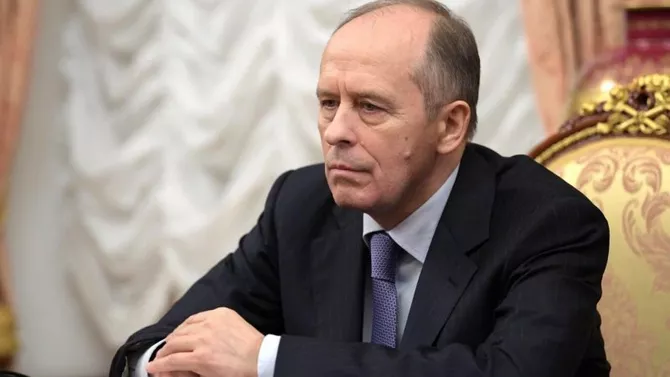
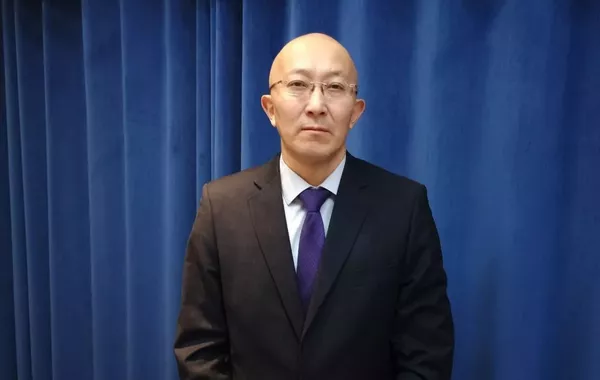
Alexander Bortnikov, the director of Russia’s Federal Security Service
Igor Kostyukov, in turn, is the head of the Main Directorate of the General Staff of the Russian Armed Forces - in other words, the head of military intelligence. This area is directly linked to war, above all the conflict in Ukraine, as well as operational issues.
From this point of view, one may assume that the talks focused on extremely important issues at the intersection of intelligence, security and foreign policy. When the head of a foreign ministry holds dialogue with such figures at the same time, this goes beyond a routine diplomatic agenda. It may involve coordination on the most sensitive regional and military-political dossiers.
- What specific issues could have been at the center of these talks?
- In my view, the first and most obvious area is the war in Ukraine and security in the Black Sea. Recently, a number of very serious developments have taken place around the risk of military operations expanding into the Black Sea. This is also directly linked to issues of energy security.
In the Black Sea, numerous drone attacks, strikes on vessels and related threats have come to the fore. All this creates an extremely important agenda in the field of Black Sea intelligence, risk monitoring and countering destabilization. Another aspect is the activity of NATO and the United States in the Black Sea, especially through Romania, as well as attempts to strengthen influence in this region. I think these issues could well have been discussed.
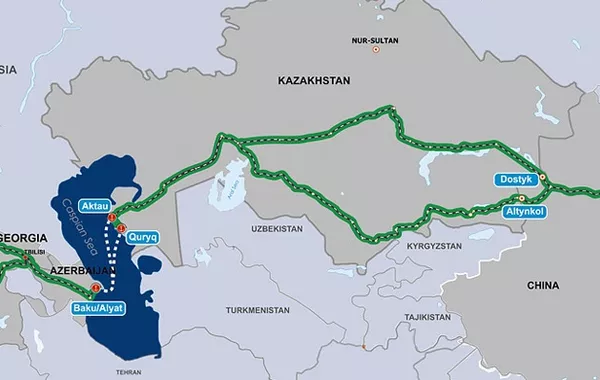
The second important block is the South Caucasus. Recently, this region has turned into a point where the interests of China, Russia, Iran, the West, Türkiye and the entire Turkic world intersect. Therefore, the South Caucasus today serves as one of the key arenas of geopolitical competition.
The elections in Armenia and the situation that may emerge after them are of particular importance, along with their geopolitical, strategic and military-security consequences. The attention of many players is now focused precisely on this direction.
Another important factor is the Iranian crisis. This concerns the confrontation between Iran and the United States, as well as Iranian-Israeli tensions and their consequences. These processes could generate serious regional effects, including for the South Caucasus. The new picture that may take shape in the Caspian direction is especially important.
The next block is the Syrian dossier. Türkiye and Russia have very important ties, mechanisms of interaction and coordination regarding Syria. On the other hand, one cannot ignore the Israeli factor, its influence in Syria and its possible impact on the future of that country, as well as the question of Russia’s future role in Syria. All these areas are of serious importance, and each of them can affect the balance of power in several regions at once.
- Can we say that these meetings were connected with an attempt to prevent a possible crisis in Turkish-Russian relations in advance?
- I think this is one of the key points. After listing all these issues, one more thing must be said: it is possible that this was about forecasting an approaching crisis in advance and developing measures to prevent it.
As is known, there has recently been a certain sensitivity and even some cooling in relations between Türkiye and Russia. From this point of view, one may assume that Moscow and Ankara are seeking to build a mechanism for control, coordination and risk management.
Bilateral relations are facing numerous manipulations. In this sense, meetings at such a level are of great importance precisely from the point of view of early detection of a possible crisis and its prevention.
In other words, strengthening a direct communication channel between the two countries, primarily between their intelligence services, is becoming an extremely important factor. This is necessary to eliminate possible misunderstandings, exchange intelligence information and, most likely, develop new mechanisms of coordination in various areas.
Moreover, ahead of the NATO summit, Türkiye, during the same week, continues contacts with the United States, maintains dialogue with Russia, interacts with Ukraine and influences the Syrian and Iranian tracks, while the South Caucasus remains an area of major struggle and uncertainty.
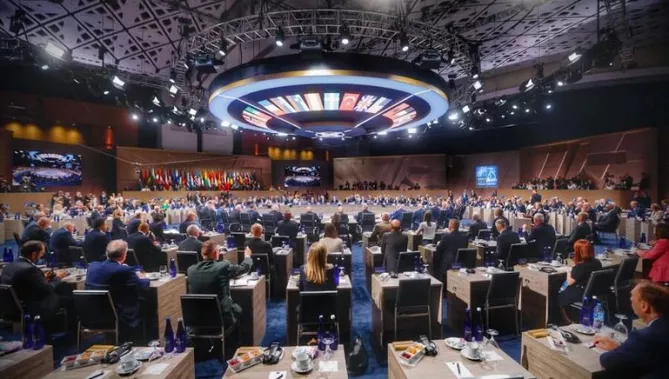
Source: Getty Images
All this shows that Türkiye does not seek to confine itself within the framework of one bloc. Instead, it is trying to assume the role of a pivotal player that controls information flows and participates in crisis management between competing centers of power.