Why Tajikistan Is Tightening Its Fight Against Religious Radicalism
Experience of history has shown that the higher the standard of living and level of education, the lower the religiosity of the majority of the population. In addition, the degree of urbanization plays a significant role in this issue, since residents of rural areas are generally considered the most conservative. Another important factor in the spread of radical ideas is the influence of neighboring countries. Due to its geographical position, Tajikistan happens to border the Islamic state of Afghanistan, which has been seeking to exert pressure on its closest neighbors. More broadly, religion is often used as a tool for expanding zones of influence, which poses serious risks for countries trying to build a modern, secular society.
Tajik media periodically report on incursions by various extremist groups into the territory of the republic. For instance, on the night of December 23-24, 2025, a group of three armed individuals crossed the Tajik-Afghan border near the village of Kavo in the Shamsiddin Shohin district. During the ensuing firefight, all three attackers were killed. Tajik authorities described the incident as the third terrorist attack originating from Afghan territory within a month and placed responsibility for border security on the Taliban government.
On January 18, 2026, another armed clash occurred along the Tajik-Afghan border between Tajik border guards and terrorists attempting to cross from Afghanistan, according to the press service of Tajikistan’s State Committee for National Security (SCNS). Tajikistan shares a border of more than 1,300 kilometers with Afghanistan.
No less concern for Tajikistan is posed by ethnically and culturally close Iran. Although the two countries do not share a border, they are connected by a common language, which facilitates the dissemination of radical Islamic propaganda. It is worth noting that Iran was the first country to recognize Tajikistan’s independence in 1992. In the early years of bilateral relations, high-level meetings, including negotiations between the two presidents, were frequent. The Tajik president visited Iran 14 times, while the Iranian president visited Dushanbe 13 times. At the turn of the 2000s and 2010s, exchanges of visits took place almost annually.
However, beginning in 2015, relations entered a phase of sharp deterioration, largely due to Iran’s support for Tajik fundamentalist movements. The turning point was a meeting between Muhiddin Kabiri, leader of the Islamic Renaissance Party of Tajikistan (IRPT), and Iran’s Supreme Leader Ayatollah Ali Khamenei. The IRPT has been designated a terrorist organization in Tajikistan, and its leader is accused of attempting a coup d’état and is wanted by Interpol. Following the meeting, Tajikistan’s Foreign Ministry delivered a protest note to the Iranian ambassador in Dushanbe, Hojjatollah Faghani. Tajikistan subsequently banned imports of Iranian food products and goods citing “low quality,” revoked simplified visa procedures for Iranian citizens at the airport, and shut down the local branch of the Iranian charity - the Imam Khomeini Relief Committee.
Moreover, Dushanbe opposed Iran’s bid to join the Shanghai Cooperation Organization (SCO), accusing Tehran of sheltering IRPT supporters who allegedly sought to destabilize Tajikistan. These political tensions negatively affected economic ties: in 2017 Iran virtually halted investments in Tajikistan, and bilateral trade dropped from $292 million in 2013 to $114 million in 2016. In recent years, contacts have increased again, yet economic cooperation remains limited - annual trade barely exceeds $200-250 million, representing about 5% of Tajik exports and just over 1% of Iran’s exports. Thus, the significance of bilateral relations lies more in cultural, linguistic, and historical ties than in economics.
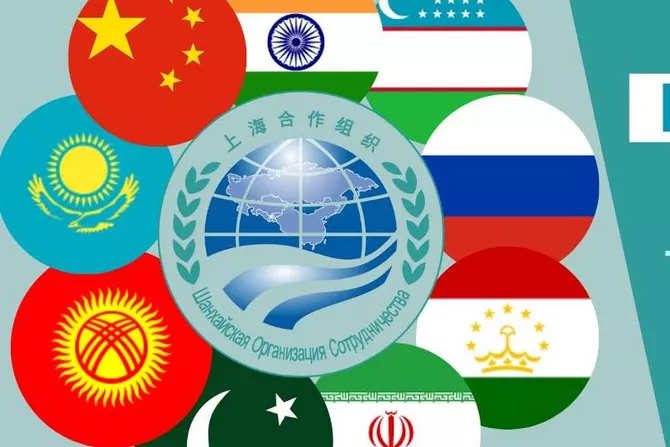
photo: Jagran Josh
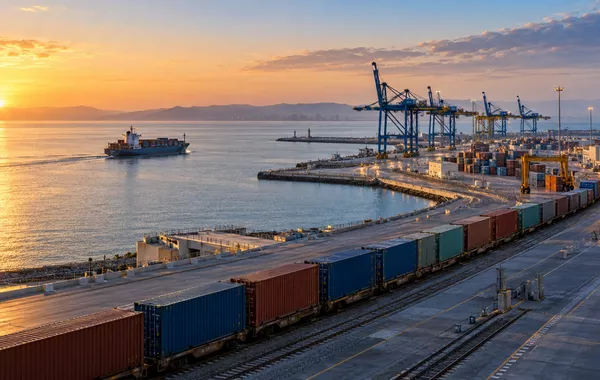
Both sides have attempted to expand transport links and regional security cooperation, particularly through the Iranian port of Chabahar, which was seen as important for Tajikistan’s access to the Gulf of Oman. However, following Iran’s military setbacks in the 12-day war of 2025, severe sanctions, economic collapse, and large-scale domestic protests, Tehran’s capacity for regional engagement appears severely constrained. In this sense, one external threat to Tajikistan’s secular system has temporarily weakened.
Nevertheless, Tajikistan continues to pursue strict preventive measures against religious radicalism. In 2018, the government recommended that women refrain from wearing religious clothing; those who ignored this faced warnings and restrictions on access to state institutions, schools, hospitals, and civil registry offices. President Emomali Rahmon later signed a law banning not only the wearing but also the import and sale of “foreign clothing.” Violations carry fines of 8,000 somoni ($750) for individuals and 57,000 somoni ($5,200) for legal entities.
Men are prohibited from growing beards associated with the “Wahhabi style.” Identified individuals are first given warnings and then taken to barbershops. Additionally, citizens under 18 are banned from attending mosques, and those under 35 are prohibited from performing the Hajj pilgrimage to Mecca. Government officials are forbidden from attending Friday prayers. Excessive public observance of religious rituals is also restricted.
The second pillar of policy is strict control over religious education and clergy. In 2016 private Islamic schools were banned, and in 2021 unlicensed online religious education was criminalized. Under Article 334 of Tajikistan’s Criminal Code, illegal religious teaching can result in fines or imprisonment of up to three years. More than 1,000 unauthorized prayer houses were closed in 2018, and imams are required to undergo regular training on countering extremism.
Finally, Tajikistan actively combats extremism through reintegration programs. Women returning from conflict zones in Syria and Iraq are monitored, and their children are often placed in boarding schools to limit exposure to radical influences. A law was also passed stipulating that the bodies of killed terrorists are no longer returned to families but buried in unmarked graves in closed cemeteries.
In sum, Tajikistan is making determined efforts to preserve its secular character and steer the country toward modernization and development.