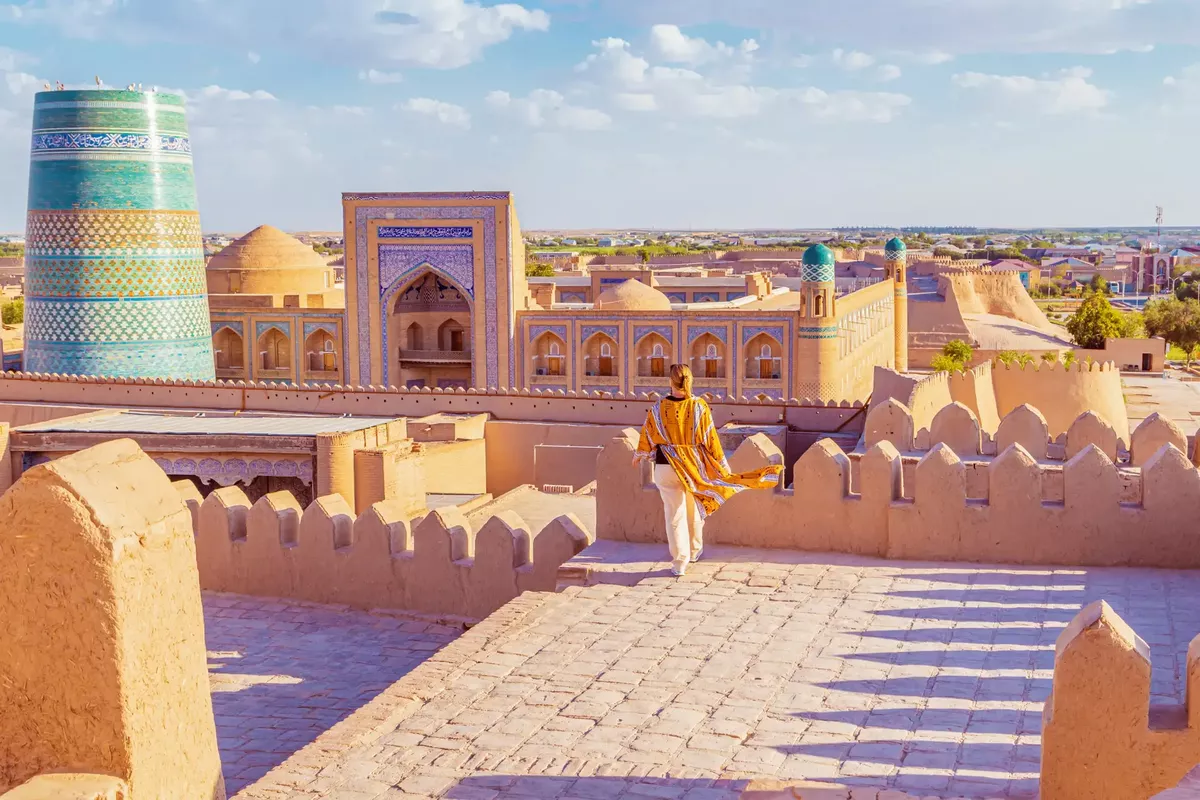
UzDaily highlights that Uzbekistan, long celebrated for its rich historical and cultural heritage, is increasingly positioning itself as a promising destination for new investments.
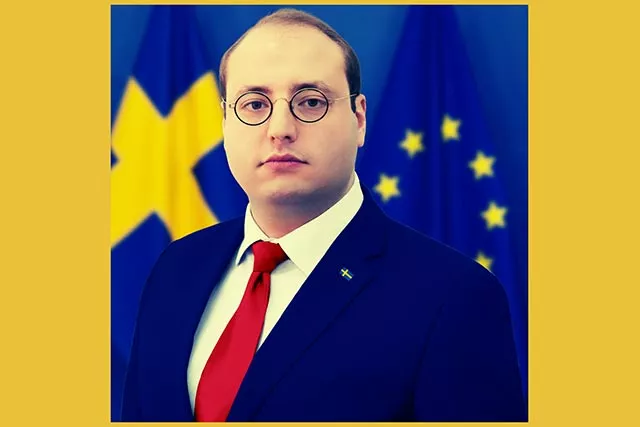
photo: UzDaily.uz
Mr. Alex Matrsson, a distinguished Swedish pracademic, is known for his ability to bridge the worlds of academia and business with rare precision. His work spans continents and disciplines, shaping global perspectives on innovation, education, and sustainable development. Among the many nations he has engaged with, Uzbekistan stands out to him as a country of heritage, ambition, and transformation, a place where education, entrepreneurship, and culture converge to define a new era of progress, The Caspian Post reports via Uzbek media.
Education as a Catalyst for National Transformation
In discussing the evolution of Uzbekistan’s academic landscape, Mr. Matrsson reflects on how universities across the country have transcended traditional teaching models to become engines of innovation and applied knowledge. For him, higher education in Uzbekistan is not simply about theory; it is about action, impact, and purpose.
He notes that universities are cultivating critical thinking, entrepreneurship, and leadership among students, preparing them not only for employment but for meaningful contribution. Modern curricula, international partnerships, and government-led reforms are shaping a new generation of graduates who think globally while remaining grounded in the values and vision of their nation.
For Mr. Matrsson, education in Uzbekistan represents more than institutional reform; it embodies the nation’s collective aspiration to compete and thrive on the global stage. He highlights how government policies, from curriculum modernization to digital infrastructure investments, are creating an environment where innovation and research can flourish. Students, he observes, are at the core of this transformation. They approach their studies with ambition and creativity, engaging in projects, entrepreneurship, and international collaborations. Each academic endeavor becomes an act of national development, an investment in the future of Uzbekistan.
Mr. Matrsson is actively engaged with numerous universities in Uzbekistan, leading projects designed to foster innovation, strengthen academia and industry cooperation, and promote practical solutions aligned with the United Nations Sustainable Development Goals (SDGs). His initiatives particularly support Quality Education (SDG 4), Gender Equality (SDG 5), Decent Work and Economic Growth (SDG 8), Industry, Innovation and Infrastructure (SDG 9), and Partnerships for the Goals (SDG 17). Through these programs, Mr. Matrsson seeks to inspire Uzbek universities to translate academic knowledge into meaningful outcomes that contribute both to national progress and global well-being.
Reflecting on this engagement with the local governmental institutions, Mr. Matrsson notes that, compared with similar experiences elsewhere in the world, the Uzbek government stands out for its efficiency, transparency, and genuine commitment to supporting international academic cooperation. He highlights that the institutional environment in Uzbekistan is remarkably well-structured, characterized by excellent accessibility, responsive coordination, and a collaborative spirit at all levels. These qualities provide a strong foundation for the country’s continued advancement as an emerging center of academic excellence.
A Land of Economic Momentum and Global Opportunity
Beyond academia, Mr. Matrsson views Uzbekistan as a country rapidly emerging as an economic powerhouse in Central Asia. Its strategic location at the heart of the region, combined with a youthful and dynamic population, positions the nation as a prime destination for investors and entrepreneurs from around the world. Reform-driven policies have created an environment where innovation, enterprise, and international collaboration can thrive.
Key sectors, including energy, manufacturing, technology, and agriculture, are undergoing transformation through modernization and diversification. Streamlined regulations, improved logistics, and targeted investment incentives are enhancing the business climate and creating opportunities for sustainable growth. Uzbekistan’s commitment to economic reform and openness makes it an increasingly attractive hub for multinational companies seeking to expand in Central Asia.
Mr. Matrsson is actively involved in this economic evolution, facilitating partnerships that connect global investors with Uzbek businesses. He is spearheading initiatives to establish research centers, innovation hubs, and joint ventures, creating direct links between academia, government, and industry. These efforts aim to integrate knowledge, technology, and entrepreneurship, ensuring that economic growth benefits not only businesses but also society at large.
Culture, Heritage, and Human Connection
Mr. Matrsson often speaks about the beauty and depth of Uzbek culture, its traditions, warmth, and timeless spirit. He describes the people of Uzbekistan as among the most hospitable he has encountered in his international work, noting that generosity, respect, and kindness are deeply rooted in daily life.
While based in Sweden, the United Arab Emirates, and Kazakhstan, Mr. Matrsson often finds himself drawn to Uzbek cuisine and culture. He fondly recalls enjoying pilaf, naan bread, and shakarob salad, often prepared with a sense of care and community that reflects the nation’s soul. For him, every meal and every conversation in Uzbekistan carries a sense of shared humanity and continuity, a living expression of a country that honors its past while building its future.
A Historic Global First for Uzbekistan
In a historic milestone, Mr. Alex Matrsson notes that UNESCO has chosen Samarkand to host its 43rd General Conference, marking the first time in four decades that this major global meeting will take place outside Paris. He emphasizes that this unprecedented recognition reflects the world’s acknowledgment of Uzbekistan’s sweeping reforms in education, culture, science, and information. According to Mr. Matrsson, by hosting such a high-profile assembly, Uzbekistan is not merely a venue; it is celebrated as a global partner shaping the future of knowledge, innovation, and intercultural dialogue.
Mr. Matrsson highlights that Samarkand itself, with its rich Silk Road heritage, timeless architecture, and legacy as a crossroads of civilizations, embodies the meeting of history and modern ambition. He observes that the city’s selection as a host underscores Uzbekistan’s emergence as a hub of global cultural dialogue and educational advancement. This conference transforms Samarkand from a historic landmark into a symbol of the nation’s forward-looking vision, where heritage meets modernity and innovation.
He adds that for Uzbekistan, this event carries strategic national significance. Welcoming ministers, scholars, and cultural leaders from around the world, the country demonstrates its capacity to lead in global cultural diplomacy. Mr. Matrsson points out that the conference will highlight national initiatives in heritage preservation, digital education, and youth and women empowerment, showcasing Uzbekistan not only as a custodian of its storied past but as a vibrant center of evolving knowledge, creativity, and international collaboration.
Beyond the historic significance and global recognition, Mr. Matrsson underscores that hosting the UNESCO General Conference positions Uzbekistan as a strategic bridge between civilizations. He notes that it highlights the nation’s ability to harmonize its rich Silk Road heritage with contemporary innovation, becoming a hub for global dialogue in culture, education, and research. According to Mr. Matrsson, this event allows Uzbekistan to project its vision of leadership in youth empowerment, international collaboration, and cultural diplomacy, showcasing a country that honors its past while confidently shaping the future.
Looking Ahead: Vision, Partnership, and Progress
To Mr. Matrsson, Uzbekistan represents not only a promising market but a nation at a pivotal point of its development, one that is transforming ambition into remarkable achievements. As a pracademic who believes in uniting theory with practice, Mr. Matrsson views Uzbekistan as an example of how nations can align intellectual power, economic vision, and human values to drive lasting progress. He envisions continued international cooperation between universities, industries, and governments as the foundation for a sustainable and prosperous future.
About Mr. Alex Matrsson
Mr. Alex Matrsson is a Swedish Pracademic. He is a visionary leader, a mentor, an entrepreneur, a senior lecturer, a researcher, and a well-established international business advisor. He is the number one International Business Strategy graduate in Sweden. He has extensive experience starting, running, and managing businesses across the global value chain, as well as working internationally with investors, SMEs, MNCs, government agencies, universities, and multidisciplinary research institutes. Advocating on issues related to business strategy, industrial marketing, commercial diplomacy, and research commercialization. When it comes to education, Mr. Matrsson believes in serendipity, innovation, and the power of synergy-making. Therefore, these concepts jointly constitute the springboard for his knowledge dissemination endeavors. He implements a pragmatic approach that is rigorous in nature. He systematically ensures the successful delivery of core business concepts, while simultaneously developing the students' ability to become reflexive thinkers. He aims to enable the students to operationalize their "state-of-the-art" knowledge constructively-so that they can become an invaluable source of prosperity, driving forward the "social" and "economic" well-being for their local communities, their regions, and the larger society, worldwide. His scientific endeavors consolidate around trade promotion, emerging markets, business resilience, and the network approach to internationalization. Finally, on a personal level, his wide-ranging interests include blue whales, Arabian horses, classical music, ethical capitalism, religion, culture, the Nordics, the GCC region, and Central Asia.