In Central Asia, it is not just the geography of cooperation that is changing - the very logic of regional politics is being transformed. For the first time in many years, the space between the Caspian Sea and the Altai is beginning to speak of itself as a single economic and political organism, where routes, resources and interests converge into a new strategic axis. Azerbaijan’s accession to the Consultative Meeting of Central Asian Heads of State has become a turning point, giving the regional architecture new scale and a new geodynamic trajectory.
Why is this format emerging now? How does Kazakhstan view the expanding “Central Asia + Azerbaijan” space - as a transit alliance, an energy platform, or a future political center of gravity in Eurasia? And what role can Baku play in transport corridors, security and the Turkic world?
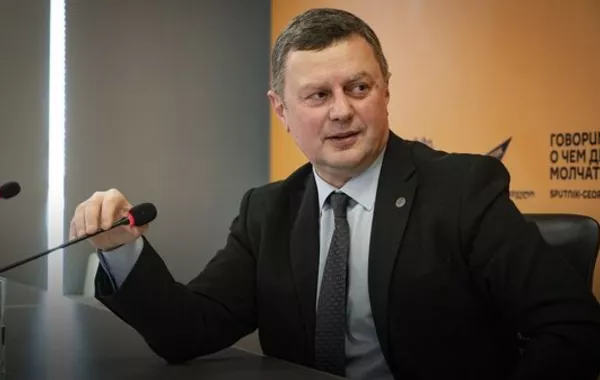
The Caspian Post explores these questions in an exclusive interview with Farhad Kassenov, head of the A+Analytics Research Center and a Kazakh political analyst, who explains why the decision made by Astana and the region’s states has become strategically inevitable.
- What is the strategic significance, from Kazakhstan’s perspective, of Azerbaijan’s accession to the Consultative Meeting of Central Asian Heads of State?
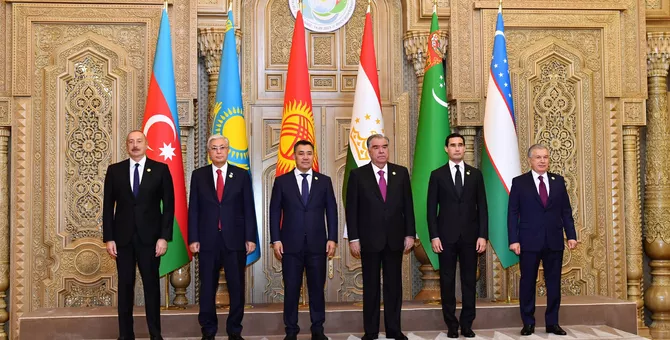
photo: President.az
- In reality, the decision to bring Azerbaijan into the consultative format carries profound strategic significance. For a long time, the countries of the region viewed Baku not as an external observer but as a full-fledged partner, and the Tashkent meeting was the moment this course was formally articulated.
Azerbaijan and the Central Asian states are now beginning to speak in the language of a shared “we,” forming a new level of geopolitical and geo-economic connectivity. Above all, this concerns the consolidation of resource and transit potential. Azerbaijan and Kazakhstan are key oil suppliers, while Turkmenistan provides gas. The combined energy capacity turns the united space of Central Asia and the South Caucasus into a significant actor in global and European energy markets.
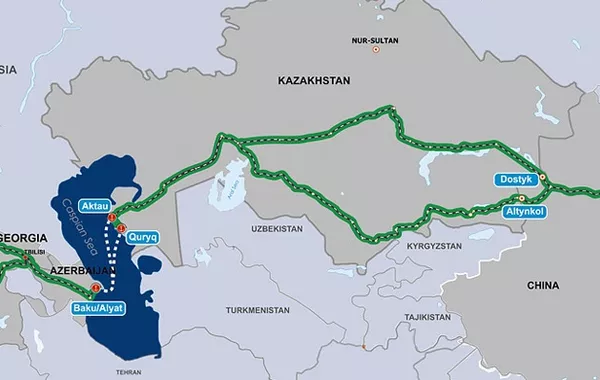
No less important is the transport and logistics dimension. Until now, the Middle Corridor faced political and geographical fragmentation along the Caspian line: Central Asia and the South Caucasus existed within different political spheres. Azerbaijan’s participation in the C5+1 format effectively synchronizes these spaces. The route from China through Kazakhstan, the Caspian Sea, Azerbaijan, the Zangezur Corridor and Türkiye to Europe acquires a unified political and economic logic.
Industrial cooperation is being driven primarily by Uzbekistan, which is actively developing automobile and equipment manufacturing and strengthening its partnership with Kazakhstan. The inclusion of Azerbaijan expands this cooperative framework, creating a trilateral platform with additional access to European markets via Türkiye. In turn, Azerbaijan gains enhanced access to the markets of Central Asia.
Other strategic resources are also important: Kyrgyzstan and Tajikistan’s light industry, Uzbekistan’s rare-earth metals, and the uranium reserves of Kazakhstan and Uzbekistan, which together account for more than half of global production. This entire sector is now acquiring a unified framework that Azerbaijan is joining.
Thus, the combined configuration of Central Asia + Azerbaijan forms a new economic and political space capable of influencing regional and global processes. From Kazakhstan’s perspective, this is the strategic essence of Azerbaijan’s participation in the consultative format.
- Considering Kazakhstan’s course toward expanding transport and logistics ties, how might Azerbaijan’s involvement affect the development of transit routes, especially the Trans-Caspian Corridor?
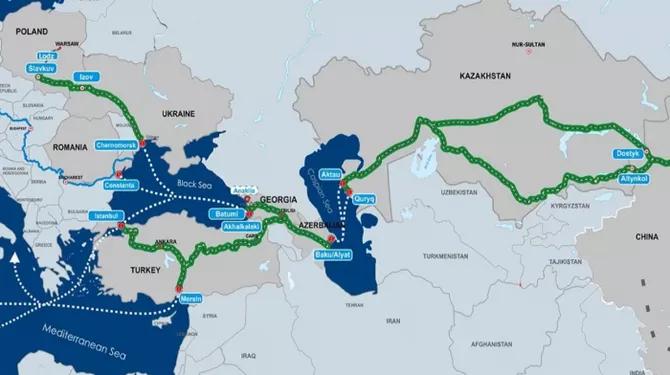
photo: News.Az
- This decision has strategic implications for the entire region. Central Asian states have long recognized that Azerbaijan’s participation in the C5+1 format is essential, since no major international transport route in this area can function fully without Baku. Azerbaijan is the key point of entry into the European logistics environment and therefore the central node of the Middle Corridor.
The connection between the Middle Corridor and Azerbaijan is not only geographical but functional. The anticipated launch of the Zangezur Corridor will eliminate bottlenecks and raise the route to a fundamentally new level of efficiency - in speed, customs procedures, container handling, and transshipment across the Caspian.
Joint efforts between Kazakhstan and Azerbaijan in the digitalization of logistics are creating a unified digital space where key processes - cargo tracking, customs clearance, documentation - occur automatically and in real time. A mechanism is already in place that allows cargo to travel from China to Europe with a single documentation package, drastically reducing delays.
Kazakhstan’s proposal at the Seventh Consultative Meeting - to create a unified transport and logistics system - fits naturally into these processes. All major trade flows from Central Asia are structurally routed through Azerbaijan, making it not simply a participant but the key driver of regional transport transformation.
- How does Kazakhstan assess Azerbaijan’s role in regional security and potential joint initiatives for political stability and risk prevention?
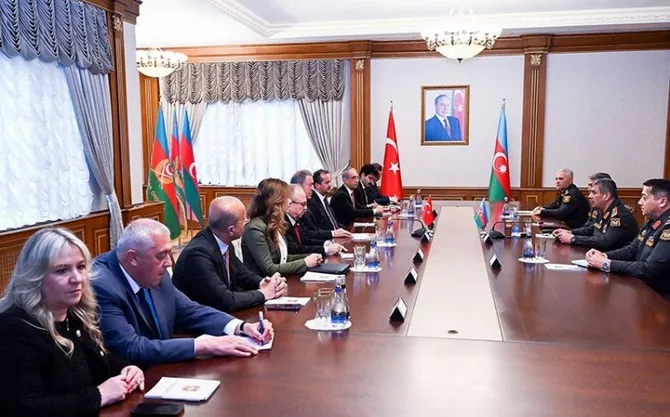
photo: News.Az
- Kazakhstan generally holds a very high opinion of Azerbaijan’s role in ensuring regional security and creating new mechanisms of political stability. Officials in Astana emphasize that Baku’s decisive and consistent actions made it possible to resolve long-standing territorial disputes in the South Caucasus, which became a key factor in strengthening security across the broader region.
As a result, the South Caucasus is now viewed as a more predictable and stable space, creating new opportunities for Central Asia.
Particular attention is paid to Azerbaijan’s practical initiatives in information, energy and economic security. The laying of the fiber-optic line along the Caspian seabed between Kazakhstan and Azerbaijan, as well as plans to construct an energy cable, diversify routes, enhance infrastructure resilience and strengthen the region’s strategic autonomy.
Equally important are joint defense and emergency response efforts: regular military and civil defense exercises and the expansion of multilateral cooperation in the “Azerbaijan-Central Asia” format. A major international exercise initiated by Baku is planned for next year, further enhancing coordination and mutual confidence.
All these steps - from infrastructure projects to military collaboration - are seen in Kazakhstan as Azerbaijan’s contribution to political stability, economic connectivity and collective regional security.
- In your view, which economic and energy projects could become the first beneficiaries of the new Kazakhstan-Central Asia-Azerbaijan cooperation format?
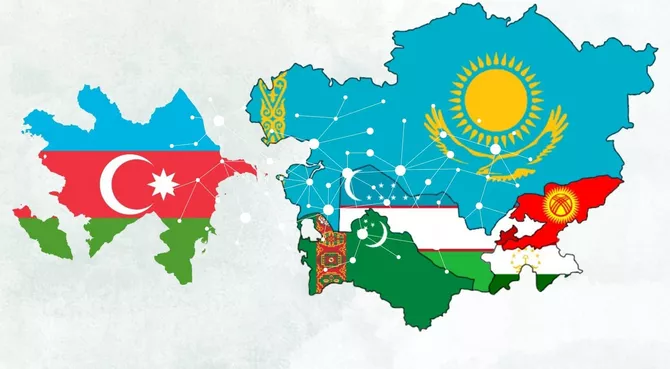
photo: TREND
- The new formats primarily create opportunities for the development of transport and logistics projects. The chief beneficiary will be the Middle Corridor - in its road, rail and maritime components. Its role will grow significantly thanks to a comprehensive approach to synchronizing transit and ensuring uninterrupted flows between China and Europe in both directions.
A second beneficiary will be industrial cooperation. New clusters are emerging across the region in automobile manufacturing, advanced grain and agricultural processing, and dairy and meat production. These industries target both the Central Asian market and European export destinations, which naturally increases Azerbaijan’s importance as the key transit link.
In the future, more complex multilateral initiatives specifically designed for the expanded cooperation format can be expected. Such multi-state projects will become the next beneficiaries of deeper interaction within the “C5 + Azerbaijan” framework.
- To what extent does Azerbaijan’s new participation align with Kazakhstan’s long-term foreign policy strategy of strengthening Turkic and Eurasian cooperation?
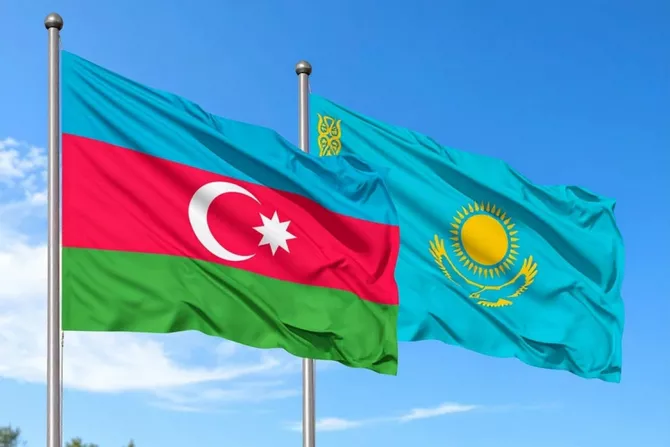
photo: APA
- Azerbaijan’s growing regional role fits naturally into Kazakhstan’s long-term strategy of reinforcing both Turkic and Eurasian cooperation. Astana traditionally pursues a multi-vector foreign policy whose core principle is building mutually beneficial relations without confrontation among different centers of power.
Azerbaijan strengthens this logic: instead of turning Central Asia into a zone of rivalry, it opens opportunities for a “win-win” format in which interests align and complement rather than collide.
Azerbaijan’s contribution to the Turkic vector is especially notable. While Türkiye remains the largest and most technologically advanced Turkic state, Azerbaijan serves as a natural bridge that gives Kazakhstan direct access to the Turkish market, logistics and technologies. Through transport corridors across the Caspian, previously nonexistent direct connectivity between Kazakhstan and Türkiye has essentially been established, giving the Turkic world a new degree of unity and dynamism.
As for the Eurasian dimension, Azerbaijan also strengthens the resilience and balance of regional cooperation. Eurasian integration is built along the North-South axis, with Russia as an important component - a major power with a strong Turkic cultural presence and historic ties to the Great Steppe. The deepening Azerbaijani-Kazakh partnership adds an additional layer of trust, dialogue and parity to this format, which is highly valued in Astana.
Overall, Azerbaijan’s participation enables Kazakhstan to strengthen the Turkic axis, deepen Eurasian stability and implement its multi-vector policy in its most constructive and balanced form.