The conflicts in Ukraine, Iran, and Afghanistan are undermining the viability of Central Asia as an energy and transport hub.
Eurasia’s trade corridors are fragmenting under the pressure of three simultaneously escalating conflicts. The Iran War has disrupted the world’s most critical sea lane. Ukraine is striking Russian oil export infrastructure across the Baltic, Black, Caspian, and Mediterranean seas. The Afghanistan-Pakistan conflict has severed Russia and Central Asia’s overland route to the Indian subcontinent, The Caspian Post reports via The National Interest.
These disruptions do not occur in isolation. They spread through shared networks of pipelines, ports, shipping lanes, and border crossings, reaching global agricultural and industrial markets. The connectivity built to sustain Eurasian commerce has become the mechanism for its destruction. What is dying is not Eurasia itself, but the era of open connectivity that was supposed to bind it together.
Existing analytical frameworks treat each conflict theater separately and systematically underestimate the compounding effects. However, there is a theory that can close this gap: the theory of “geo-connectivity.” By mapping the overlapping networks of transport infrastructure, resource supply chains, financial flows, and institutional linkages through which geopolitical shocks travel, the framework identifies how disruptions at any node cascade across the system, reshaping power, vulnerability, opportunity, and the strategic significance of states.
Three Regional Conflicts, One Eurasian Network
Consider a single supply chain. Kazakh crude flows through the Caspian Pipeline Consortium (CPC)’s terminal at Russia’s Black Sea port of Novorossiysk, then by tanker through the Bosporus to the Bazan refinery in Haifa, which processes around 64 percent of Israel’s crude. Azerbaijan and Kazakhstan together supply roughly 70 percent of Israel’s crude imports, with Azerbaijani oil reaching Haifa via the Baku-Tbilisi-Ceyhan (BTC) pipeline and the Mediterranean.
Ukraine has struck the CPC terminal twice since November 2025, damaging offshore mooring points and degrading export capacity. Meanwhile, Iranian and Hezbollah missiles have struck the Bazan refinery. Two separate wars are hitting both ends of the same corridor. No bilateral analysis of either conflict would have identified Kazakhstan’s simultaneous exposure at the point of export and the point of consumption.
Ukraine’s drone campaign has expanded from refineries to export terminals and pipelines. Russia’s Baltic hubs of Primorsk and Ust-Luga have been repeatedly struck, taking roughly 40 percent of Russian export capacity offline and reducing output by up to 400,000 barrels per day. Moscow has retaliated asymmetrically, confirming it will halt Kazakh oil flows to Germany via the Druzhba pipeline from 1 May. Gazprom has reported intensifying attacks on the TurkStream and BlueStream pipeline pumping stations that supply Türkiye and Southeastern Europe. Israeli strikes reached Bandar Anzali, Iran’s main Caspian port receiving Russian weapon supplies, and Ukrainian drones have hit Russian Caspian infrastructure over 700 kilometers from the frontlines.
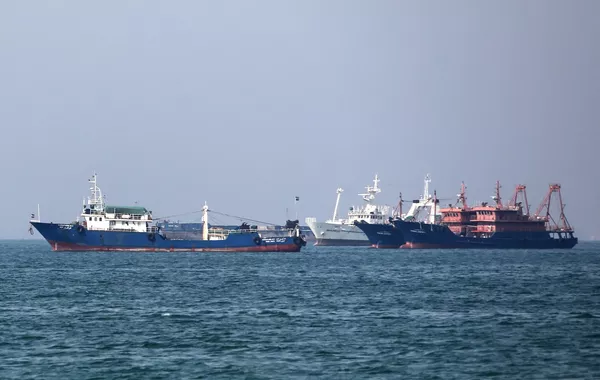
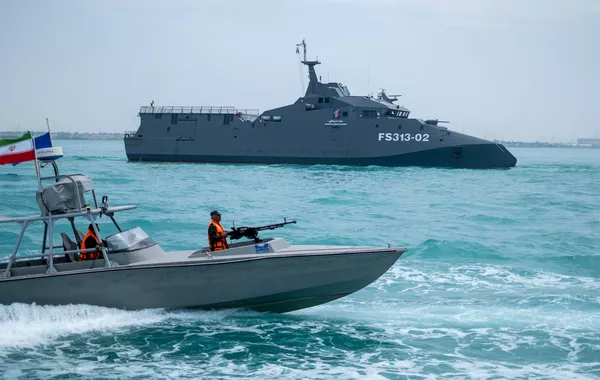
The Iran war operates through a parallel but connected set of corridors. Tehran has weaponized one of the world’s most critical economic arteries, using control of the Strait of Hormuz to hold the global economy hostage as a condition of regime survival. The strait, which normally handles around a fifth of global oil consumption, has been effectively closed with minimal tanker traffic since hostilities began. Qatar declared force majeure on its LNG output after strikes on Ras Laffan,removing over 17 percent of global LNG supply. Saudi production has fallen by around 30 percent. More than 500 million barrels of crude and condensate have been knocked out of the global market since the war began, the largest energy supply disruption in modern history. The Houthis’ entry into the conflict simultaneously risks closing the Bab el-Mandeb Strait, the second of the two chokepoints connecting Gulf energy to global markets.
The Afghanistan-Pakistan conflict completes the picture. As we wrote for The National Interest in November, border closures since late 2025 have severed overland transit between the two countries, cutting off Central Asia’s shortest route to the Indian Ocean via Karachi and Gwadar. The Iran War eliminated the last remaining route via Bandar Abbas and Chabahar.
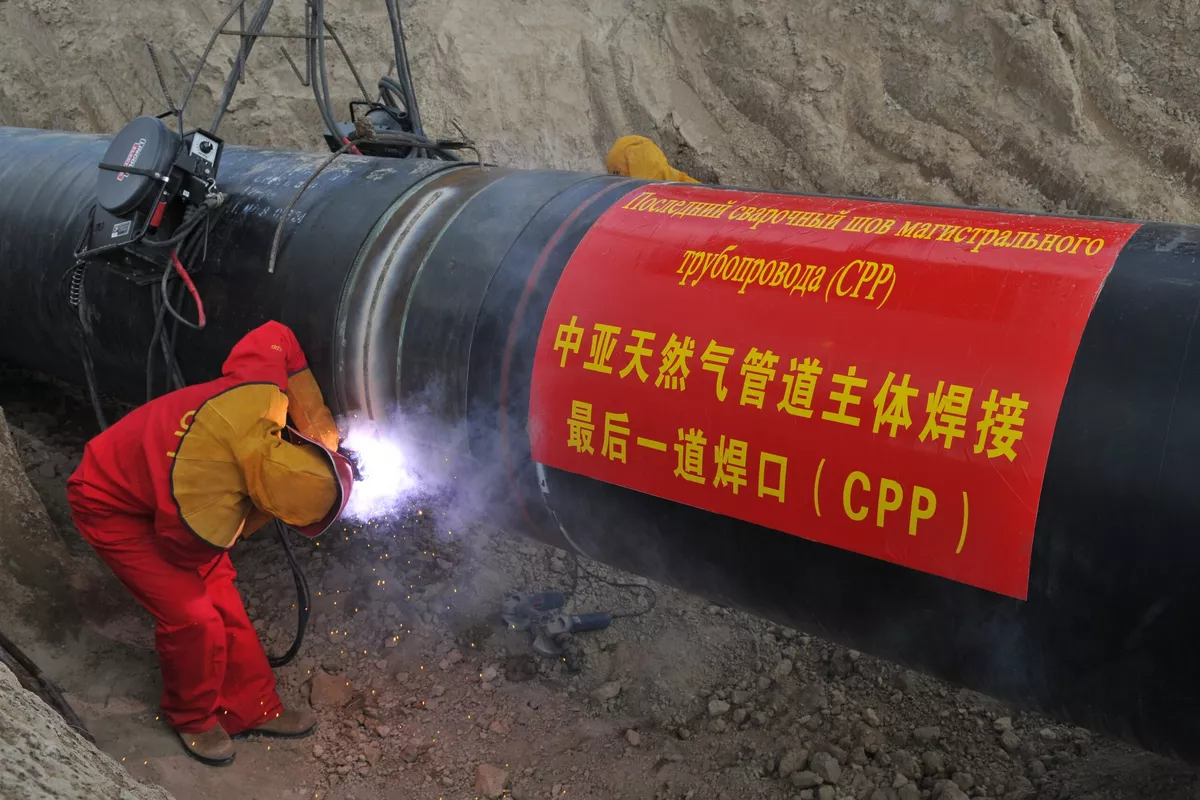
The three conflicts share physical infrastructure. Ukrainian strikes on Russian terminals affect the same Novorossiysk port complex that handles Kazakh exports to Europe. The Hormuz closure affects the same LNG supply that powers fertilizer production in Bangladesh and Pakistan. The Afghanistan-Pakistan border closure affects the same corridors that China’s Belt and Road Initiative investments were designed to traverse. Mapping these shared transmission channels reveals why the compounding effects are consistently worse than any single-theater analysis would suggest.
Eurasia’s Systemic Fragility Is a Feature, Not a Bug
The key analytical insight of Geo-Connectivity, building on Nassim Nicholas Taleb’s foundational work on systemic risk, is that vulnerability lies in the structure of the network, not in the shock itself. Kazakhstan’s dependence on a single pipeline makes it fragile to any disruption in Novorossiysk, whether from Ukrainian drones, weather, or Russian political leverage. The concentration is the vulnerability.
The era of open globalization created a hyper-integrated system optimized for efficiency. Corridors were built where they were cheapest and most direct. Redundancy, the spare capacity that absorbs shocks, was treated as waste. The result is a system that functions well under stable conditions and fails catastrophically when multiple nodes degrade simultaneously. The geopolitical analyst Velina Tchakarova has shown that with four supply chains simultaneously disrupted, cascade effects become multiplicative rather than additive. The region and the world are now well past that threshold, and the effects are cascading not only across geographies but also across sectors and over time.
The Hormuz closure illustrates these cascades. The closure is commonly understood as an oil or energy crisis, but oil and gas are feedstocks for naphtha, methanol, ammonia, and urea, which are in turn essential for nitrogen fertilizer. The shortage arrives precisely as South Asia enters its summer planting season. Fertilizer reserves and nitrogen production have fallen to critical levels, with India drawing down strategic stocks, Bangladesh operating on days of supply, and Pakistan’s output sharply curtailed. The agricultural calendar does not wait for geopolitical settlements.
A missed planting window will lead to food insecurity by the third quarter of 2026, regardless of when the Strait of Hormuz reopens. Southeast Asian governments have imposed fuel rationing and work-from-home mandates. European aviation faces growing jet fuel constraints. Each sector transmits the shock to the next, and the temporal dimension-the lag between disruption and consequence-means that the worst effects arrive months after the initial event. Geo-Connectivity combines these two moves: mapping the shared networks that carry shocks, and assessing the structural properties that determine whether those networks absorb or amplify them.
China’s Eurasian Trap
These converging disruptions create a particular dilemma for China. Beijing’s overland strategy, designed to bypass maritime chokepoints such as the Straits of Malacca, relied on a network of corridors across Central and South Asia. Every one of those corridors is now under stress.
The China-Pakistan Economic Corridor (CPEC) faces border disruptions, deadly incidents targeting Chinese nationals, and runs through territory India claims as its own. Iran, which Beijing had cultivated as an alternative crude supplier after losing access to Venezuelan oil, is now a war zone with degraded export capacity. The unstable Poland-Belarus crossing, which was closed in September 2025, undermines the reliability of China-EU rail exports via the northern Russian route. The US-backed TRIPP corridor through Armenia introduces US influence over the Middle Corridor infrastructure, marketed as an alternative, and is now viewed by Iran as hostile.
The result is contradictory. China and Central Asia are being drawn closer together as they seek stable trade. Central Asia, having held together politically and economically while its neighbors have fractured, is the last remaining island of relative stability on China’s western periphery. Yet the wars are simultaneously undermining Beijing’s ability to secure diversified overland access. China’s alternatives are narrowing precisely when it needs them most. From Central Asia’s perspective, the tightening Chinese embrace carries its own risks. Deeper integration with Beijing under crisis conditions may come at the cost of autonomy, a loss that would be difficult to recover in calmer times.
Russia’s Increasing Leverage Over Iran
Iran’s degradation during the war has opened a second structural shift. A militarily and economically weakened Tehran will depend increasingly on Moscow. Russia is currently the only actor that can restrain Iran’s behavior toward its neighbors and provide guarantees for Western-led projects in the region against Iran’s future unpredictability. Moscow is already extracting a price for this.
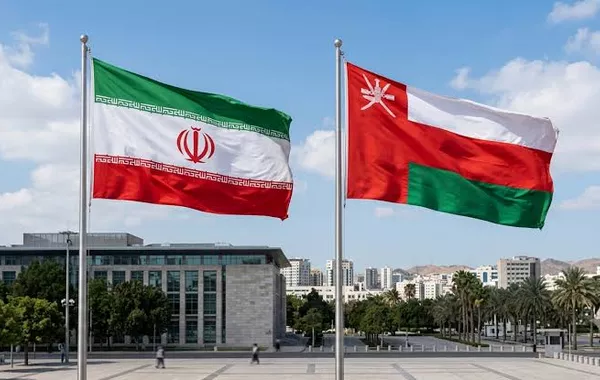
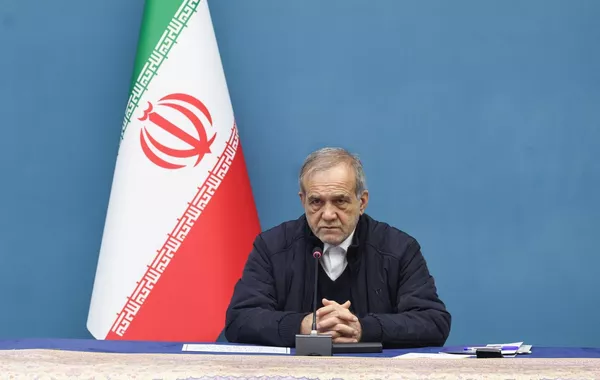
After Iranian drones struck Azerbaijan’s Nakhchivan exclave in March, Russian President Vladimir Putin held two calls with Iranian President Masoud Pezeshkian, after which Pezeshkian publicly apologized and pledged to stop striking neighboring states. Azerbaijan, which had closed its trade corridor with Iran, reopened it following those calls, and then moved to resolve its outstanding tensions with Moscow.
Should Iran’s regime survive, a post-war Tehran aligned with Moscow hands Russia preferential positioning over the corridor connecting Eurasia to the Indian Ocean, at the expense of Central Asian states that spent years building alternatives to Russian-controlled routes. The very infrastructure projects meant to reduce dependence on Russia may end up reinforcing it if Moscow becomes the gatekeeper of Iran’s integration into the Eurasian trade system.
The Middle Corridor Under Pressure
With the northern route through Russia politically compromised and the southern routes through Iran and Pakistan closed, the Middle Corridor through the Caspian, Azerbaijan, Georgia, and Türkiye has absorbed increasing demand as the last viable east-west pathway.
But the corridor’s apparent safety is eroding. Israeli and Ukrainian strikes have reached the Caspian. The Iranian plot against the BTC pipeline and the Nakhchivan strikes demonstrated that Iranian retaliation can reach the infrastructure these routes depend on. The Caspian itself is shrinking, with water levels dropping along the Kazakh and Turkmen shores that anchor the corridor’s maritime segment.
Every additional conflict that spills into the Caspian basin reduces the Middle Corridor’s viability as a neutral transit space. For Europe, which views the Middle Corridor as its primary hedge against Russian dependency, this is a compounding problem. For Central Asia, which sits at its geographic center, it is existential.
What this mapping reveals is that the previous era of free globalization built a system that is spatially concentrated on a small number of chokepoints, sectorally linked so that energy disruptions transmit into fertilizer, agriculture, and food security within weeks, and temporally lagged so that the worst consequences arrive months after the initial shock, often after the political attention has moved on.
Central Asia’s position in this system is instructive. By every traditional measure of power, these are minor states. But their political and economic resilience through the current crises, combined with their position at the intersection of all three conflict theaters and at the geographic center of the last operational east-west corridor, gives them a strategic significance that material attributes alone do not explain. Central Asia has emerged as the last island of stability in a fragmenting Eurasia, and every functioning corridor now runs through it. Türkiye’s significance in the current crisis lies not in its military capacity but in its position as the central node of the Middle Corridor and Eurasian energy flows. Pakistan’s significance lies in its role as a gatekeeper to Afghanistan’s access to the Indian Ocean and as a mediator between Washington and Tehran.
The geo-connectivity framework has already helped anticipate specific developments: the Afghan-Pakistani border closure redirecting trade northward, Ukraine’s shift to striking Russia’s export terminals amid the Iran War, and China’s turn to Central Asia. But its greater value lies in mapping the network through which shocks propagate and assessing the system’s structural fragility or resilience before a shock arrives, rather than in forecasting which shock will come next.
The connectivity that promised to integrate Eurasia is now the mechanism through which it fragments. States and firms that continue to analyze geopolitical risk theater by theater will remain surprised by cascading effects. Geo-connectivity’s unique contribution is integrating the three dimensions that existing frameworks treat separately: the geographic networks through which shocks cross borders, the sectoral linkages through which they cascade from energy into agriculture and food security, and the temporal lags that determine when consequences arrive.
The question now is not whether more corridors will be disrupted, but whether any actor has the strategic vision to invest in the redundancy that could absorb the shocks still to come.
By Vlad Paddack, Eldaniz Gusseinov