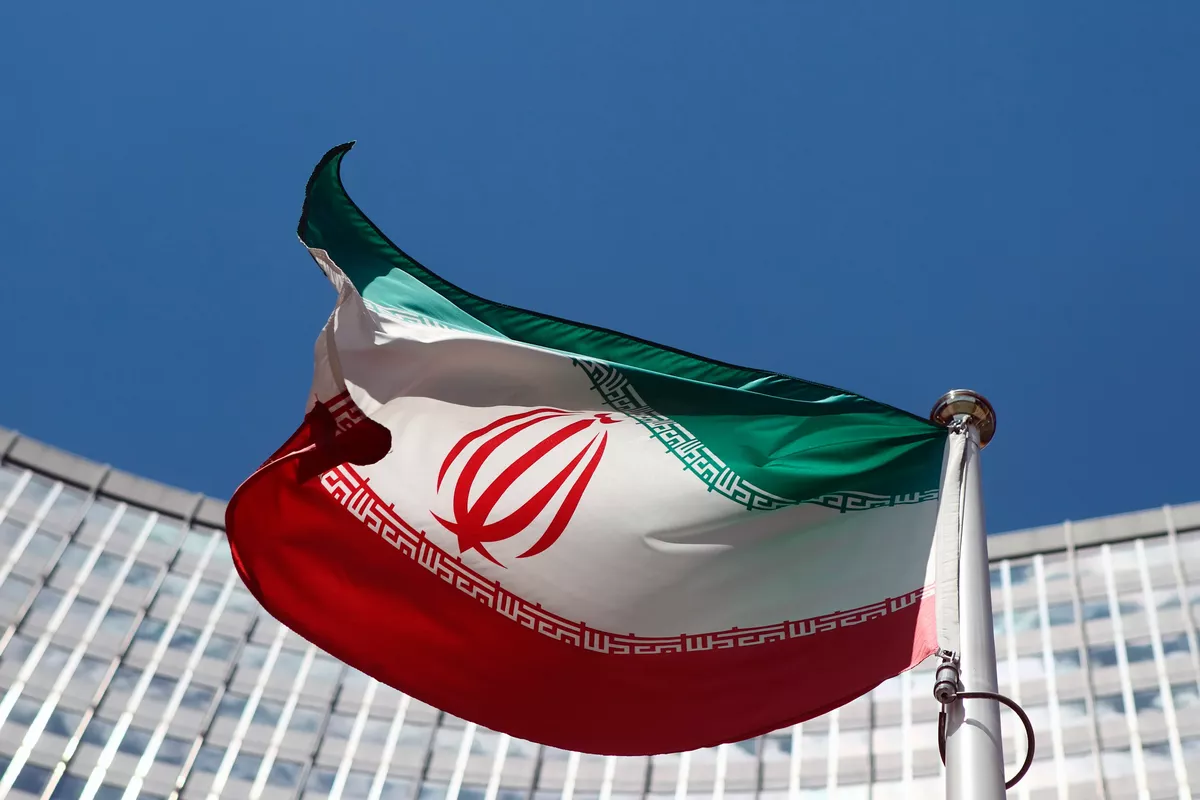
Iran has once again pulled the idea of uniting the Persian-speaking world out of its political archives. At first glance, this appears to be a cultural initiative built around shared history, language, literature, and civilizational heritage. Yet under the current geopolitical circumstances, Tehran’s proposal can hardly be viewed as a purely cultural project. A much broader question lies behind it: is Iran trying to create its own regional counterweight to the growing influence of the Organization of Turkic States?
On August 16, Iran’s First Vice President Mohammad Reza Aref, during a meeting with Tajikistan’s Minister of Energy and Water Resources Daler Juma, proposed establishing a “Union of Persian-Speaking Countries and Regions.” Aref emphasized the shared language, culture, and civilizational heritage of Iran and Tajikistan and suggested that the initiative be discussed further at future bilateral meetings.
The very fact that such a proposal has resurfaced is significant. Tehran is not simply invoking its cultural affinity with Dushanbe; it is proposing that this affinity acquire an institutional form. Even if such a union never becomes a fully-fledged international organization, the idea itself reveals how Iran is beginning to view the changing geopolitical architecture of Eurasia.
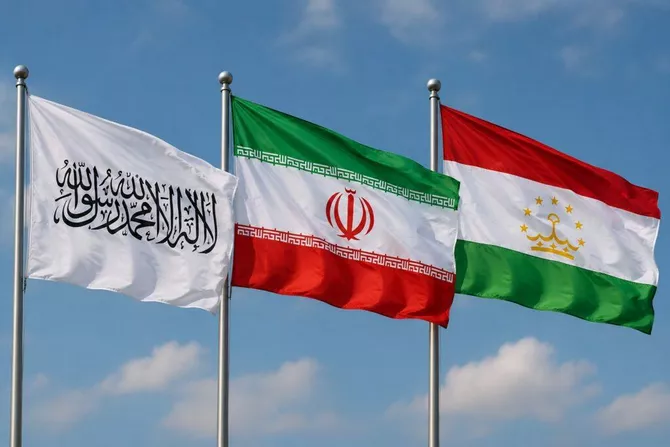
The core of the modern Persian-speaking space consists of Iran, Tajikistan, and a significant part of Afghanistan. Persian, or Farsi, is spoken in Iran, Dari in Afghanistan, and Tajik in Tajikistan. These are varieties of the same Persian linguistic continuum, although decades of separate political, cultural, and institutional development have created substantial differences among the societies concerned.
Credit: pajhwok.com
It would therefore be an exaggeration to describe these three countries as a natural political community that already exists in practice.
They certainly share a considerable cultural heritage, but they largely lack one of the most important prerequisites for successful modern integration: compatible political systems and coinciding strategic interests.
This is where the central problem of the Iranian project begins.
The idea of closer integration among Iran, Tajikistan, and Afghanistan is not new. It was discussed particularly actively in the late 2000s and early 2010s - roughly the same period when cooperation among Turkic-speaking states was becoming institutionalized.
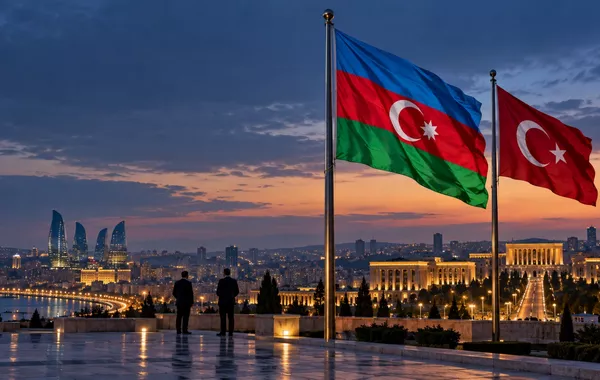
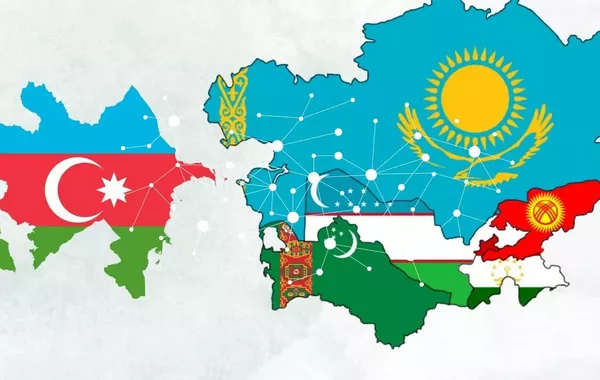
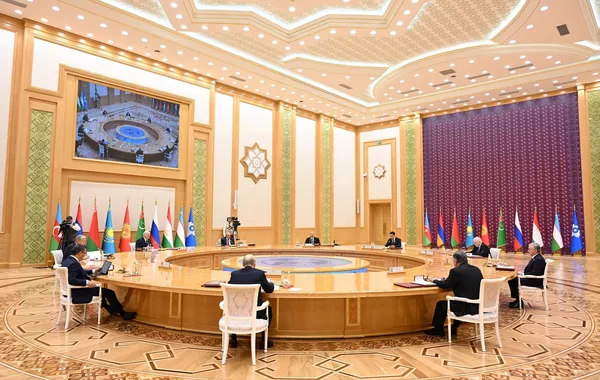
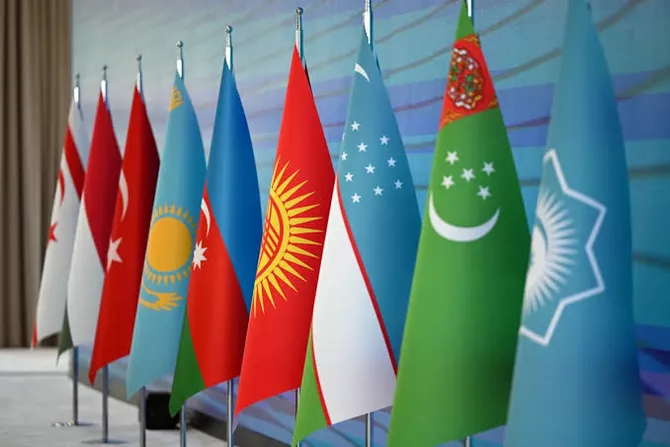
In 2009, the Cooperation Council of Turkic-Speaking States was established in Nakhchivan. It later evolved into the Organization of Turkic States. Today, the OTS brings together Azerbaijan, Kazakhstan, Kyrgyzstan, Türkiye, and Uzbekistan, while Turkmenistan participates as an observer. The organization has long moved beyond the symbolic idea of linguistic kinship. Its agenda now covers the economy, transport, customs cooperation, energy, investment, digitalization, education, security, and many other areas.
This is the fundamental difference between the two integration models.
The OTS first built an institutional and economic framework for cooperation and then gradually filled it with broader political content. Iran’s approach appears to be moving in the opposite direction: first comes the civilizational concept, while the practical substance still has to be created.
Credit: Report
In the early 2010s, Tehran had already attempted to give its relations with Dushanbe a stronger military and political dimension. In May 2010, then-Iranian Defense Minister Ahmad Vahidi visited Tajikistan, where the two sides signed agreements on defense cooperation. At the same time, Vahidi advocated closer interaction among Iran, Tajikistan, and Afghanistan in the areas of regional security, terrorism, and drug trafficking.
For Tehran, the geopolitical logic was obvious. Iran wanted to consolidate its position in Central Asia, expand its influence in Afghanistan, and prevent a regional architecture from emerging along its northern borders in which Iran itself would be relegated to the sidelines.
Since then, however, the regional environment has changed far more dramatically than Tehran might once have expected.
Turkic cooperation has evolved from a relatively cautious cultural and political project into an increasingly elaborate system of interaction. Transport initiatives, economic cooperation mechanisms, investment structures, regular summits, and a growing common vision of the role of the Turkic space between Europe and Asia have all emerged.
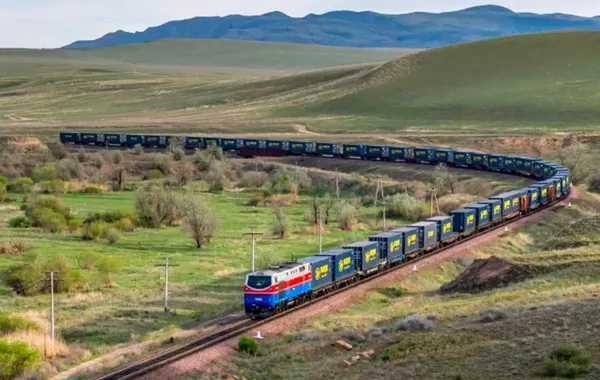
The Middle Corridor is especially important.
Because this is no longer about a romantic vision of the “Turkic world.” It is about the geography of global trade.
Azerbaijan, Kazakhstan, Central Asia, and Türkiye lie along one of the routes connecting China with Europe. The greater the volume of cargo, energy flows, digital infrastructure, and investment moving through this axis, the more strategic importance the connectivity of the Turkic space acquires.
This is why Iran’s reaction should not be viewed solely through an ethnic or cultural lens.
What concerns Tehran above all is the changing balance of power and the transformation of transport geography around its borders.
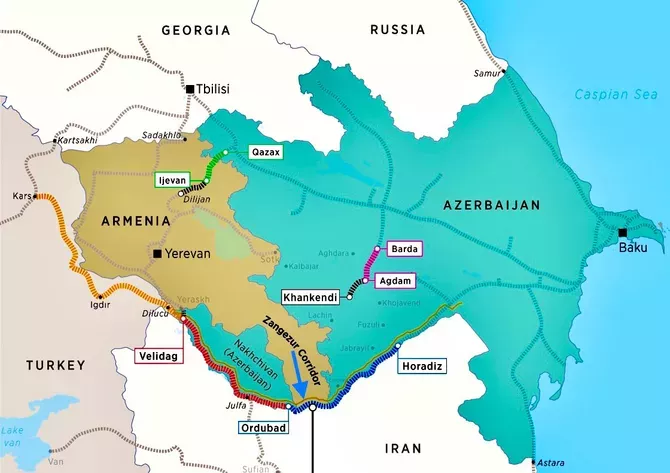
Iran’s position on communications between mainland Azerbaijan and Nakhchivan through Armenia is particularly revealing. Tehran has repeatedly, including at the highest political level, opposed any model of the so-called Zangezur Corridor that would imply a change in existing borders, extraterritoriality, or the presence of outside forces near Iran’s border.
But for Iran, the issue goes far beyond a single transport route.
Connecting Azerbaijan with Nakhchivan and then with Türkiye would strengthen a continuous transport axis stretching from the Caspian through the South Caucasus and Anatolia toward Europe. For Baku and Ankara, this means greater economic and strategic connectivity. For Tehran, it may mean a relative decline in Iran’s own transit importance and the emergence of an alternative infrastructure network that does not depend on Iranian territory.
The development of the OTS and the Middle Corridor therefore creates an objectively new geopolitical reality for the Islamic Republic.
Within Iranian expert and strategic discourse, Turkic integration is also often perceived as an expansion of Türkiye’s influence and, through Türkiye, as part of a broader Western presence in Central Asia and the South Caucasus. Iranian political and military analysts have repeatedly expressed concern about the strengthening ties among Ankara, Baku, and the Central Asian states.
Against this background, the proposal for a “Union of Persian-Speaking Countries and Regions” takes on a very different meaning.
This is no longer simply about festivals of Persian poetry or conferences dedicated to shared cultural heritage.
It is an attempt to formulate an alternative identity and provide Iran with its own platform for influence in Central Asia.
Yet this project faces a fundamental limitation: its potential participants are simply too different.
Iran is a Shiite Islamic republic with its own ideological system and the ambitions of a regional power.
Tajikistan, by contrast, is an emphatically secular state whose authorities have spent years restricting the influence of political Islam. In 2024, the country adopted legislation banning clothing officially described as “alien to national culture,” measures widely associated with attempts to curb the spread of certain forms of Islamic dress.
This is not a minor technical difference. It reflects two very different models of statehood.
The situation with Afghanistan is even more complicated. Kabul is now controlled by the Taliban, whose Sunni Islamist ideology and political system differ fundamentally from those of Iran. Relations between Tehran and the Taliban have alternated between pragmatism and tension.
Building a politically coherent alliance out of Tehran, Dushanbe, and Kabul simply because millions of people in these countries speak related languages would therefore be extremely difficult.
This is one reason why earlier attempts to create such a structure produced no significant result.
Today, however, there is one important difference: relations between Iran and Tajikistan have genuinely improved.
After a serious crisis in the mid-2010s, the two sides restored political dialogue and expanded cooperation in trade, energy, transport, and even defense. Economic relations have also grown noticeably in recent years.
It would therefore be wrong to dismiss Aref’s proposal as mere propaganda.
Iran can offer Tajikistan concrete advantages: access to Persian Gulf and Indian Ocean ports, energy projects, petroleum products, industrial goods, transport routes, and access to the Iranian market.
But this is precisely where Tehran faces its main dilemma.
Dushanbe today needs a political patron far less than it did 20 or even 10 years ago.
Tajikistan has normalized relations with its Central Asian neighbors and actively cooperates with China, Russia, Gulf states, Western countries, and international financial institutions. Dushanbe no longer has to choose between a supposedly “Persian” world and a “Turkic” world.
That may be one of the most important changes in the region.
Modern Central Asia is increasingly moving away from the logic of rigid geopolitical blocs. The countries of the region prefer multi-vector foreign policies: cooperating with China, trading with Europe, maintaining relations with Russia, expanding ties with Türkiye, using Iranian ports, and participating in Middle Corridor projects at the same time.
Tajikistan does not need to become a member of the OTS in order to maintain close relations with Azerbaijan, Uzbekistan, Kazakhstan, or Türkiye.
By the same logic, it does not need to join a political “Persian-speaking union” in order to deepen cooperation with Iran.
This sharply limits Tehran’s ability to transform cultural affinity into geopolitical dependence.
That raises the key question: why does Iran need to revive this idea now?
The answer likely lies in the new map of Eurasia.
The Middle Corridor is becoming increasingly significant. Azerbaijan’s ties with Central Asia are expanding. The OTS is strengthening institutionally. Türkiye is increasing its economic, political, and cultural presence east of the Caspian.
Meanwhile, Iran is watching a space take shape to its north that may increasingly connect China and Central Asia with Europe without necessarily relying on the territory of the Islamic Republic.
This is why alarmist references to a supposed “Greater Turan,” which periodically appear in parts of Iranian political and expert discourse, obscure a much more practical problem.
No single political state called “Turan” is being created.
What is being created is infrastructure.
Roads and railways are being built. Customs procedures are being simplified. Ports are being expanded. Investment mechanisms are being developed. Trade is increasing. Energy policies are being coordinated.
And in the 21st century, it is infrastructure, not slogans, that increasingly determines geopolitical influence.
This is the central advantage the OTS possesses over a hypothetical Persian-speaking union.
The Organization of Turkic States can rely on an already existing network of economic, transport, political, and cultural ties. Its members have a practical interest in expanding trade, improving logistics, and turning their geographical position between East and West into an economic asset.
Iran’s Persian-speaking project, by contrast, still offers identity first and practical benefits second.
Identity alone is not enough.
Modern alliances cannot be built solely on memories of ancient empires, a common literary heritage, or the origins of related languages. States enter durable partnerships when they see roads, investment, security, markets, technology, and political opportunities.
This is where Tehran will have to answer the most uncomfortable question.
What exactly would its partners gain from a Persian-speaking union that they cannot obtain without it?
If Iran offers Tajikistan and other potential partners genuine economic advantages, new transport corridors, investment, and equal partnership, the initiative may acquire real substance.
But if the attractive civilizational formula merely conceals Tehran’s desire to construct its own sphere of influence, the project is likely to repeat the fate of previous attempts.
This is where the fundamental line between integration and geopolitical nostalgia lies.
The OTS is developing not because someone has drawn a mythical “Greater Turan” on a map. It is developing because its participants have found practical value in cooperation.
Iran, meanwhile, appears to be responding to a new Eurasian reality with an old instrument - an appeal to civilizational commonality.
And perhaps this is the central paradox of Aref’s initiative: today, a Persian-speaking union may be needed far more by Tehran than by Dushanbe.
Iran is proposing an alliance built around a shared past at precisely the moment when its potential partners are becoming increasingly focused on the opportunities of the future.