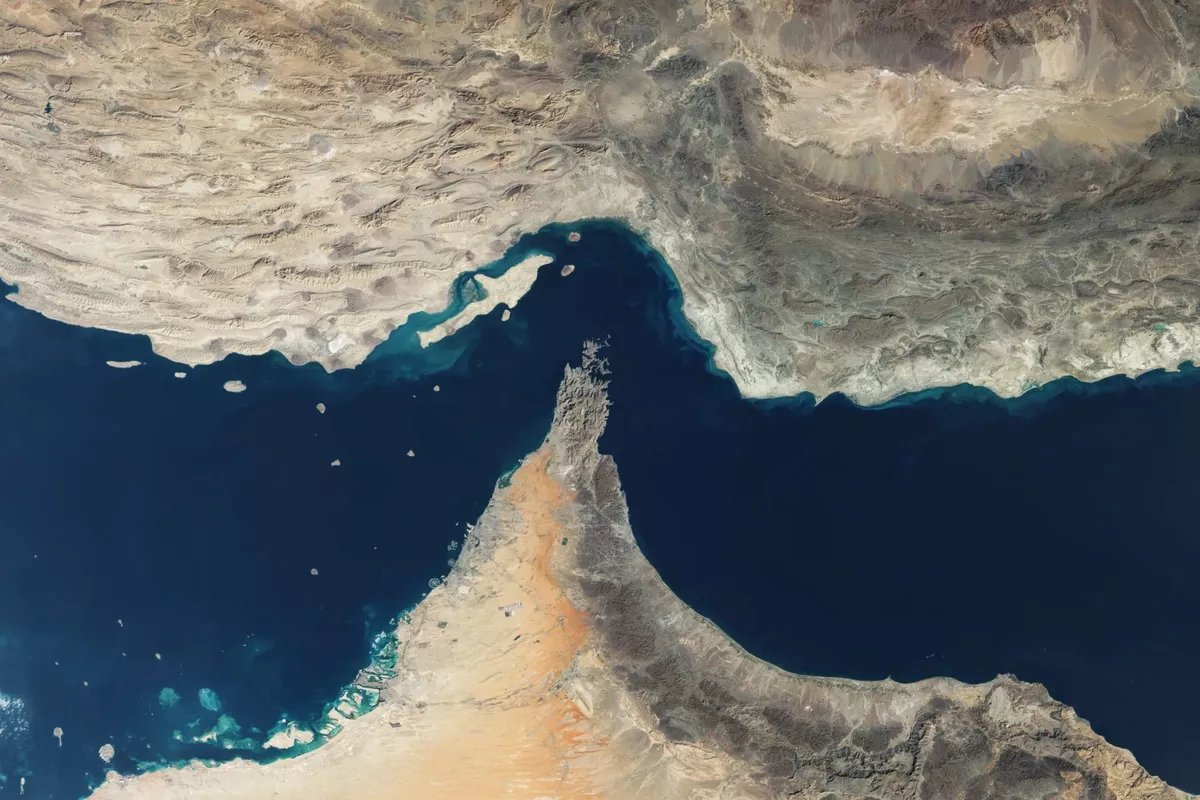
The negotiations between the United States and Iran within the framework of the signed memorandum have raised serious concerns among neighboring Arab countries. The Islamic Republic's attempts to effectively "privatize" the Strait of Hormuz, with Oman's involvement in the process, could lead to higher oil prices and increased regional dependence on Tehran. Another major concern is the possibility that the Iranian regime may retain its missile program. Iran has already demonstrated that, in the event of a potential conflict, it is prepared to stop at nothing.
For the first time since the United States and Iran signed their framework agreement on a temporary cessation of hostilities, the member states of the Gulf Cooperation Council (GCC) have adopted a unified and uncompromising stance against Iran while expressing support for the United States, thereby setting the tone for their future relations with the Islamic Republic.
On June 25, 2026, Saudi Arabia, the United Arab Emirates, Qatar, Kuwait, Bahrain and Oman held a summit in Manama, attended by U.S. Secretary of State Marco Rubio. During the meeting, Rubio outlined the concrete measures being taken to restore freedom of navigation through the Strait of Hormuz, in line with repeated assurances by U.S. President Donald Trump that maritime traffic would return to its pre-war status.
Washington's commitment to this position was underscored by the powerful strike carried out on June 26 against Iranian military targets in response to an attack by Iran's Islamic Revolutionary Guard Corps (IRGC) on a Singapore-flagged tanker transiting the Strait of Hormuz. According to the U.S. Central Command (CENTCOM), the operation targeted missile and drone storage facilities, as well as coastal radar installations. The United States has therefore demonstrated that it is honoring its commitments to safeguard the interests of the Gulf states.
In response, the summit participants reaffirmed their "strong commitment to the strategic partnership between the United States and the GCC," a partnership that Iran has consistently sought to undermine in an effort to weaken the Gulf states individually. They also stressed "the need to maintain momentum and unity" as peace negotiations move forward.
photo: getty images
The joint GCC-U.S. statement declared their "shared objective of ensuring that Iran never develops or otherwise acquires a nuclear weapon," while also emphasizing the need to "address the full spectrum of Iranian threats, including its ballistic missiles, drones, and support for proxy groups throughout the region."
One of the most contentious elements of the U.S.-Iran framework agreement from the perspective of the Gulf states remains the provision allowing Tehran to retain its missile arsenal. Recent developments have demonstrated that these missile capabilities are a particular source of concern for GCC members.
The Gulf states also presented a unified position on the ongoing dispute over the Strait of Hormuz, stating that "free, unconditional and unrestricted navigation, including the right of transit passage guaranteed under international law, remains an essential prerequisite for both regional and global security."
"The ministers rejected any tariffs, fees or attempts to establish control over the Strait and welcomed the announcement by the Sultanate of Oman and the International Maritime Organization regarding the launch of an evacuation plan for more than 11,000 seafarers stranded in the region."
During his brief tour of the Gulf, Rubio emphasized that the United States would "do nothing that would undermine the security of our long-standing allies in the region."
The GCC countries also outlined their vision for future economic cooperation with Iran, acknowledging that such cooperation is possible but would be "conditional and reversible, depending on Iran's compliance with the memorandum and the final agreement," as well as on "the cessation of its destabilizing activities."
In addition, the Gulf states and the United States stated that the peace negotiations "are not contingent upon the outcome of other conflicts," referring to Tehran's key demand that Israel halt its military offensive against Hezbollah in Lebanon. At the same time, they called for the group's "complete disarmament."
The partners "emphasized that Lebanon's full sovereignty is impossible as long as armed non-state groups retain military capabilities outside the framework of the Lebanese state institutions. They called for the complete disarmament of all such groups and the restoration of the Lebanese state's monopoly on the legitimate use of force, while stressing the importance of supporting the Lebanese Armed Forces in achieving this objective."
This position fully aligns with Israel's long-standing demand for the disarmament of Iranian proxy groups across the Middle East.
Expanding the scope of their joint political agenda and expressing support for President Trump's plan to end the conflict in the Gaza Strip, the Gulf states also "reaffirmed the need for the demilitarization of Hamas alongside Hezbollah."
"The ministers emphasized the importance of disarming all armed non-state groups to enable the reconstruction of Gaza and the need to transfer responsibility to an independent technocratic government."
By doing so, the summit participants reaffirmed their determination to counter attempts by individual regional powers to establish hegemony in the region.
An important development in this regard was the framework agreement reached between Israel and Lebanon following negotiations in Washington on June 26. As U.S. Secretary of State Marco Rubio stated, "This is only the beginning. Israel and Lebanon still have a long way to go." Nevertheless, the agreement represents an important step toward peace and stability in the region.
During the summit, the Gulf states reached a consensus that their relations with Iran will never return to what they once were. At the same time, the necessity of restoring unrestricted navigation through the Strait of Hormuz is prompting both rivals and partners in the region to develop their own frameworks for engagement with Tehran.
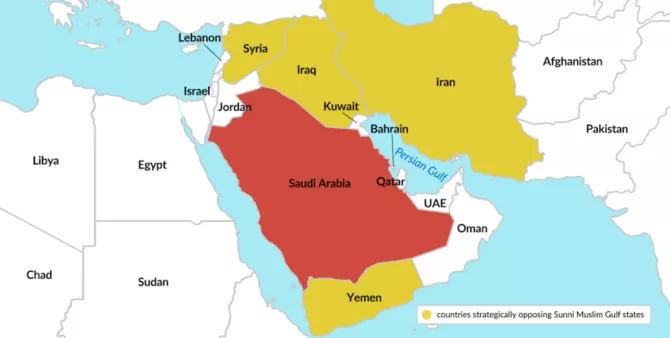
photo: getty images
The joint statement issued by the United States and the GCC outlines a clear shared vision for a new regional order in which Iran will be expected to honor the commitments it has undertaken. It is evident, however, that this situation cannot remain static, particularly in light of Tehran's hard-line policies and its efforts to sow divisions among the Gulf states. As a result, the regional dynamic is likely to continue evolving, shaped by strategic calculations, geopolitical competition and the complex history of mutual relations.
While GCC representatives were meeting with Rubio in Bahrain, plans were announced to hold a regional summit in Saudi Arabia involving both the Gulf states and Iran. This initiative may reflect an alternative vision for the region's future amid speculation over why Rubio chose to visit only some, rather than all, of Washington's Gulf allies.
The Washington-based Institute for the Study of War (ISW) stated on Thursday that "Iran is likely to use the discussions envisaged under the memorandum of understanding between the United States and the Islamic Republic to reach agreements with the Gulf states that would allow Tehran to preserve enduring influence around the Strait of Hormuz in the post-war period."
According to ISW, some Gulf states "may be inclined" to cooperate with Iran within the framework of "a broader economic model." The think tank also noted that one provision of the interim agreement paves the way for Iran to lead negotiations "on the future governance of the Strait of Hormuz with Oman and the other Gulf littoral states."
ISW analysts further concluded that "the Iranian regime may be attempting to shift the discussion over the status of the Strait of Hormuz into a broader debate about reducing U.S. and Israeli influence and partnerships in the Gulf states."
Against the backdrop of worsening relations with Iran, the Gulf Cooperation Council reaffirmed its member states' right to collective defense. The declaration was adopted following a meeting of the GCC Ministerial Council in Manama.
The Gulf states seek to change Iran's behavior because they fear both a strong and unified Iran and a fragmented Iran consumed by internal conflict that could easily spill beyond its borders. Ultimately, they would prefer a weakened, restrained, non-threatening, yet functioning Iran over one that is wounded, embittered and unpredictable.