On 9 July, Azerbaijan marks the Day of Employees of the Diplomatic Service. This is not merely a professional holiday for those working at the Ministry of Foreign Affairs, embassies and consulates. It is a date that reminds us that a state exists not only through its borders, army, economy and institutions of power. It also exists through its voice - through the way it is heard, understood and perceived beyond its borders.
Diplomacy is rarely loud. It does not always produce immediate results, it does not always become the subject of public debate, and it is not always visible to society. Yet it often resolves what cannot be resolved by force, emotion or slogans. Behind every official statement, every visit and every international document stand weeks, months and sometimes years of painstaking work. It is a profession where knowledge and experience matter, but so do restraint, precision, a sense of timing and the ability to speak on behalf of the state.
The date of 9 July was not chosen by chance. It was on 9 July 1919, during the period of the Azerbaijan Democratic Republic, that one of the first documents related to the activities of the Ministry of Foreign Affairs was adopted. For the young republic, this was not simply an administrative decision. In the difficult international environment of that time, the creation of a foreign policy mechanism meant Azerbaijan’s desire to present itself as an independent state capable of conducting dialogue with the world in its own name.
The Azerbaijan Democratic Republic existed for only a short period, but its diplomatic legacy became an important part of national political memory. Even then, it was clear that independence had to be not only proclaimed, but also defended on the international stage. The young republic had to explain to the world who Azerbaijanis were, where their statehood stood, what interests they defended and why their right to independence deserved recognition.
It is telling that as early as 1919, diplomatic representations of a number of foreign states were already operating in Baku. This shows that Azerbaijan was not viewed as a periphery, but as an important political, economic and strategic centre of the region. Baku was a city watched closely by external powers, because interests, routes, resources and political expectations intersected there.
One of the most important diplomatic achievements of that period was the de facto recognition of Azerbaijan’s independence by the Supreme Council of the Paris Peace Conference in January 1920. For the young republic, this was a major success. It meant that Azerbaijan had managed to enter the international agenda and ensure that it was seen as a subject of politics, not as an object of decisions made by others.
In this context, it is impossible not to recall Alimardan bey Topchubashov, one of the key figures of Azerbaijani diplomacy in the early 20th century. His work became an example of how important a role an individual can play in the history of a state. He represented Azerbaijan on the international stage, conducted negotiations, promoted the position of the young republic and tried to convey to the world the truth about its aspiration for independence. His mission was difficult: he spoke on behalf of a state that was only beginning to form its institutions, but already demanded respect.
However, modern Azerbaijani diplomacy as a strong state institution took shape after the restoration of independence. Here, a special place belongs to National Leader Heydar Aliyev. It was with his return to the leadership of the country that Azerbaijan’s foreign policy acquired consistency, strategic direction and political stability.
The early 1990s were among the most difficult periods in the history of independent Azerbaijan. The country faced war, occupation of its territories, internal instability, economic crisis and serious external pressure. Under such circumstances, diplomacy could not remain merely a protocol sphere. It had to become an instrument for saving statehood, strengthening international positions and restoring confidence in Azerbaijan as an independent partner.
Heydar Aliyev understood very well that a weak state could not afford a chaotic foreign policy. Azerbaijan had to speak with different centres of power without becoming dependent on any single direction. It was then that the foundations of a balanced and multi-vector diplomacy were laid - an approach that remains one of the defining features of Azerbaijan’s foreign policy today.
Under Heydar Aliyev, Azerbaijan began building relations simultaneously with Türkiye, Russia, the United States, European states, the Muslim world, CIS countries and international organisations. This was not an attempt to please everyone. It was a strategy of survival and consolidation of independence. The young state had to preserve room for manoeuvre, defend its national interests and prevent itself from being turned into an object of someone else’s geopolitical game.
One of the key directions of this policy was energy diplomacy. The “Contract of the Century”, signed in 1994, was not merely an economic agreement. It was a major foreign policy step that placed Azerbaijan at the centre of international energy attention. Through energy, the country gained the opportunity to strengthen ties with leading global companies and states, increase its international weight and create an economic foundation for future development.
This is where Heydar Aliyev’s political foresight was most clearly visible. He understood that oil and gas were not only resources for Azerbaijan, but also diplomatic instruments. Energy projects allowed the country to strengthen its independence, attract investment, create new routes of cooperation and build a network of long-term interests around Azerbaijan. Foreign policy ceased to be abstract rhetoric and became a practical mechanism for strengthening the state.
Equally important was the fact that under Heydar Aliyev, Azerbaijan began consistently communicating its position on the Armenia-Azerbaijan conflict to the international community. For many years, Baku emphasised on all platforms the principles of territorial integrity, sovereignty and the inviolability of internationally recognised borders. This line required patience, persistence and diplomatic discipline. It was necessary not merely to repeat Azerbaijan’s position, but to ensure that it became firmly embedded in international political thinking.
Heydar Aliyev effectively transformed Azerbaijani diplomacy from a forced reaction to crises into an independent strategy. He laid the foundations of a foreign policy school in which emotions give way to calculation, slogans to arguments, and short-term steps to long-term national interests. This was especially important for a country that was rebuilding its institutions while simultaneously fighting for its place in a complex international system.
His role in strengthening relations with Türkiye also deserves special mention. The formula “one nation, two states” became not just a beautiful expression, but the political foundation of allied relations between Baku and Ankara. This line was later further developed under President Ilham Aliyev, but its foundation was laid precisely during Heydar Aliyev’s period.
After Ilham Aliyev came to power, Azerbaijan’s foreign policy did not change its strategic foundation, but it acquired new content, new scale and new dynamism. If under Heydar Aliyev the main task was to preserve statehood, strengthen independence and lay the foundation for international authority, then under Ilham Aliyev Azerbaijan became a more confident, active and independent player.
Over the past two decades, Azerbaijani diplomacy has come a long way. The country has strengthened its positions in international organisations, expanded its circle of partners, increased its role in Europe’s energy security and become an important participant in transport and logistics processes between East and West. Azerbaijan no longer merely explains its position to the world - it puts forward initiatives, shapes the agenda and influences regional processes.
Of particular importance is the fact that under Ilham Aliyev, Azerbaijan achieved its main national goal - the restoration of its territorial integrity and sovereignty. This was not only a military and political event, but also a major diplomatic milestone. For many years, Azerbaijani diplomacy defended the country’s position on the basis of international law. After 2020, and later after the full restoration of sovereignty, Azerbaijan’s foreign policy agenda entered a new phase.
Now diplomacy faces different tasks. It must not only defend the results achieved by the state, but also help shape a new reality in the South Caucasus. This concerns the peace agenda, the restoration of liberated territories, the opening of communications, regional cooperation, border delimitation and the creation of conditions for long-term stability. This is complex work, because after decades of conflict, peace does not emerge by itself. It has to be built - step by step, document by document, negotiation by negotiation.
Under Ilham Aliyev, Azerbaijani diplomacy has become more proactive in the best sense of the word. It is not limited to defending itself against external accusations or reacting to initiatives proposed by others. Baku is increasingly setting the tone of discussions - whether on the South Caucasus, energy, transport corridors, Turkic cooperation, relations with Europe or dialogue with the Global South.
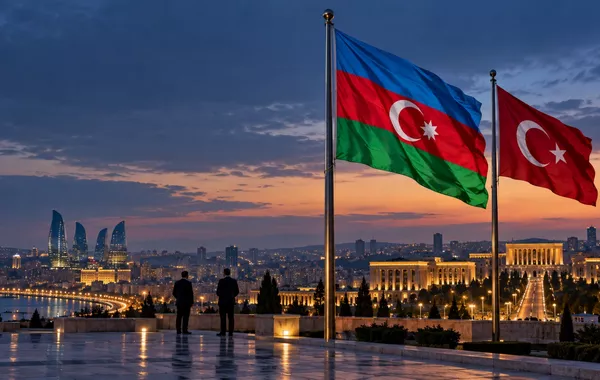
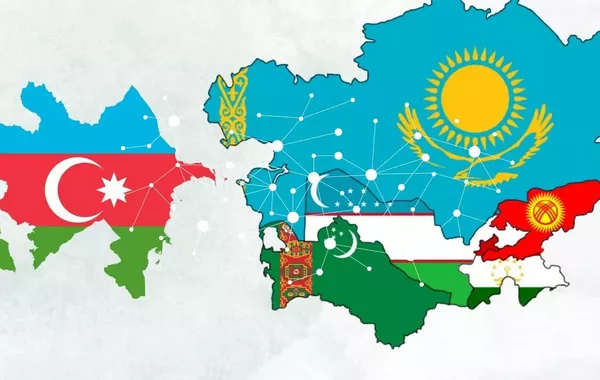
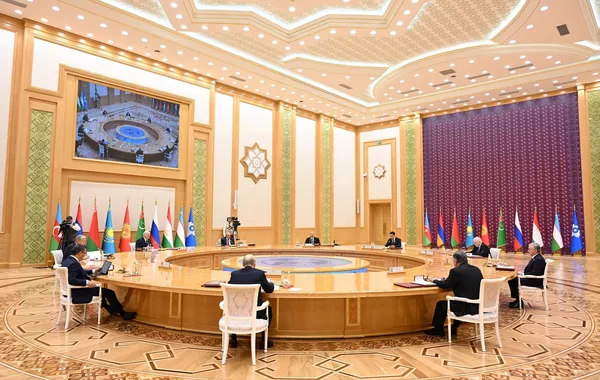
An important direction has also been policy within the Turkic world. Azerbaijan actively develops ties with the Organization of Turkic States and strengthens relations with Türkiye, Kazakhstan, Uzbekistan, Kyrgyzstan and Turkmenistan. For Baku, this is not only a cultural and historical space, but also a serious political, economic and transport dimension. In a changing world order, the Turkic factor is becoming increasingly significant, and Azerbaijan occupies one of the central places in this process.
Under Ilham Aliyev, allied relations with Türkiye reached a qualitatively new level. The Shusha Declaration of 2021 became an important political document that consolidated the strategic nature of Azerbaijan-Türkiye relations. It was the logical continuation of the course laid by Heydar Aliyev, but already in new historical conditions - after Azerbaijan’s victory and the change in the balance of power in the region.
At the same time, Azerbaijan continues to develop relations with the European Union, the countries of the Middle East, Central Asia, the Muslim world, Russia, China and other centres of power. This is the essence of Baku’s modern diplomacy: Azerbaijan does not build its foreign policy on dependence on one direction. It prefers partnership based on mutual interests, respect for sovereignty and a pragmatic approach.
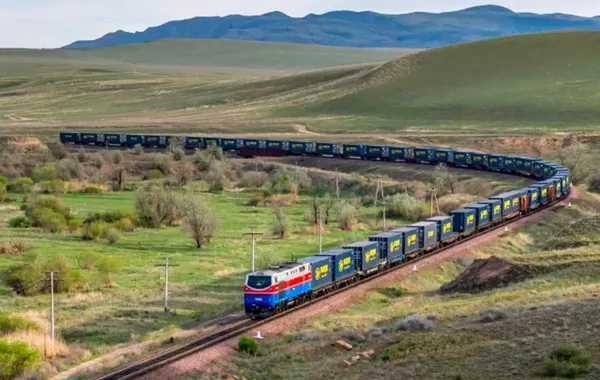
Economic diplomacy occupies a special place. Azerbaijan has long moved beyond the image of being solely an energy partner. Today, the country plays an increasingly visible role as a transport and logistics hub between East and West, North and South. The Middle Corridor, energy projects, new communications, investment and digital infrastructure are all directly linked to foreign policy work. A modern diplomat must understand not only politics, but also economics, energy, security, international markets and regional interests.
Another indicator of Azerbaijan’s growing international authority was the hosting of COP29 in Baku. For the country, this was not merely a major international event. It was an opportunity to show that Azerbaijan is capable of serving as a platform for global dialogue on issues that concern the entire world. Climate diplomacy, energy transition, the interests of developing countries, the responsibility of wealthy states and fair financing - all these issues placed Baku at the centre of the global agenda.
It is important that modern Azerbaijani diplomacy combines several dimensions: classical political diplomacy, economic diplomacy, energy diplomacy, humanitarian diplomacy and the climate agenda. This is no longer the diplomacy of a small state merely seeking attention. It is the diplomacy of a country that confidently occupies its place in the international system and understands the value of its own voice.
An important part of the modern diplomatic school has also been the formation of a professional personnel base. The establishment of the Azerbaijan Diplomatic Academy, which later transformed into ADA University, was one of the steps in this direction. This shows that diplomacy is not only the practice of negotiations, but also a system of training, analysis, education and long-term thinking. The state needs specialists who are able to understand not only the current agenda, but also future challenges.
The humanitarian dimension is no less important. Azerbaijan consistently promotes the ideas of intercultural dialogue, tolerance and respect for diversity. Baku has repeatedly served as a platform for international forums and meetings where issues of peace, cooperation and mutual understanding have been discussed. This, too, is part of diplomacy - perhaps not the loudest, but certainly an important one. A country’s image is formed not only through political statements, but also through culture, history, values and the ability to serve as a platform for dialogue.
In modern history, the Day of Employees of the Diplomatic Service received official status precisely under President Ilham Aliyev in 2007. This was an important symbolic decision, because it emphasised continuity between the diplomacy of the first republic, the foreign policy course of Heydar Aliyev and the modern stage of development of independent Azerbaijan.
The work of diplomats often looks calm from the outside, but behind this restraint stands enormous effort. Every statement, every meeting, every document and every negotiating position requires preparation, knowledge, composure and responsibility. A diplomat has no right to a careless word, because the state stands behind it. This is the distinctive nature of the profession: it requires not only professionalism, but also inner discipline.
For Azerbaijan, the diplomatic service has always been part of the struggle for statehood. During the period of the first republic, it helped the young country assert its right to independence. During Heydar Aliyev’s period, it became an instrument for saving and strengthening the state. Under Ilham Aliyev, it has turned into one of the mechanisms for advancing a victorious, confident and independent Azerbaijan.
The Day of Employees of the Diplomatic Service is an occasion to express respect to those who represent Azerbaijan in the world - those who work at the Ministry of Foreign Affairs, embassies, consulates and international organisations. Their work is not always visible to a wide audience, but its significance is difficult to overestimate.
In the modern world, the strength of a state is measured not only by its army, economy or natural resources. It is also measured by how convincingly a country can speak to the world. Azerbaijani diplomacy has travelled a serious path - from the first steps of a young republic to the active foreign policy of a modern independent state. And today, its main task remains unchanged: to defend Azerbaijan’s interests, strengthen its international authority and work for the future of the country.