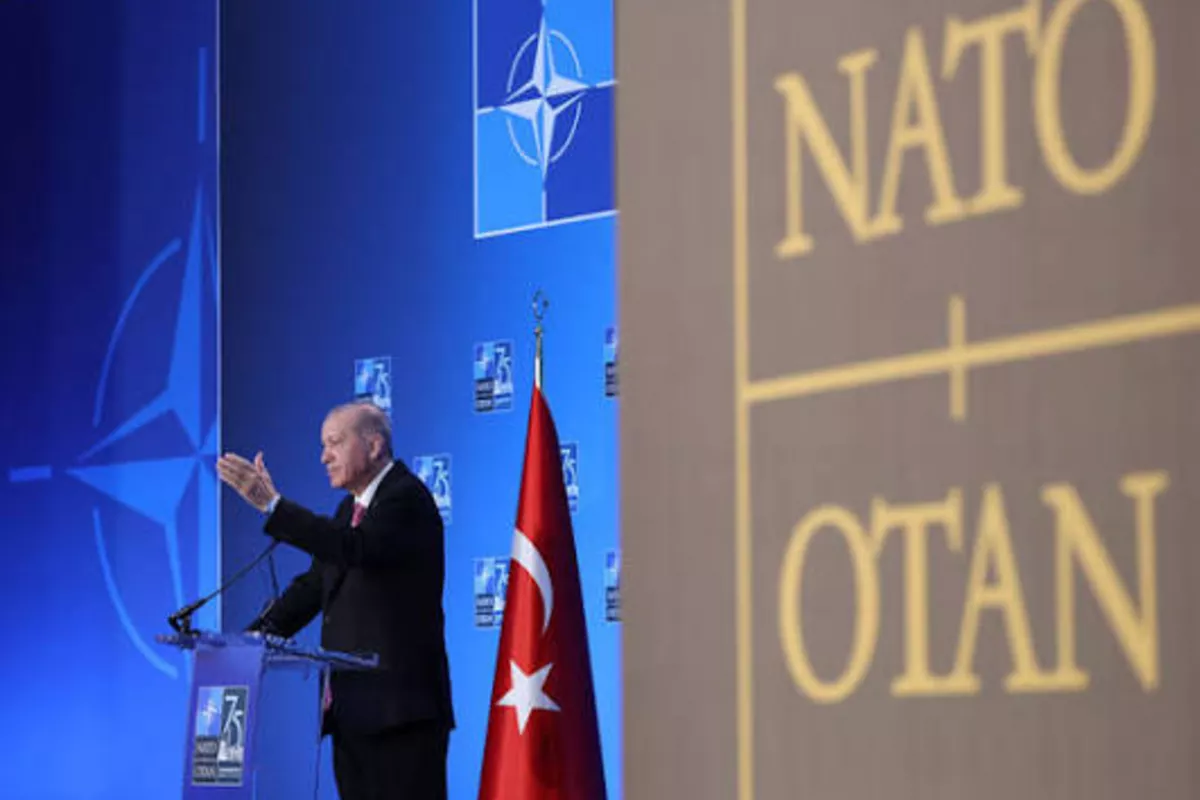
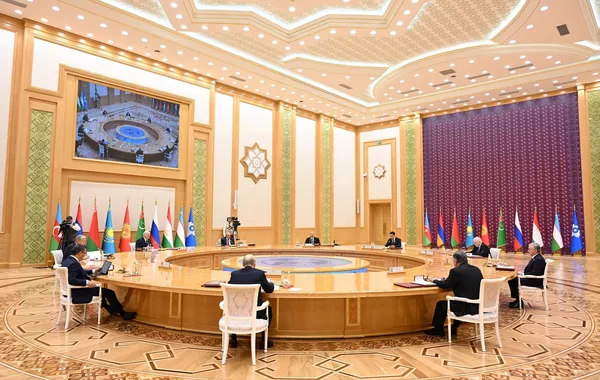
On July 7-8, 2026, Ankara will host the NATO summit - an event that Türkiye’s Minister of National Defense Yaşar Güler has already called a “turning point” for the alliance. The choice of Türkiye’s capital is not accidental: among the three cities considered - Ankara, Istanbul, and Antalya - the decision favored the capital due to its infrastructure and readiness to host an event of this scale, while Istanbul was rejected because of transportation problems, and Antalya to avoid harming the tourist season. Turkish authorities are preparing seriously for the upcoming event. The summit’s security is expected to be ensured by air defense systems, F-16 fighter jets, anti-drone systems, and more than 40,000 security personnel.
It is symbolic that the summit will be the first after the start of the U.S.-Israel war against Iran - a country bordering Türkiye. But more importantly, for the first time in its history, NATO is being forced to discuss not only external threats but also its own internal resilience.
Formally, the focus of the upcoming summit is the continuation of support for Ukraine in its military conflict with Russia. Discussions are planned on a new €70 billion military aid package initiated by Germany, as well as the future of the PURL program, through which Ukraine receives American weapons funded by European financing of up to $15-16 billion per year.
However, the real intrigue of the Ankara summit will not be financial calculations, but an attempt to answer the question of whether NATO unity can be relied upon under current conditions. The military escalation around Iran has revealed noticeable contradictions within NATO - many countries refused to support the United States. This even led to the point where U.S. President Donald Trump stated that he was seriously considering withdrawing the United States from NATO, and in an interview with Reuters he called it “absolutely” possible, citing “disgust with NATO.”
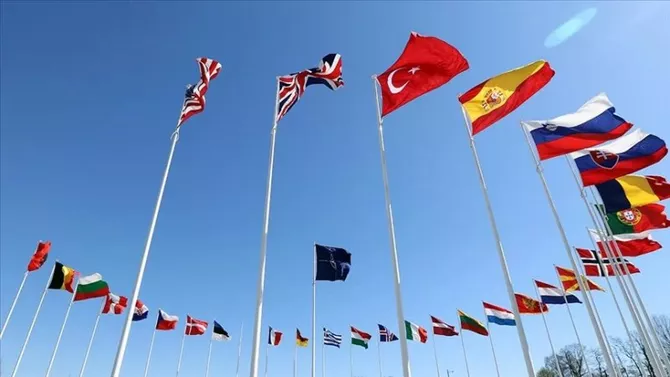
Credit: AA Photo
If we speak about the U.S. war against Iran, it has revealed several serious contradictions within NATO. At the same time, this does not refer to a split of the alliance itself, but rather disagreements over participation in the conflict, the role of the United States, and the future of NATO.
The U.S. administration has openly expressed dissatisfaction that many NATO allies did not provide direct military support for the operation against Iran and did not supply the necessary infrastructure for airstrikes. White House officials stated that some NATO allies effectively avoided participation in the campaign.
At the same time, many European governments are unhappy that Washington made key decisions without full consultation with its allies. Against this backdrop, the United States has begun reviewing its military presence in Europe and has demanded that European NATO members take greater responsibility for their own security. In Washington’s view, Europe has relied too long on American military power.
For most Eastern European NATO members, Russia remains the primary threat. For the United States, however, the Middle East and confrontation with Iran, as well as competition with China, have increasingly become more important in recent years. This raises a logical question: should Europeans support American operations in the Middle East if their own main threats are located in Europe?
European countries are concerned that the United States may reduce its involvement in European security. The recent reassessment of U.S. forces in Europe and the reduction of certain military commitments have intensified these concerns. In response, Europeans are accelerating the development of their own defense capabilities. At present, there is no talk of NATO’s collapse. On the contrary, most alliance members continue to view NATO as the cornerstone of their security. However, the war with Iran has shown that there are serious disagreements within the bloc on three issues: when and how to use military force outside Europe; the extent to which allies are obliged to support U.S. military operations; and who should bear the main burden of costs and responsibility for Western security.
Thus, the U.S. war against Iran has intensified debates about the redistribution of roles between Washington and its European NATO allies. Legally, a U.S. withdrawal from NATO is unlikely, as the decision requires congressional approval. However, analysts point to a more subtle danger: even while formally remaining in the alliance, Washington could undermine trust in Article 5 and weaken NATO’s deterrent capability without a formal break. This is consistent with the new U.S. National Defense Strategy adopted in January of this year, which explicitly places responsibility for European security on Europe itself, redirecting American resources toward deterring China in the Indo-Pacific region.
Meanwhile, a debate has intensified in Europe about creating its own military structure - but there is no unity even on this issue. For example, Spain is ready to promote the idea of a pan-European army “as soon as tomorrow,” while Portugal is firmly opposed, considering it a priority to strengthen forces within NATO. Lithuanian President Gitanas Nausėda has formulated a condition shared by many: a European army is unacceptable if it becomes a substitute for NATO’s goals and plans.
The alliance itself is skeptical of the idea. For instance, Chairman of the NATO Military Committee Admiral Cavo Dragone called the concept of a unified European army “nonsense,” noting that even NATO does not have a single army - only a set of national forces.
For this reason, a more realistic scenario appears to be another one: EU countries and Canada are developing a “fallback plan” that would allow Europe to defend itself using existing NATO infrastructure if U.S. involvement is reduced - a plan supported by Germany and designed not as a competitor to the alliance but as a safety net.
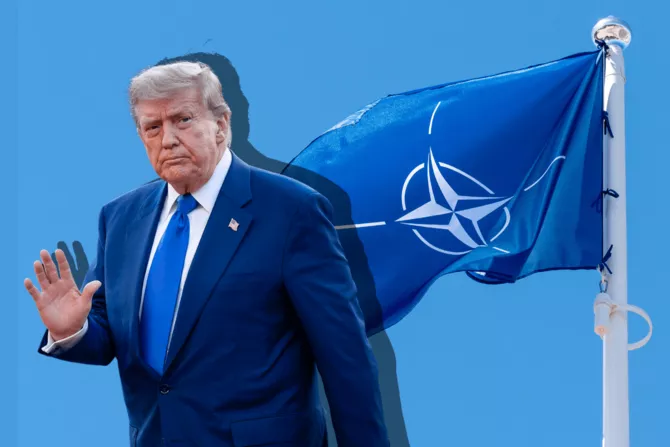
photo: European Policy Centre
An analysis of the combined factors allows us to identify several conditions that will determine whether NATO remains a fully functioning organization in the foreseeable future. First, the restoration of real, not declarative, trust in Article 5 - the crisis around Iran has shown that disagreements on peripheral issues can undermine confidence in collective defense faster than any external adversary.
Second, a fair distribution of the financial burden: Trump’s demand for allies to increase defense spending remains a central point of tension, and formal agreement to revise budgets by 2029 must be backed by real figures.
Third, clarity on U.S. participation - either the alliance retains Washington through reforms, or Europe builds a viable alternative based on existing NATO infrastructure, but not parallel to it.
Fourth, a unified position on crises outside the “core” area of responsibility - the experience with Iran has shown that the absence of prior consultation turns tactical disagreements into public accusations.
Fifth, management of internal political differences - a number of NATO countries with more pro-Russian rhetoric are slowing consensus-based decision-making in a system where unanimity is required.
In this context, Türkiye’s role in NATO is particularly significant. Starting in 2028, Türkiye will for two years lead NATO’s Multinational Reaction Force Command as the most militarily capable and one of the largest contributors to the alliance. At the same time, Ankara is pursuing its own balancing policy - drawing closer to Russia on security issues while diverging from Moscow on Syria and the broader Middle East. After the fall of Bashar al-Assad’s regime in 2024, Türkiye has actively been building military cooperation with Damascus, which creates potential for new tensions - in particular with Israel, whose interests in Syria increasingly clash with Türkiye’s.
However, Türkiye’s participation in NATO is critically important for the alliance’s security due to its control of the Black Sea straits, the second-largest army in the bloc, and its strategic location. The country serves as a key buffer between Europe, the Middle East, and Russia, and also provides essential military facilities.
The summit in Ankara is taking place at a moment when NATO is simultaneously objectively stronger than Russia in overall military potential and subjectively weaker as a unified political will. A formal collapse of the alliance is unlikely - the legal barriers to U.S. withdrawal are too high, and the strategic value of the bloc remains too great even for Washington itself. But the real danger does not lie in treaties; it lies in trust: the alliance may formally survive while losing the credibility of deterrence that has defined its purpose for the past seventy years.
For this reason, the July 7-8 meeting is described not as an ordinary summit, but as a moment capable of determining the alliance’s trajectory for years to come. The Ankara meeting will show whether it is possible to turn the current period of public disagreements into a new, more stable consensus - or whether the erosion of trust will continue and NATO will remain a formally existing structure with a weakened real deterrence effect.