As global power dynamics increasingly hinge on technology rather than territory alone, Central Asia is emerging in a new strategic light. In an article published in The Diplomat, expert in international conflict studies and geopolitics Timur Serikuly argues that concepts such as Pax Silica and Hypergravity are reshaping the region’s role in the international system. Moving beyond traditional security and resource-based narratives, Serikuly explores how digital infrastructure, technological acceleration, and systemic shocks are redefining Central Asia’s place in a rapidly evolving global order-positioning it not as a passive periphery, but as an increasingly consequential node in the new technological era.
Geographically and politically, the region - and Kazakhstan in particular - is positioned as a natural bridge between emerging technological blocs, The Caspian Post reports via The Diplomat.
Increasingly, the main venues of geopolitical competition revolve around semiconductor supply chains, computing power, laboratories, and scientific infrastructure. The United States is forming a technological alliance, Pax Silica; China in parallel has launched the world’s most powerful hypergravity research facility. Together, these developments illustrate the emergence of a new global technological architecture in which Central Asia - and Kazakhstan in particular - is gaining a unique window of opportunity.
The U.S.-led Pax Silica initiative aims to secure the entire supply chain of critical technologies - from rare earth minerals and manufacturing capacities to data centers and digital transmission infrastructure. It represents a core element of the economic strategy of the Donald Trump administration, designed to reduce dependence on competing powers and to form a “trusted club” in the fields of artificial intelligence and semiconductors. In addition to the United States, the alliance already includes Australia, Israel, the United Kingdom, Japan, South Korea, Qatar, Singapore, and the United Arab Emirates. India is expected to join the agreement in February.
As a result, Israel, Qatar, and the UAE now find themselves within a single technological architecture, reflecting Washington’s efforts to build a suprapolitical platform of integration where technology becomes a tool for rapprochement.
At present, Pax Silica members are actively developing regional projects aimed at modernizing trade and logistics routes, including the India-Middle East-Europe corridor, using advanced American technologies. The United States and Israel are also planning to launch a Strategic Framework Program linked to Pax Silica, which includes the “Fort Foundry One” industrial park in Israel to accelerate project implementation.
In essence, Pax Silica is a counterweight to China’s Belt and Road Initiative - an attempt to build an alternative system of global trade in which the United States sets the technological standards and rules of the game.
At the same time, China is pursuing its own strategy of technological sovereignty, illustrated by its launch of world’s most powerful hypergravity research facility. The facility makes it possible to simulate the extreme conditions required for the development of new materials, aerospace technologies, hypersonic systems, and energy solutions.
Unlike Pax Silica, which focuses on controlling supply chains, Beijing is betting on fundamental science and long-term autonomy, building its own scientific ecosystem and reducing dependence on Western laboratories and technologies. As a result, the world is entering a phase where not just markets and corporations compete, but entire scientific and technological civilizations.
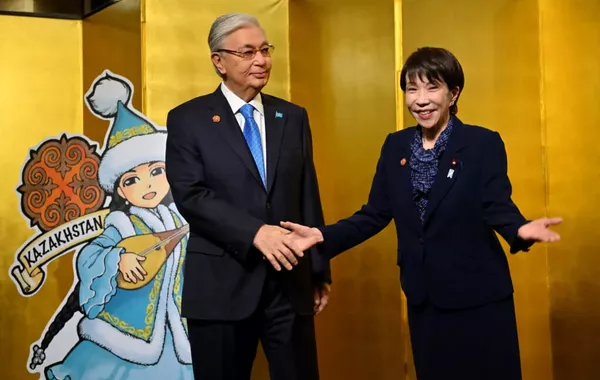
Against this backdrop, recent reports about a phone conversation between Kazakh President Kassym-Jomart Tokayev and U.S. President Donald Trump in late December sound particularly symbolic.
Following the call, Tokayev again invited the U.S. president to visit Kazakhstan on a state visit or as part of a potential Central Asia tour. If such a visit takes place, it would mark the first trip by a sitting U.S. president to Central Asia. That would send a powerful geopolitical signal that Washington views Kazakhstan not as a peripheral country, but as a key anchor point in Eurasia, capable of playing an independent role in shaping regional and technological agendas.
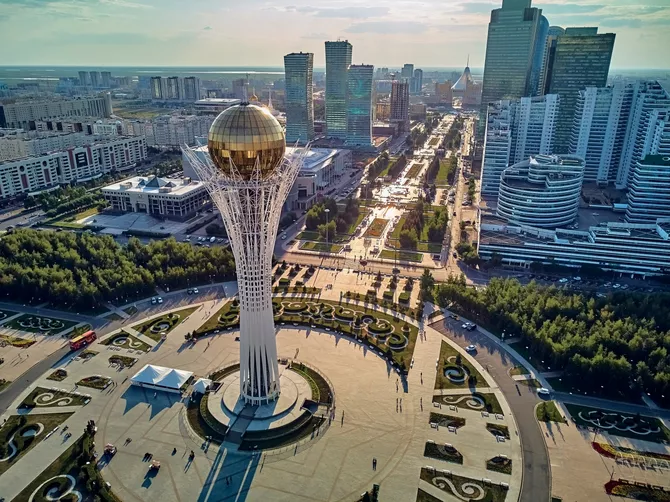
photo: Latvian Institute of International Affairs
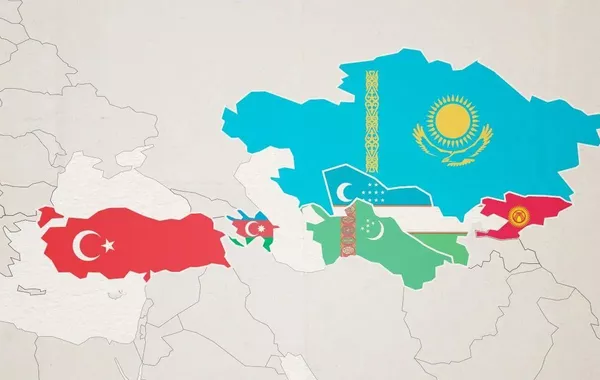
In this new configuration, Kazakhstan - the most economically and technologically advanced country in Central Asia - occupies a special position. Geographically and politically, the republic lies at the intersection of U.S., Chinese, Russian, EU, and Middle Eastern interests, making it a natural bridge between emerging technological blocs. Kazakhstan possesses advanced space infrastructure, experience in nuclear science and international scientific diplomacy, active participation in global transport corridors, digital ecosystems such as Astana Hub and technology parks, as well as its own solutions in govtech and fintech - two rapidly developing fields intersecting in the digitalization of public services and finance.
Tokayev has emphasized his firm commitment to transforming Kazakhstan into a digital state, declaring 2026 the Year of Digitalization and Artificial Intelligence.
All of this provides the prerequisites for turning the country into a regional center for high technology and science. Pax Silica could open several strategic avenues for Astana.
First, Kazakhstan possesses the reserves of rare earth and critical minerals necessary for the production of microchips, batteries, and high-tech electronics, offering an opportunity to move from raw material exports to processing and high-tech manufacturing. As noted in an earlier publication in The Diplomat, critical minerals have become part of Washington’s geostrategic agenda. The United States is seeking to create supply chains outside Chinese control, using a “friendshoring” model and placing production and resource projects in reliable partner countries. Kazakhstan has emerged as one of the leading candidates in this scheme.
Second, the country could become a data transit hub between Europe and Asia by hosting data centers and computing clusters amid rising demand for AI processing power.
Third, participation in Western technological ecosystems provides access to cutting-edge developments in cybersecurity, microelectronics, and digital infrastructure, while academic exchange programs and joint laboratories could transform Kazakhstan into a training center for engineers and scientists across the region.
At the same time, Kazakhstan’s traditional multi-vector foreign policy is acquiring new meaning amid the emerging technological bipolarity. Cooperation with the United States and Pax Silica partners in AI can be combined with participation in Chinese scientific mega-projects, engagement with the EU on digital regulation standards, and technological partnerships with Gulf countries. In this way, Kazakhstan could emerge as a neutral platform for technological dialogue between competing blocs.
China’s hypergravity facility also has direct significance for Kazakhstan. It opens opportunities for developing new materials for the mining sector, technologies for deep mines, resilient structures for seismic regions, infrastructure projects in mountainous and complex terrains, and aerospace research. This creates prospects for joint research programs and industrial partnerships, helping integrate science into the economy.
To avoid missing this historic moment, Kazakhstan needs to take concrete institutional steps: establishing a National Center for Advanced Technologies, developing strategies for participation in global AI value chains, attracting foreign funds into technological projects, launching talent repatriation and retention programs, and shaping technological diplomacy as a distinct direction of foreign policy.
Today, as the United States forms Pax Silica and China invests in hypergravity science, Kazakhstan faces a strategic choice. Either remain on the periphery of the technological world, or become a junction point of new civilizational projects and an intellectual hub of Eurasia. In the 21st century, power is measured not only in oil reserves or military bases, but in computing capacity, research centers, standards, and human capital. Kazakhstan could truly enter the top geopolitical league where the rules of the future technological world are being shaped by taking advantage of the present opportunities.