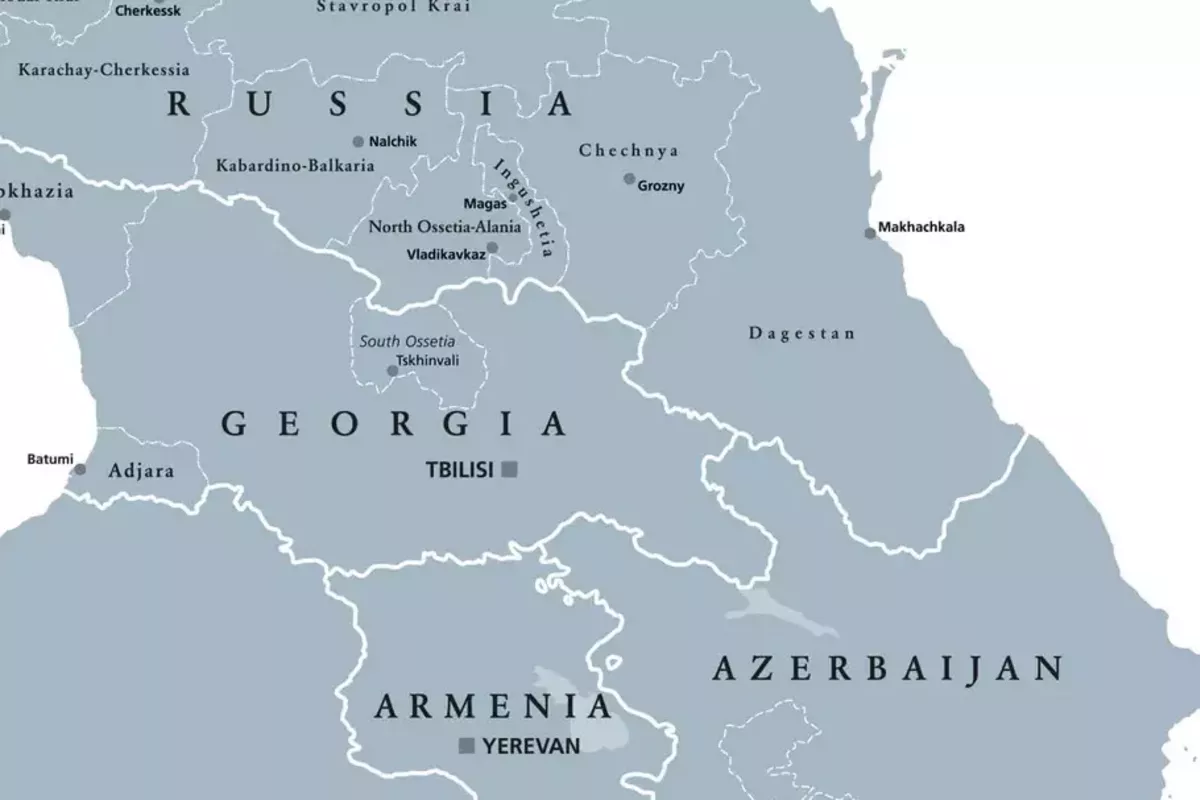
Russia is rapidly losing the South Caucasus in the person of Armenia.
Through its own shortsightedness, Moscow missed the opportunity to take control of a key transit route - Zangezur corridor. In defiance of Baku, it failed to pressure Yerevan into fulfilling Clause 9 of the November 10, 2020 Trilateral Statement. Moscow had all the necessary instruments at its disposal - yet did nothing. Now it claims that a route through Meghri cannot be built without its participation. Yerevan, however, says a third party is unnecessary. The train has already left the station.
The train of Armenia’s nuclear energy sector has also departed - a sector long regarded as Russia’s exclusive domain. During U.S. Vice President J.D. Vance’s visit to Yerevan, cooperation between the United States and Armenia in the field of nuclear energy was formally launched.
The initiative had been announced earlier. In September 2025, Armenian media outlets reported, citing the Foreign Ministry, that Armenia and the United States had begun negotiations on a so-called “123 Agreement,” which would establish the legal framework for the exchange of nuclear technologies, information, and expertise in compliance with international non-proliferation principles. The talks were initiated under memoranda of understanding signed between the Armenian and U.S. governments in Washington on August 8. The conclusion of a “123 Agreement” would enable Armenia and the United States to exchange advanced nuclear technologies and knowledge, strengthening the country’s energy security and the development of peaceful nuclear energy while strictly adhering to high non-proliferation standards.
It is worth noting that Armenia began searching for an alternative to Rosatom after the Second Karabakh War. Despite resistance in Yerevan, there was a clear understanding that the existing nuclear power plant would have to be shut down. The operational lifespan of the Metsamor Nuclear Power Plant, after several extensions, definitively ends in 2036, after which the facility must cease operations. The plant generates approximately 40 percent of Armenia’s electricity, and its closure without replacement capacity would undoubtedly trigger an energy crisis.
While international practice allows for extending the operational life of nuclear power plants beyond their initial design limits, experts believe there is no longer a technical possibility of further extending Metsamor’s lifespan. If Armenia wishes to continue using nuclear energy, it must construct a new power unit. On average, building a new nuclear reactor takes around seven years from the start of construction, not including financing arrangements and preparatory work. Specialists advise that Armenia must begin serious planning now, as Metsamor has only a decade remaining.
The closure of the outdated and seismically vulnerable Metsamor plant has long been demanded not only by neighboring Türkiye and Azerbaijan but also by the European Union. Several years ago, the EU made this issue one of the conditions for closer integration with Armenia. Neither Serzh Sargsyan nor Nikol Pashinyan fulfilled that condition.
In May 2023, it became known that the United States was studying the possibility of constructing small modular nuclear reactors (SMRs) in Armenia and other Eurasian countries. There was no discussion of modernizing the existing plant. Metsamor was built with Soviet funds and Russian technology and has effectively been managed by the Russian side - as has much of Armenia’s energy sector. Rosatom remains the primary contractor responsible for servicing the Armenian nuclear facility, and nuclear fuel is still supplied from Russia. Although Armenia signed a memorandum with Rosatom in November 2022 regarding the construction of a new power unit, no tangible progress followed, as Yerevan began receiving signals from the West.
On Monday in Yerevan, a civil nuclear cooperation agreement was signed with the United States. The agreement establishes the legal foundation for U.S. companies to export nuclear technologies, fuel, and services to Armenia and opens the door for American firms to compete for the contract to replace the Soviet-era Metsamor plant.
At a joint press conference with Prime Minister Nikol Pashinyan, J.D. Vance stated that Armenia would receive small modular reactors using American technology. According to him, the agreement provides for equipment deliveries worth up to $5 billion, with long-term fuel supply and reactor servicing contracts estimated at an additional $4 billion.
Nine billion dollars in total investment is an argument Rosatom simply cannot match. Moreover, Russia never had to “buy” Armenia - it regarded the republic as its own possession.
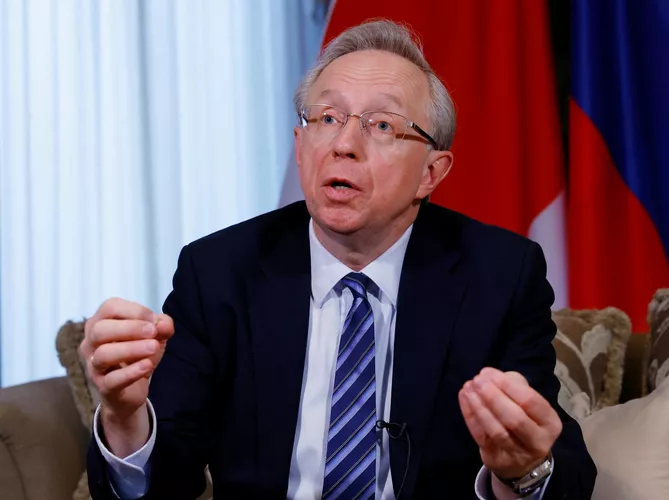
photo: Reuters
The Russian Foreign Ministry has already reacted. Deputy Foreign Minister Mikhail Galuzin stated that there are no real alternatives to Russian proposals for constructing a new nuclear power unit in Armenia. According to him, Russia has submitted a comprehensive package of well-developed proposals, and Rosatom is ready to begin implementation at short notice should the Armenian side so desire. He also emphasized that Russian and Armenian nuclear specialists come from the same Soviet school and “understand each other well.”
On the issue of mutual understanding, however, Galuzin appears to have overstated the case. The understanding between the former outpost and the former metropolis has long eroded. Armenia is moving under the wing of the United States, and Russia appears unable to prevent it.
Against this backdrop, Pashinyan’s words sound almost ironic: “We have never acted against Russia and will not do so… We will not act against Russia, but we will act in Armenia’s interests.” Every step toward Washington is a step away from Moscow, and Armenia’s interests increasingly diverge from those of its former “elder brother.” No diplomatic phrasing can conceal this reality.
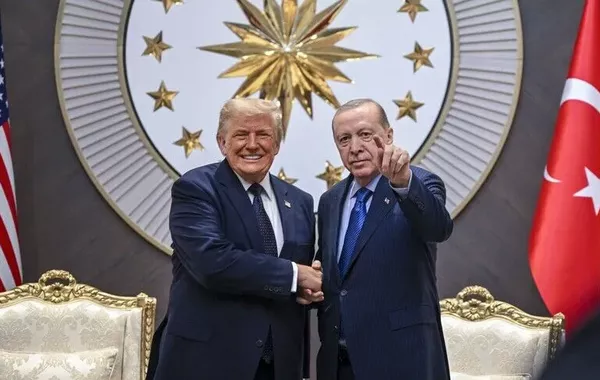
What is Moscow doing - and what can it do? It is not even issuing its traditionally harsh statements. Vladimir Putin and his team seem detached from events. While this could be interpreted as a diplomatic maneuver, most observers see it as impotence. Moscow remains silent because it cannot influence Yerevan, which has found a powerful new patron in Donald Trump.
Russia began losing ground in Armenia after Nikol Pashinyan came to power. Yet before the Second Karabakh War, the shift was not as evident. After the war, relations deteriorated sharply. Armenians saw that Russia was not as omnipotent as once believed. It failed to prevent Azerbaijan’s victory and failed to maintain control in Karabakh through its peacekeeping mission. The aura of fear Yerevan once held toward Moscow began to dissipate.
The current situation demonstrates that Putin is unable to counter U.S. interests. A strategic outpost has slipped away without even a rhetorical show of resistance. Armenia’s energy sector is drifting from Russian hands. So too are its railways.
Yerevan does not intend to include Moscow in the transit project known as TRIPP, instead offering Russia participation in secondary routes. Moscow, unwilling to accept a reduced role, risks losing its railway concession altogether. Pashinyan has already warned that if the concessionaire - South Caucasus Railway - fails to meet its obligations, the government will withdraw key routes from concession management and restore them independently.
The same pattern applies in nuclear energy. Negotiations on the “123 Agreement” have been completed between Armenia and the United States.
A “123 Agreement” is a bilateral intergovernmental accord required for the export of nuclear materials, technology, and equipment from the United States to other countries. It derives its name from Section 123 of the U.S. Atomic Energy Act of 1954, which mandates strict non-proliferation criteria, including a prohibition on the use of transferred technology for weapons purposes.
Since 1955, nearly 50 countries - including EU member states, China, India, Japan, Kazakhstan, the Republic of Korea, Türkiye, Ukraine, and the UAE - have signed such agreements. Armenia is likely to join this list unless unforeseen circumstances intervene.
Washington will likely ensure that no such unforeseen circumstances arise. In today’s geopolitical turbulence, the strategic significance of the once-overlooked South Caucasus has multiplied. A contest for influence was expected.
Instead, Russia appears to be surrendering without a fight.
By Tural Heybatov