Time for Central Asia to Build Regional Economic Grouping
The New Lines Institute for Strategy and Policy, a Washington think tank, has launched an initiative to promote the emergence of a trade-oriented group of states in greater Central Asia that, ultimately, can stretch from the Caspian Basin to the Arabian Sea.
The concept, called the Silk Seven-Plus (S7+), is designed to unfold in three phases over an extended period of time - bringing together the five core Central Asian states, Azerbaijan, Afghanistan, and eventually, Pakistan into a single economic bloc. A model for the S7+’s evolution is the Association of Southeast Asian Nations (ASEAN), The Caspian Post reports via Eurasinet.
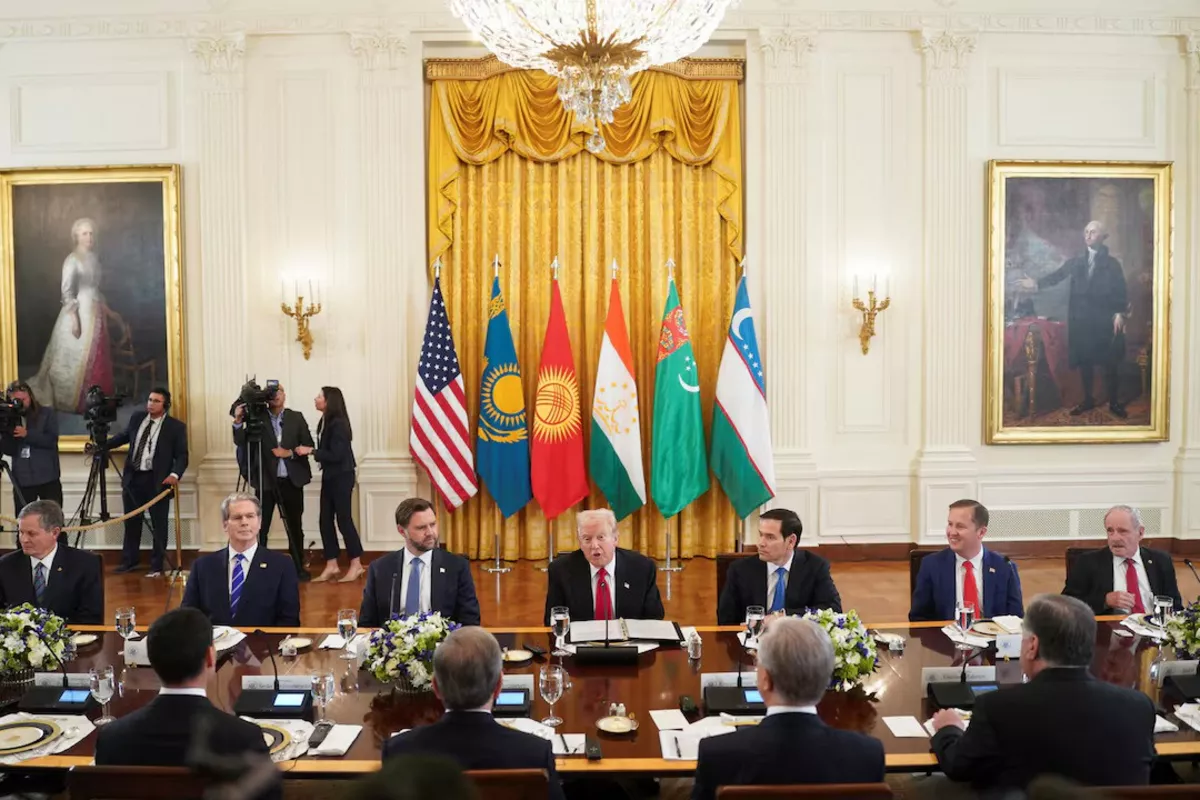
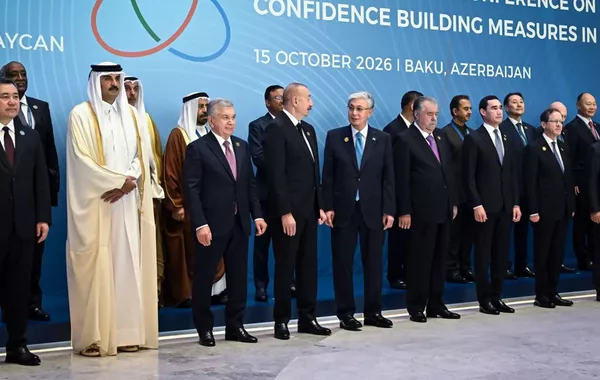
Central Asia is the only region in the world that does not have a regional bloc exclusively comprising states in the region. Individual Central Asian countries have membership or are observers in a wide variety of multilateral organizations, such as the Eurasian Economic Union and BRICS, but those groups’ agendas are set by outside powers, in particular China and Russia.
“The S7+ format can hasten Central Asia’s integration into global trade networks, enabling a significant expansion of trade in manufactured goods, advanced technologies, and natural resources between the region and the United States and European Union,” states the New Lines Institute (NLI) report introducing the S7+ concept, titled Multilateralism as the Mother of a New Economic Order: Making a Case for Unity in Greater Central Asia.
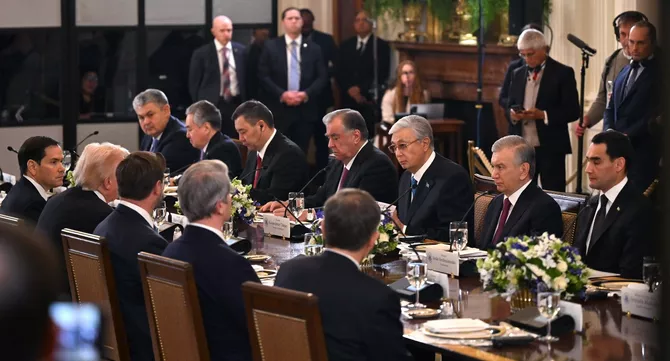
photo: Eurasinet
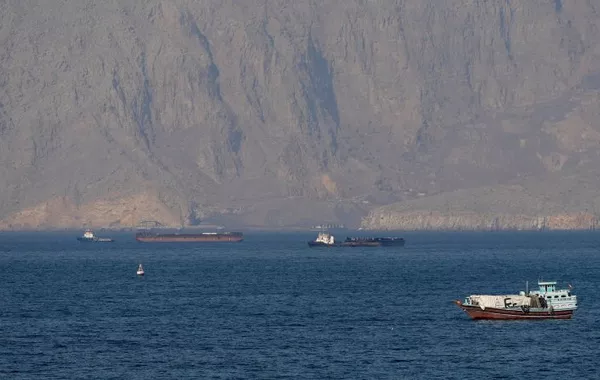
“Geography currently limits trade opportunities: the five Central Asian states are landlocked. Access to a seaport is necessary, for instance, if Central Asia wants to boost exports of critical minerals to the United States, Japan, and elsewhere,” the report adds.
The S7+ concept also can potentially offer a substantial peace dividend for the region. “A Central Asian organization that fully integrates Afghanistan into a regional trade system carries the potential benefit of weakening the forces that have long fueled the country’s vicious cycle of poverty, radicalism, and violence.”
Initial advocacy work on the S7+ will focus on fostering the establishment of sustainable joint mechanisms among the core five Central Asian states, as well as Azerbaijan, to more efficiently address pressing economic issues, including water resource management, electricity distribution, development of artificial intelligence, lowering trade barriers and improving higher education and training. Subsequent phases will strive to integrate Afghanistan, then Pakistan, into emerging multilateral systems.
In launching the initiative, NLI acknowledges the S7+ faces substantial barriers arising from the legacy of nearly 50 years of conflict in Afghanistan. Not only does the Taliban’s control of Afghanistan serve as a wild card, “deep reserves of distrust” exist in Central Asian-Pakistani relations. In addition, China and Russia are unlikely to welcome any effort by Central Asian states to forge a regional organization in which Beijing and Moscow are on the outside looking in.
“There is no shortage of obstacles standing in the way of realizing the S7+ concept. But developments are trending in the right direction [for regional cooperation],” the report states. “A need to reconcile the harm done by decades of Soviet communism with economic ambitions for the future is bringing regional leaders together.”