As familiar energy maps begin to crack and sea routes increasingly hinge on political storms, global attention shifts to regions where calculation and pragmatism still prevail. The Caspian is no longer a “quiet inland body of water,” but a pivotal node where energy, transit, and geopolitics intersect.
The Caspian Post spoke with Farkhad Kassenov, head of the A+Analytics research center and a Kazakh political scientist, about why the Caspian region is emerging as a point of strategic balance, how Western and Asian perspectives on the South Caucasus and Central Asia are evolving, and whether Caspian gas can offer a real solution to Europe’s energy anxieties.
- Can we today speak of the Caspian region as an island of relative energy stability?
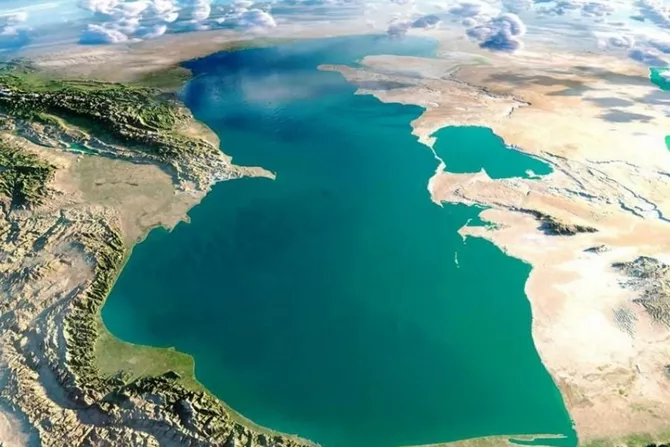
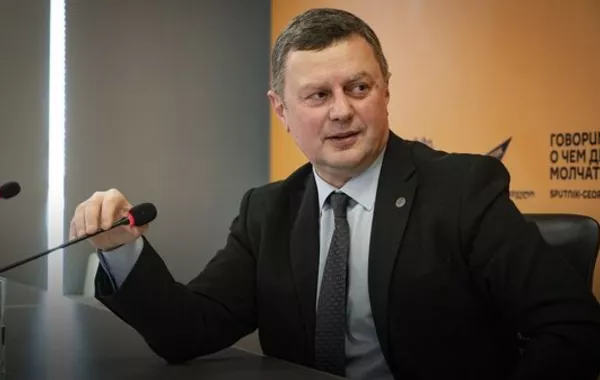
photo: Caspian Post
- Yes, absolutely. In this respect, the Caspian region demonstrates resilient stability, which is largely linked to the role of Azerbaijan and Kazakhstan. In particular, Azerbaijan has long ensured stable and uninterrupted hydrocarbon supplies to global markets, which largely shapes the region’s overall resilience. At the same time, it is important to note that other states are also actively operating on the Caspian shelf - Turkmenistan, Kazakhstan, Russia, and Iran. All of these countries are involved in extraction, and hydrocarbon production as a whole continues without interruption.
However, we cannot ignore existing challenges linked to broader geopolitical turbulence and the impact of war on energy processes. In particular, the Caspian Pipeline Consortium has faced well-known difficulties. Kazakh, Russian, and American companies continue to supply oil to global markets, but CPC infrastructure, including berth facilities, has been hit by drone strikes, putting part of the infrastructure out of service. This affects deliveries, and it is impossible to deny the impact of the war. Yet it is important to clarify that this concerns the CPC’s outlet infrastructure to the Black Sea, not the Caspian extraction region itself, which currently remains stable.
Much of this resilience is also due to Azerbaijan, which has consistently built a diversified system of hydrocarbon supplies and ensured the stable functioning of alternative routes to global markets, particularly the Baku-Ceyhan oil pipeline.
I would also like to express gratitude to the Azerbaijani side for assisting Kazakhstan in diversifying its hydrocarbon transport channels. Approximately 80 percent of Kazakhstan’s oil is exported via the CPC, and under current conditions Azerbaijan provides a real opportunity to mitigate the consequences arising from the military situation and the war between Russia and Ukraine.
- Is the importance of the Caspian rising precisely because the Middle East is becoming more unpredictable?
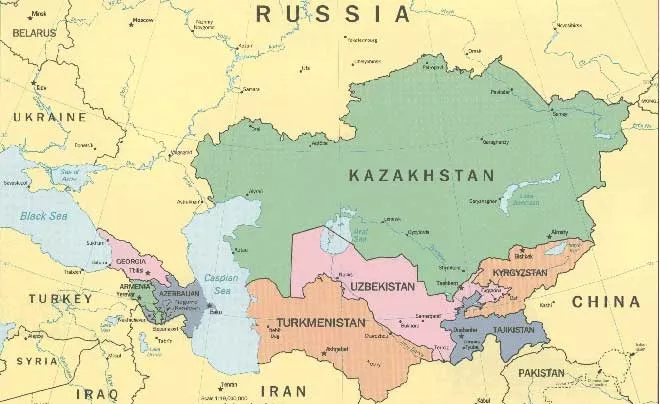
photo: moderndiplomacy
- I think this is a combination of factors. The situation in the Middle East has always been tense and complex, and this year has been no exception. Many key problems in the region remain unresolved. Yes, efforts are being made, including by the United States, to stabilize the situation, but the factor of instability has not disappeared.
In this sense, the Middle East remains a space of high unpredictability. At the same time, it sits at the crossroads of the interests of key global power centers for whom uninterrupted hydrocarbon and energy supplies to world markets are fundamentally important.
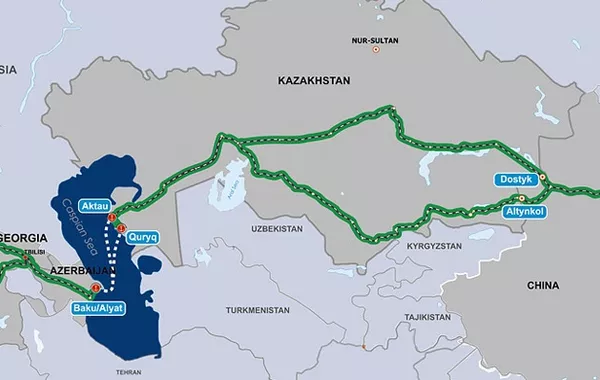
One consequence of heightened attention to energy security is the rising significance of the Caspian region. Today, the Caspian is not only a source of energy resources, but also an increasingly important transit zone along both the West-East and North-South directions.
This becomes especially relevant against the backdrop of potential escalation between China and the United States and the risks of blocked maritime trade routes. Although overland routes are more expensive in terms of infrastructure, operations, and transportation overall, they nonetheless remain a viable alternative to sea lanes. That is why both European countries and China are interested in creating transport corridors that would preserve trade links even if maritime shipping were constrained.
In this context, the importance of the Caspian region rises sharply. It is also important to consider another aspect: the Caspian region, or the so-called Turkic corridor, has strategic significance for ensuring regional access to global markets.
Japan, in particular, is showing serious interest in supplies of rare earth and critically important materials. During the recent visit of our president, a number of agreements were signed, resulting in Kazakhstan moving into second place globally in gallium production. For Japan, diversifying sources of such materials is fundamentally important, as a significant share currently comes from China.
Using the Middle Corridor via the Caspian makes it possible to build alternative logistics: products do not transit through China, but move along the Caspian route, then westward, and ultimately reach Japan.
Thus, we are observing a process of balancing the global economic system, which always seeks to diversify routes and reduce risks. Instability in the Middle East objectively increases the significance of the Caspian region - both as an energy hub and as a key transport and transit space for countries involved in Caspian logistics.
- To what extent have the West and Asia begun to look at the Caspian differently after the latest crises?
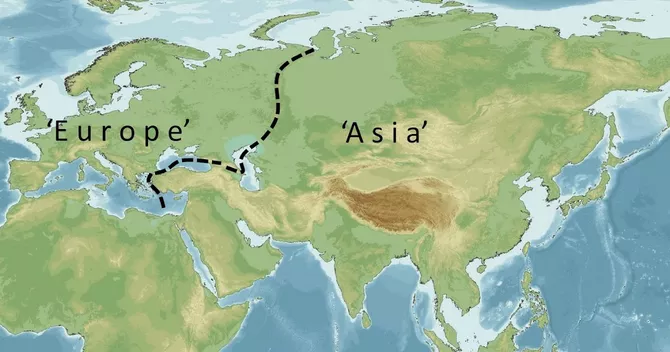
photo: TASS
- I would like to emphasize that today both the West and Asia are indeed viewing the Caspian region in a completely new way. This rethinking is a consequence of the latest global crises, above all the unprecedented sanctions war. We are speaking not only about the consequences of the Russia-Ukraine conflict, but also about a broader transformation of the world economy, including the tariff confrontations launched by Donald Trump’s administration.
Under these conditions, the Caspian acquires new significance. First, the region is increasingly striving to take an independent place in the global energy balance. Second, it is becoming a key node of major transport routes - not only along the West-East axis, but also in the North-South direction. This opens access to markets and regions that were previously either limited or peripheral in global logistics.
We are seeing growing and tangible interest from both Western and Asian states in the so-called mega-meta-region of the South Caucasus and Central Asia. More experts now view these spaces as a single geopolitical whole. The reason is simple: they face similar challenges, and responses are formed according to similar algorithms - above all through multi-vector diplomacy and the development of transport and logistics potential. This region shares structural features and develops synchronized ways of responding to external shocks, making it reasonable to consider it a single meta-region.
The growing attention is confirmed by several landmark events. In Washington, a peace declaration between the countries of the South Caucasus was signed - a clear signal that the United States is looking at the region closely and systematically. The same trend was confirmed by the C5+1 summit at the White House with Central Asian leaders - a truly unprecedented event. Another indicator was the invitation of the presidents of Kazakhstan and Uzbekistan to participate in the G20, a step that would have seemed unlikely just a few years ago.
If we also recall the number of major international events held in Azerbaijan this year, as well as a series of C5+ summits involving the European Union, Germany, Italy, Japan, China, and the United States in Central Asia, it becomes clear that this is systemic interest. Moreover, dialogue is taking place not only at the level of heads of state, but also at the level of foreign ministries and relevant ministries. A telling example is a separate consultation format on the development of the aviation sector, in which China is becoming increasingly active.
It is also important that interaction is moving beyond declarations and memoranda of intent. Increasingly, they are being transformed into concrete technological and infrastructure projects. Large-scale project work is underway, and a new economic and logistics architecture is forming.
Taken together, all of this points to the main conclusion: the Caspian region and the related meta-region of the South Caucasus and Central Asia are becoming zones of stable and long-term interest for leading global powers - both the West and Asia and the broader East. This is no longer episodic; it is a new reality of global politics.
- Is it realistically possible to increase the role of Caspian gas in Europe’s energy balance?
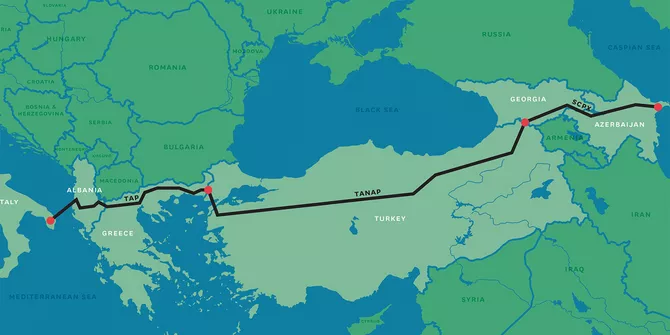
photo: CNN
- I believe serious efforts are indeed being made in this direction. At the same time, I hold my own position: these efforts need to be significantly intensified by consistently expanding the proposed initiatives.
Why? Because it is well known what European countries are interested in. The European Union objectively needs gas, and currently European states have effectively no full alternative. Yes, Europe is actively moving toward “green” energy, which implies abandoning coal generation. However, Europe has not yet been able to abandon traditional energy overall, and as a result nuclear energy and natural gas - both pipeline and liquefied - remain critical.
In this context, Caspian gas, especially Azerbaijani and Turkmen gas, has significant potential and serious prospects, which, in my view, will only strengthen its role in the European energy market.
In addition, we should not forget the next stage of the energy transition. Within the “green” agenda, traditional natural gas is followed by a gradual shift to blue and green hydrogen. This means that long-term trends must be considered today. The energy resources of the Caspian region - whether natural gas or, in the future, hydrogen - will play an increasingly significant role.
Over the next five to 10 years, these prospects will undoubtedly grow, particularly in the context of transporting energy resources from our region.