The trilateral meeting between Ukraine, the United States, and Russia in Abu Dhabi marked the start of an initial phase of political dialogue rather than a breakthrough. For the first time, all three sides participated in a single format, moving beyond indirect and separate contacts.
Expectations, however, remain limited, as none of the parties appears ready to make meaningful concessions. Analysts view this format as inherently long term, potentially extending through 2026 and possibly shifting to other venues. While the talks are intended to reduce tensions and explore potential compromises, the complexity of the conflict makes any rapid resolution unrealistic in the near future.
The Caspian Post analytical website spoke to Ukrainian political scientist and military expert Alexander Kovalenko to gain insight into the current dynamics of the negotiation process and the broader strategic outlook.
- Mr. Kovalenko, what can you say about the results of the trilateral negotiations between Ukraine, the United States, and Russia held in Abu Dhabi?
- The main positive outcome is that the trilateral meeting actually took place. In other words, discussions were not held separately between the Ukrainian and American delegations and then between the American and Russian delegations. Previously, positions and issues were addressed remotely, through indirect communication, with attempts to find some form of consensus.
At the current stage, however, no breakthroughs or major decisions should be expected. This resembles an initial discussion phase.
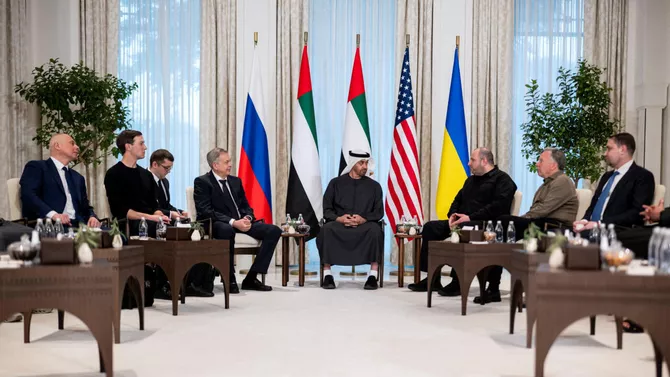
photo: France24
It is too early to say that the parties are close to signing any kind of peace agreement or making mutual concessions. No one is ready for concessions. Therefore, this should be seen as an early stage of dialogue and such meetings, which I believe will continue throughout 2026.
Unless, of course, Donald Trump becomes fatigued by this prolonged diplomatic process and either disengages or shifts to a strategy of coercive pressure against Russia. In principle, the second option would suit us quite well, because Russia remains the main obstacle in the negotiation process.
- In your opinion, what political stage did this meeting initiate, and how realistic is the likelihood that this format will be long-lasting?
- Issues of this magnitude are not resolved quickly, so the diplomatic process may last a year or even longer. I would not be surprised if this format is not limited to Abu Dhabi alone. The venue could shift to Ankara or another country willing to host such talks. These negotiations are inherently long-term. That is the nature of this kind of diplomacy. But in a full-scale war on the European continent-the first of this kind since the Second World War - there can be no quick solutions or rapid compromises.
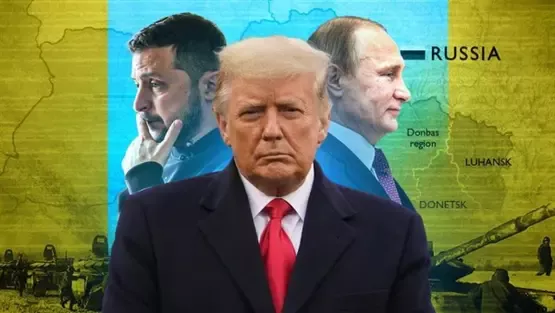
photo: Alarabiya
This is a complex diplomatic path, and the parties are only at the very beginning of it, including the American side, which has assumed the role of arbiter. Therefore, regardless of how much Donald Trump wants a fast outcome, he will not achieve one. I have a sense that the U.S. president’s patience may eventually run out, and he may begin to act more decisively, primarily toward the Russian side.
As for Ukraine, the United States could theoretically apply pressure by suspending support, but that would look extremely negative in a historical context. It is unlikely that Republican members of Congress, especially in light of this year’s elections on Capitol Hill, would allow Donald Trump to take steps that are overtly harmful to Ukraine and damaging to the Republican Party’s reputation, which is already losing electoral support. There is a real risk that Republicans could lose not only dominant positions but even parity in the Senate and the House of Representatives, effectively ceding ground to the Democrats. Domestic political factors will therefore play a significant role.
- One of Russia’s key demands concerns the withdrawal of the Ukrainian Armed Forces from Donbas. Do you see any possibility of compromise for Kyiv on this issue?
- No compromise is possible. Ukrainian troops will not voluntarily withdraw from territories currently under Ukrainian control. We are talking about the most heavily fortified bridgehead in Donetsk region today - the Slovyansk-Kramatorsk agglomeration, or defensive area.
This includes roughly 5,000 square kilometers of defensive lines, positions, and fortifications, which are far more significant from a defensive standpoint than, for example, Bakhmut, Avdiivka, or even the Pokrovsk-Myrnohrad agglomeration, where Russian occupation forces have been fighting for more than a year and a half.
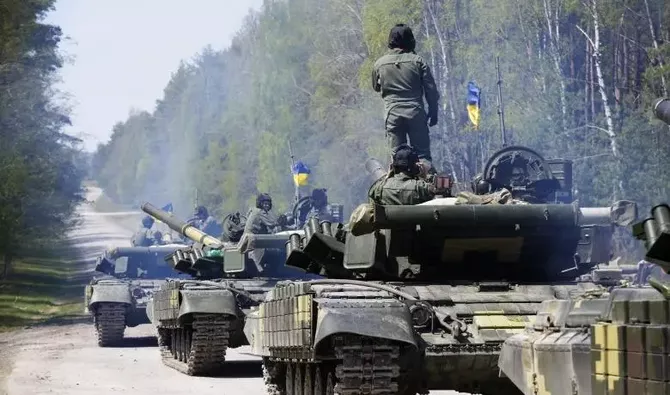
photo: Kyiv Post
In essence, Russia is demanding that Ukraine abandon the most difficult and strategically important section of Donetsk region, which constitutes a major obstacle to Russian advances. We understand this perfectly well. They want to seize this territory without incurring significant military costs. That is why they are making such a demand.
Moreover, Ukraine will never agree not only to withdraw from its own territories, but also to recognize Russia’s territorial claims or acknowledge any so-called rights to the territories it has occupied. This issue is closed. We will never accept the occupation of our land. Whether the United States is prepared to fully hear this position is a separate matter, but the issue itself is not up for discussion.
- What risks and opportunities, from the perspective of Ukraine’s strategic interests, are created by U.S. participation in the negotiations both as a mediator and as an actor shaping the process?
- I would not say that the United States is creating specific risks. The main problem is that Donald Trump wants a quick solution to an issue that simply cannot be resolved quickly. He is trying to accelerate events.
However, his most recent statements, particularly those made in December 2025, suggest that he has begun to accept the reality that resolving the Russia-Ukraine war is not a rapid process. It cannot be settled with a single decision and then concluded.
I believe he is gradually coming to terms with the fact that this will be a lengthy diplomatic process. At the same time, it is unlikely that he will tolerate Russia’s position, which is often driven by ultimatums and includes demands of a capitulatory nature that Ukraine will never accept. That may ultimately become the limit of his patience.
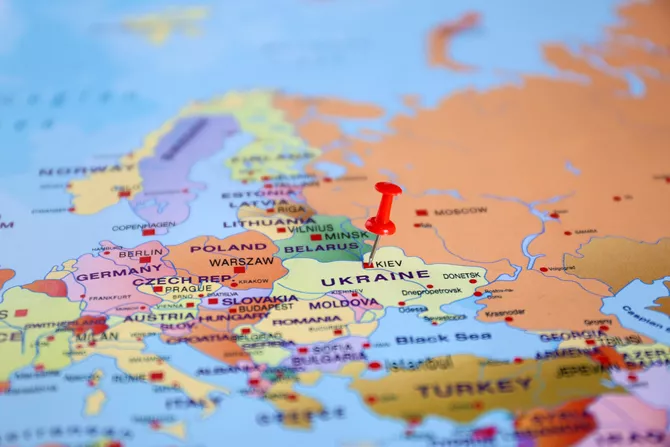
photo: Reuters
As for the rest, I cannot say that U.S. representatives Steve Witkoff and Jared Kushner are fully neutral third parties with no preferences. We see that Witkoff and Kushner communicate with the Russian side in a more open and positive manner, which naturally raises concerns. On the other hand, we also know that within the White House and Donald Trump’s inner circle there are political forces dissatisfied with the negotiation process precisely because of Russia’s stance. This includes, in particular, Marco Rubio, who in recent times has represented the more security- and military-oriented wing within Trump’s circle.
Therefore, while there are legitimate concerns, especially regarding Witkoff’s warm communication with the Russian side and his openly critical attitude toward Ukrainian representatives, there is nonetheless a certain internal balance within the Trump administration.
- How do you assess the actual role of European Union countries and NATO member states in the current negotiation process, and how might their potential marginalization affect the final outcome?
- There will certainly be no complete marginalization of the European Union or NATO countries. At present, the United States is acting as the main arbiter of the negotiation process, but this process is impossible without Europe’s participation.
Europe provides substantial financial and military assistance to Ukraine and may also be involved in discussions about deploying peacekeeping forces or observers from European countries. For this reason, sidelining European actors is simply not feasible.
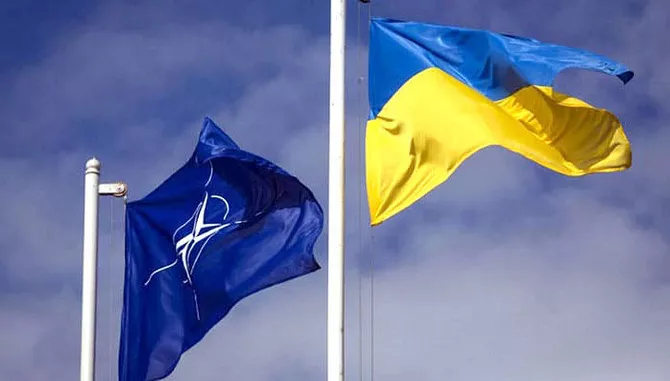
photo: nato.int
Of course, Washington would prefer to fully control the process and act as the sole arbiter, but this is not realistic. I am not particularly concerned about Europe being excluded. However, the recent cooling of relations between the United States and the Old World is worrying, as it could eventually lead to a divergence in foreign policy approaches that Europe and the United States once pursued in close coordination. At present, that synergy is no longer clearly visible.
- Against the backdrop of the current military situation, including frontline dynamics and strikes on energy infrastructure, what realistic political scenarios for ending the war do you see in the near future?
- I do not see a realistic scenario for ending the war in 2026. I see only one scenario: the continuation of the war. Ukraine will continue to defend its independence, its freedom, and its territory. Russia will continue to pursue its predatory strategy of territorial expansion.
Overall, we are continuing the defensive strategy aimed at exhausting Russia, and it is producing results. At present, Russia cannot point to any significant territorial gains or large-scale occupations in Ukraine. Not a single regional capital has been captured by Russian forces.
photo: News.Az
Smaller cities such as Pokrovsk and Myrnohrad have become multi-month, if not multi-year, grinding battles for the Russian army. Even a relatively small city like Kupyansk has turned into one of the most striking embarrassments of 2025 for the Russian General Staff and high command. A city that Russian commanders declared captured five times remains under Ukrainian control to this day.
It is clear that Russia is entering a phase of exhaustion. Our task in 2026 is that if we cannot force Russia onto a peace track based on reasonable agreements, the strategy of attrition will continue throughout the year. Any meaningful changes may only become possible in 2027, and only as a result of developments in 2026. Therefore, I see no prospects for peace or for any long-term ceasefire in 2026.