Tajikistan’s foreign policy priorities underscore the importance of stable relations with neighboring states as a cornerstone of both national security and economic resilience. Past tensions with Uzbekistan and Kyrgyzstan demonstrated how fragile regional ties can lead to isolation and heightened security risks. In recent years, normalization efforts, including trilateral agreements, have helped rebuild trust and created momentum for deeper regional integration.
Dushanbe is increasingly positioning itself as a constructive regional actor, promoting cooperation frameworks aimed at strengthening stability, trade, and connectivity. At the same time, emerging Eurasian transport corridors linking Central Asia with the South Caucasus and Europe are enhancing Tajikistan’s strategic relevance, reinforcing its interest in sustained good-neighborly relations and broader regional partnerships.
Against this backdrop, The Caspian Post analytical website spoke to Tajik political scientist and international relations expert Muhammad Shamsuddinov about Tajikistan’s evolving regional role, its approach to security and economic cooperation in Central Asia, and the broader geopolitical implications of new Eurasian connectivity initiatives.
- How do you assess Tajikistan’s relations with neighboring countries from the perspective of regional security and mutually beneficial economic cooperation? How significant is Dushanbe’s role in these processes?
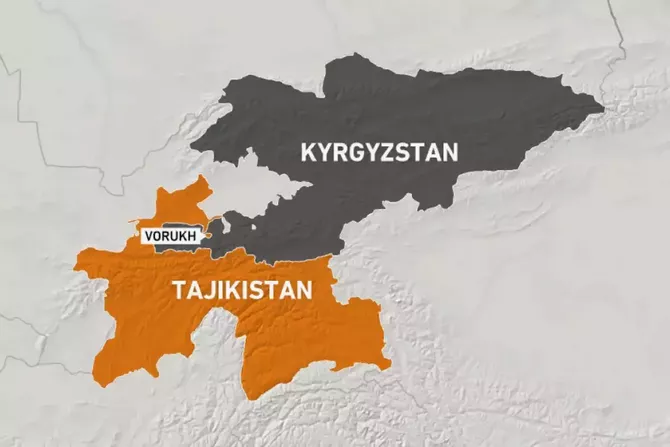
photo: The Caspian Post
- Central Asia is of key importance for Tajikistan. Much depends on relations with neighboring states, from economic development to security. For example, in the 2000s and early 2010s, Tajikistan’s relations with Uzbekistan deteriorated sharply, leading to Dushanbe’s isolation and numerous difficulties.
A similar situation existed until recently in relations with Kyrgyzstan, where territorial disputes resulted in serious border clashes, raising significant security concerns and affecting Tajikistan’s security and the overall situation in the region. From this perspective, stable and friendly relations with neighbors are vital for Dushanbe, as the country’s security and socio-economic well-being depend on them.
Regarding Tajikistan’s role in deepening intra-regional ties, Dushanbe is clearly interested in strengthening cooperation, as the country’s stability and security are closely linked to the regional environment. The normalization of relations with Uzbekistan and Kyrgyzstan, formalized through bilateral and trilateral documents, including the agreement on the junction point of the three countries’ state borders and the Khujand Declaration on friendship and good-neighborliness, has improved the regional security climate and created preconditions for deeper integration, as well as expanded trade and economic cooperation. In this context, Tajikistan plays an important role in advancing regional cooperation.
- What factors contribute to deeper cooperation between Central Asia and Azerbaijan, including Tajikistan?
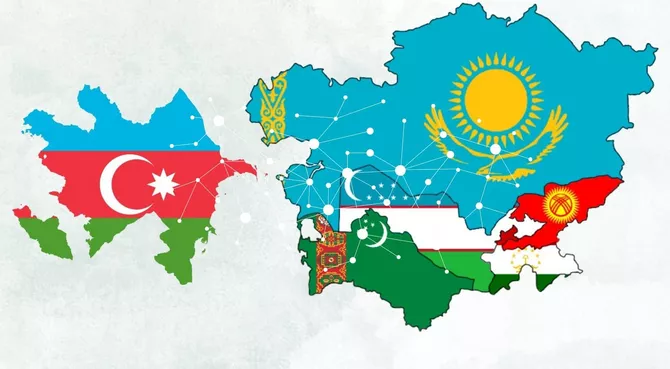
photo: aircenter
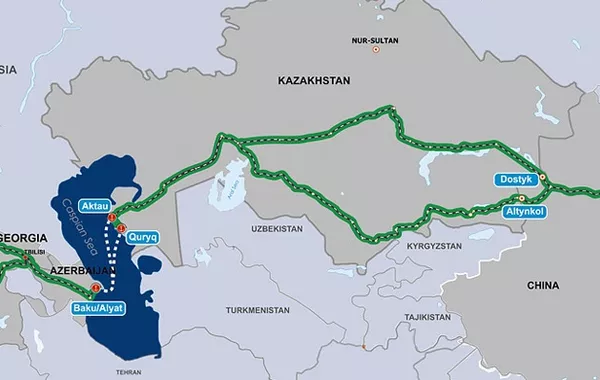
- I believe the key factor is the emergence of new transport and logistics routes across Eurasia as alternatives to traditional northern corridors, primarily those passing through Russia. Such transport and logistics corridors could connect China and Europe via Central Asia and the South Caucasus, extending further westward. This development is likely to bring Central Asian states closer to Azerbaijan.
Another important factor is the aspiration of both Central Asian countries and Azerbaijan to position themselves as independent international actors. This factor may also lead to closer ties, since any rapprochement in the post-Soviet space that does not involve Russia is often perceived as an attempt to pursue an autonomous political course. This creates mutually beneficial incentives, offering diplomatic advantages and strengthening international standing.
Azerbaijan’s participation in the consultative meetings of Central Asian heads of state can be viewed through these two lenses: the desire to demonstrate statehood and subjectivity, and the development of transport and logistics routes.
- How do you assess the situation in the South Caucasus in light of the normalization of relations between Azerbaijan and Armenia?
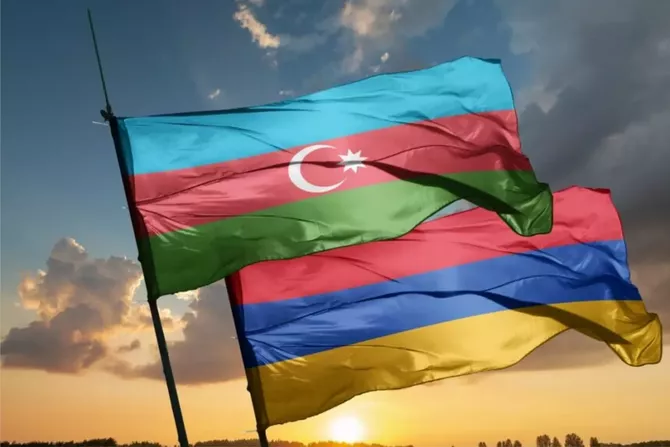
photo: The Caspian Post
- The normalization of relations between Azerbaijan and Armenia is a highly positive development for the South Caucasus. It contributes to regional stability and creates preconditions for expanding trade, economic cooperation, and the region’s transit potential.
These positive effects may extend beyond the South Caucasus to Central Asia. As I mentioned earlier, normalization facilitates the creation of new Eurasian transport and logistics routes. The United States and the European Union view this process positively and, to some extent, support it, as they are interested in gaining access to the resources of the South Caucasus and Central Asia and in developing secure transit routes that bypass Russian territory.
In 2025, there were several discussions in the U.S. Senate on the need to support the development of transport and logistics links between Central Asia and the South Caucasus, with onward access to Europe. In this context, the “Trump Route” project in the South Caucasus is taken quite seriously in Washington.
- What are your forecasts regarding Iran’s domestic political situation? Is there a possibility of a new attack on Iran by the United States and Israel?

photo: CNN
- In the current situation, it is important to consider the specific characteristics of Iranian society. Iranian citizens are highly politicized and demonstrate a strong interest in politics, their political future, and socio-economic well-being.
From this perspective, opposition to the authorities, regardless of who is in power, is not unusual. Large-scale protests have occurred repeatedly, both during the Shah’s era and under the Islamic Republic. What is happening today is therefore part of a long-standing socio-political reality rather than an entirely new phenomenon.
Regarding possible U.S. or Israeli intervention, Israel stated shortly after the protests began that it would not interfere in Iran’s internal affairs. As for the United States, reports suggest that the Pentagon has proposed various scenarios to President Trump for potential intervention. However, external interference could have the opposite effect, leading to the consolidation of public support around the current government.
Iranians are also highly sensitive to foreign interference, which may serve as an additional restraining factor for both Israel and the United States.
Another distinctive feature of Iranians should also be noted: they are highly sensitive to external interference in their internal affairs, which may serve as a restraining factor for both Israel and the United States.
- How is Azerbaijan’s rapprochement with Central Asian countries perceived in the European Union, the United States, China, and Russia?
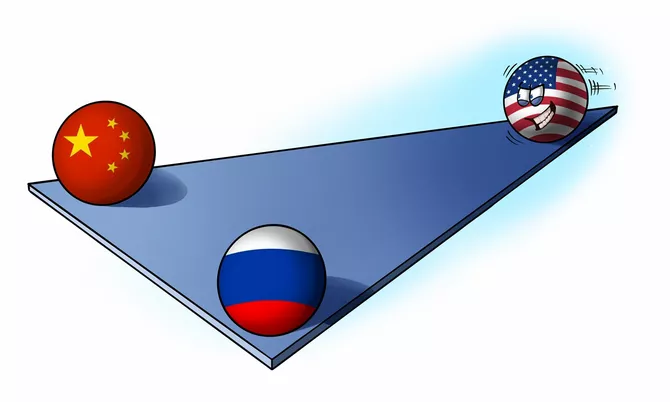
photo: globaltimes
- Overall, the EU, the United States, and China support this process, as they are interested in the development of new logistics routes across Eurasia.
For Russia, the situation is somewhat different. Moscow may view Azerbaijan’s rapprochement with Central Asian countries with suspicion, since it facilitates transport routes that bypass Russia. At the same time, Russia is wary of other geopolitical players expanding access to Central Asia’s resources and increasing their influence in the region.
Russia may also be cautious about post-Soviet states drawing closer to one another without its participation, as it considers this region part of its sphere of influence. Any political developments, particularly the creation of new frameworks without Russia’s involvement, can therefore be a source of concern for Moscow.
By Asif Aydinli