The tragedy of the AZAL plane crash became a defining moment for Kazakh-Azerbaijani relations, testing solidarity beyond the bounds of formal diplomacy. Kazakhstan’s swift response, involving emergency, medical and security institutions, demonstrated a partnership in action. The support extended to Azerbaijan during the crisis underscored that relations between Astana and Baku rest not only on economic or strategic interests, but also on trust, shared responsibility and a deep sense of brotherhood between the two nations.
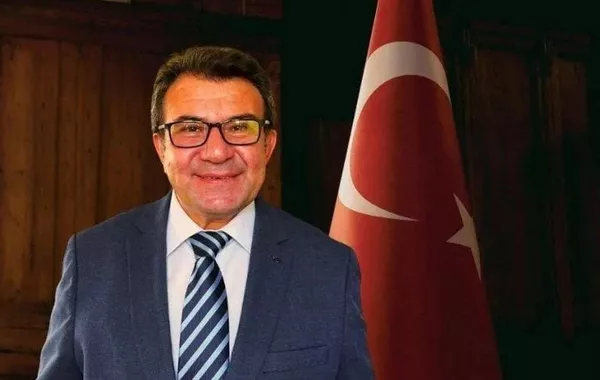
The Caspian Post analytical website presents an interview with Rasul Kospanov, a Kazakh political scientist and a member of the Central Asia-Azerbaijan expert community.
In the interview, Kospanov assesses the key trends shaping relations between Azerbaijan, Kazakhstan and the wider Central Asian region, with a particular focus on strategic connectivity, regional cooperation and political solidarity in times of both opportunity and crisis.
- How effectively do Baku and Astana coordinate their positions on key regional and international issues? What significance does the Middle Corridor hold for both countries?
- Over the past three years, Kazakhstan’s interaction with the countries of the South Caucasus has intensified significantly. This applies not only to Kazakhstan but to Central Asia as a whole. That said, the two main drivers of this process are, of course, Kazakhstan and Azerbaijan.
photo: APA
I will focus primarily on Kazakhstan, as more than half of Central Asia’s total economic output is generated by Kazakhstan. In practical terms, developments in Kazakhstan are reflected in regional economic statistics as a whole.
Azerbaijan accounts for around 76 per cent of Kazakhstan’s total exports to the countries of the South Caucasus, making it the largest export market in the region for Kazakh goods.
According to 2024 data, aluminium was the largest category of Kazakhstan’s exports to Azerbaijan. Azerbaijan actively purchases Kazakh aluminium, with trade in this segment amounting to approximately $136 million in 2024. Crude oil and petroleum products ranked second, while wheat was third.
In turn, Kazakhstan primarily imports oil and gas sector equipment from Azerbaijan. Azerbaijan also supplies juices, mineral water and other consumer goods. In 2024, bilateral trade turnover reached $534 million.
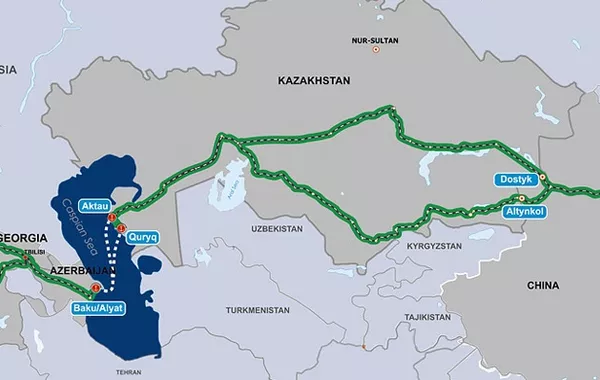
When speaking about coordination between our countries, the Middle Corridor should naturally be mentioned first, as it is the key strategic project. Both Astana and Baku view the Middle Corridor as a core pillar of their economic policies.
Just as President Kassym-Jomart Tokayev regularly highlights the importance of developing the Middle Corridor, President Ilham Aliyev also frequently addresses this issue. At its core, the project is about reducing dependence on northern transport routes. The establishment of high-quality logistics infrastructure along the Middle Corridor will have an impact far beyond the region, affecting the entire Eurasian continent.
- What practical steps, in your view, could bring cooperation between Azerbaijan and Kazakhstan to a qualitatively new level in the coming years?
- In reality, we are still at an early stage of this journey, and I believe the Middle Corridor has truly enormous potential. Kazakhstan is a landlocked country located at the very heart of the Eurasian continent, and it is actively seeking to ensure access to global markets not exclusively through Russia and China. Diversification of transport and logistics routes is therefore a strategic priority, and within this framework the Middle Corridor, and, consequently, Azerbaijan plays a key role.
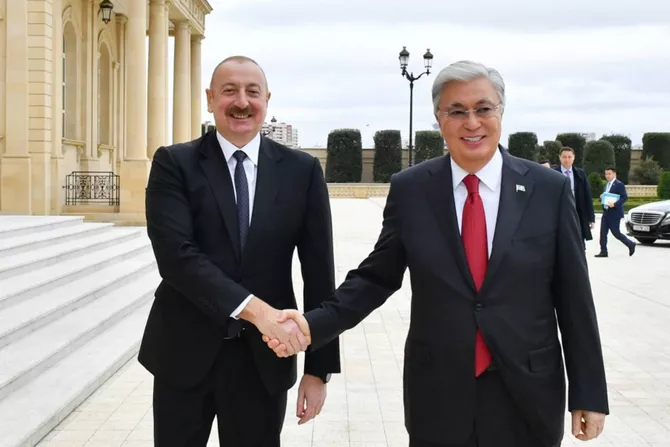
photo: The Caspian Post
Both countries are making significant efforts to expand the infrastructure of this corridor in order to enhance its attractiveness.
Another important area is digital connectivity. As is well known, a fibre-optic cable project along the bottom of the Caspian Sea is currently being implemented, which will substantially strengthen the digital independence of our states.
It is also important to understand that the Middle Corridor is not only a bridge between China and Europe or major global economies. For us, first and foremost, it is a regional backbone capable of significantly boosting trade and, as a result, improving prosperity in Central Asia and the South Caucasus.
Energy is, of course, another key area of cooperation. Last year, Kazakhstan supplied approximately 1.3 million tonnes of oil through the Baku-Tbilisi-Ceyhan pipeline. These volumes are not particularly large; Kazakhstan transports comparable amounts through the Caspian Pipeline Consortium in roughly two weeks. In its current configuration, the Baku-Tbilisi-Ceyhan pipeline cannot accommodate substantial volumes of Kazakh oil, and naturally we would be interested in increasing supplies via this route. There is also the Baku-Supsa pipeline, and the Kazakh side would likewise be interested in oil deliveries through this corridor.
A serious test for Kazakh-Azerbaijani relations was the tragedy of the AZAL plane crash. It seems to me that moments like these reveal the true nature of partnerships and genuine brotherly relations between states. On that tragic day, Kazakhstan’s Ministry of Emergency Situations, Ministry of Internal Affairs and Ministry of Health promptly provided all necessary assistance and acted in very close coordination with the Azerbaijani side. At such times, it becomes especially clear that the Kazakh-Azerbaijani partnership extends far beyond purely economic interests. We are brotherly states, and Kazakh citizens understand this very well. Such events remain in collective memory for a long time.
If we speak about practical steps towards a new stage of cooperation, it is worth looking again at the structure of bilateral trade. The fact that a significant share of exports consists of aluminium from Pavlodar suggests that other regions and sectors are still underrepresented and that the overall potential is far from exhausted. I believe Kazakh business representatives need to visit Azerbaijan more frequently, and the same applies to the Azerbaijani side. The potential for cooperation is enormous, and we can be of interest to one another across many sectors.
If travel between our countries becomes more accessible, not only by air but also through the development of maritime transport, residents of Kazakhstan’s Caspian regions would likely be more inclined to visit Azerbaijan. Likewise, Azerbaijanis would show greater interest in western Kazakhstan and the country as a whole.
In my view, once a critical mass of citizens has visited each other’s countries, when it becomes routine for Kazakhstanis to spend a weekend in Baku or for Azerbaijanis to travel to Almaty, mutual investment will follow as a natural consequence.
- How do you assess Kazakhstan’s relations with other Central Asian countries?
- When discussing Kazakhstan’s relations with other Central Asian states, it seems to me that they became particularly dynamic following the arrival of Kassym-Jomart Tokayev. A significant role has also been played by Uzbekistan’s President Shavkat Mirziyoyev. As you know, relations between Nursultan Nazarbayev and Islam Karimov were not always smooth.
Under Karimov, Uzbekistan was a relatively closed country, and in my view its economic model bore similarities to a Soviet-style system. Today, the situation in Tashkent is much better, and the change in leadership has had a positive effect on bilateral relations. I mention Uzbekistan deliberately: alongside Kazakhstan, it is one of the key economies in Central Asia.
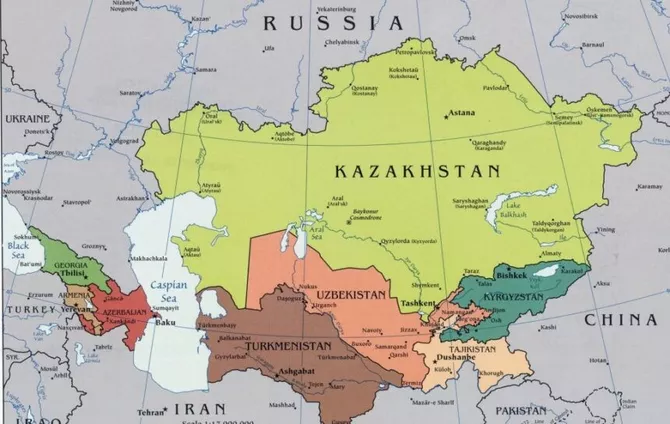
photo: Kazinform
Economic activity is increasing year by year, as is trade turnover. Kazakh businesses have begun investing more actively in Uzbekistan. Recently, the construction of a joint oil and gas complex in southern Uzbekistan was announced. An Uzbek oil company is investing in oil exploration in Kazakhstan’s Mangystau region, while Kazakhstan’s construction group BI Group will develop an entire district in Tashkent. As a result, our relations have become highly diversified.
Similar processes are underway with other Central Asian countries as well. In my view, consultative meetings among regional leaders are extremely important. Previously, presidents met less frequently and usually within the framework of organisations such as the CIS or the SCO. Today, leaders have the opportunity to engage directly, without intermediaries, and there is a growing sense of unity among Central Asian leaders.
A clear litmus test that Central Asia is moving in the right direction is progress in resolving tensions in the Fergana Valley. Until recently, border disputes between Kyrgyzstan and Tajikistan periodically escalated due to the lack of clearly delimited boundaries. Today, a process of dialogue and border settlement is underway. In the past, clashes in disputed areas involved the use of artillery and military equipment. Against this backdrop, Kazakhstan welcomes and supports efforts to advance dialogue in the Fergana Valley and to complete the delimitation of borders.
- How do you assess the role of the Organization of Turkic States in strengthening ties between Azerbaijan and Central Asian countries?
- When discussing the role of the Organization of Turkic States, it should be emphasised that it provides an important platform for regular coordination of positions among leaders. Azerbaijan is undoubtedly one of the driving forces behind this organisation.
More broadly, the Turkic vector of cooperation with Türkiye and the countries of Central Asia occupies a key place in Baku’s foreign policy strategy, and this undoubtedly contributes to deepening ties across the region.
For Azerbaijan, this also means strengthening its role as a Caspian hub. While the Middle Corridor is of particular interest to Kazakhstan, with appropriate policies and competitive tariffs it will also become highly attractive to other Central Asian states. Uzbekistan, like Kazakhstan, is landlocked, and the same applies to Kyrgyzstan and Tajikistan. All of these countries have a clear interest in this project.
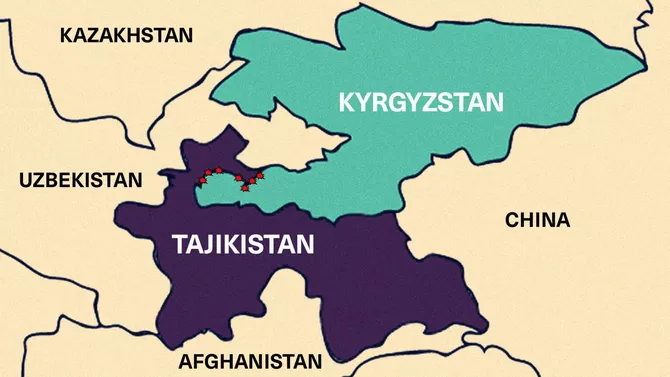
photo: codastory
Ultimately, the significance of the Organization of Turkic States lies not so much in its cultural or historical narrative, but in its practical function as a mechanism for developing economic ties and regional integration. As an instrument, it enhances connectivity between Central Asia and Azerbaijan on the basis of a shared past. Azerbaijan is itself a Turkic country, and despite being located across the Caspian Sea, linguistic and cultural proximity creates a strong foundation for closer interaction.
- What can you say about the process of normalisation between Azerbaijan and Armenia?
- In Kazakhstan, the process of normalising relations between Azerbaijan and Armenia is viewed very positively. Kazakhstan has consistently stated, both under Nursultan Nazarbayev and President Tokayev, that Karabakh is the territory of Azerbaijan. This position has been shared not only by the political leadership but by society as a whole.
Therefore, the very fact that the process of border delimitation between Azerbaijan and Armenia has begun is an event of exceptional importance and deserves genuine admiration. Despite decades of conflict and deep mutual grievances, both states have taken a step towards peace. This deserves respect.
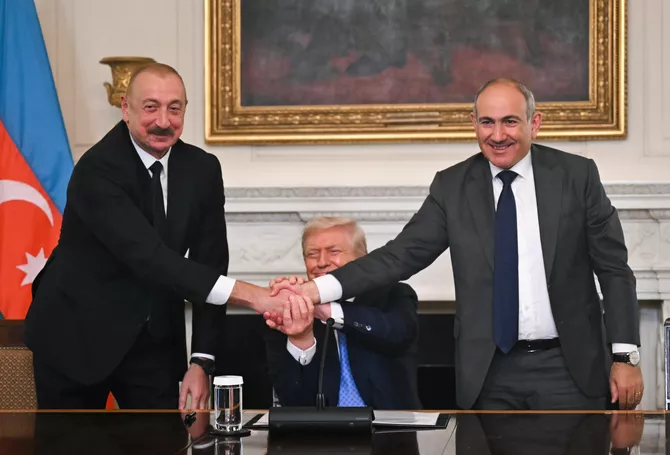
Photo: AZERTAC
I believe the leaders of Azerbaijan and Armenia have demonstrated strong political will. Such processes are never quick or simple, but it is precisely now that the foundations of lasting peace in the South Caucasus are being laid. There would not be such significant international attention, including from US President Donald Trump, if this were a marginal development. This is clearly an event of global significance, with the potential to positively influence political and economic dynamics in the South Caucasus, Central Asia and Europe.
Today, fathers are laying a peaceful foundation for their children and grandchildren. I sincerely hope that peace in the South Caucasus will endure for many years to come. Both Azerbaijan and Armenia stand to benefit from a stable, mutually advantageous framework of cooperation and partnership.